Posted under Czech Republic
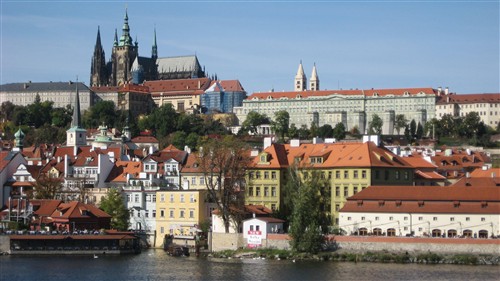
With multi-style juxtaposed architecture, winding cobblestone streets with antique street lamps, castles and bridges that reflect on the sparkling River Vltava, and a panorama of Florentine elegance, Prague dazzles. While you could easily fill your days inside Prague’s museums and churches, the ultimate Prague experience is walking through the city, marveling at the beautiful Old Town Square dominated by the unforgettable Gothic Tyn Church; lingering on the dreamy Charles Bridge with stunning views of Prague Castle; strolling Wenceslas Square with the powerfully illuminated National Museum at its head; and climbing to one of the many elevated viewpoints to take in the magnificent red-roofed cityscape. And once you’ve let your starry eyes dance around Prague, you’ll want to return again and again to see the stunning views in the changing plays of light.
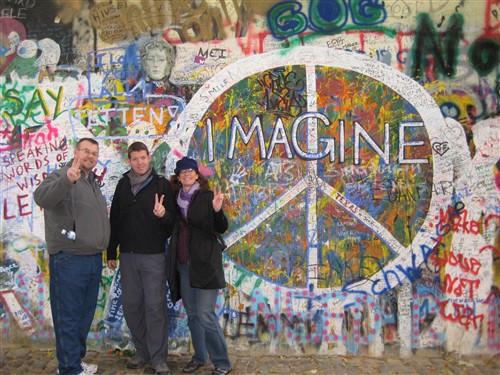 Of course, there are hidden treasures all around the city – a graffiti-covered John Lennon memorial wall, an Italian palace garden with a stalactite wall revealing faces likely conjured by Dante’s Inferno, and obscure modern sculptures by local artist David Cerny – that inspire touristic scavenger hunts, the hidden fruits of which are discoveries of interesting streets, pretty parks, and romantic nooks along the way.
Beneath the glitter, in dimly lit local pubs and in narrow alleyways, lies an arty, obscure culture of music and literature. You feel it on the streets at night as cool jazz seeps out of doorways, enticing you inside for a spot of warmth and a bitter Czech pivo (beer), and in ambient book shop cafés with brooding literary types sitting solo with a coffee and a well-worn paperback.
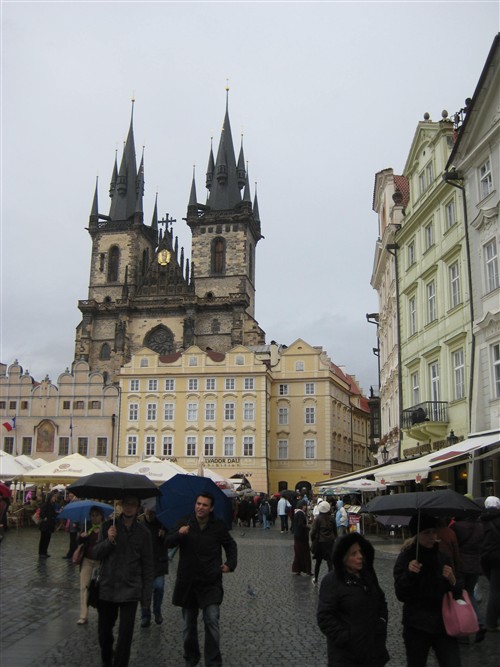 With our cheery traveling companions, George (who graciously hosts our website) and Jennifer, we spent five nights in the historic, romanticized city of Prague. We sampled a smorgasbord of Czech beers – the crisp fall air and cloudy skies always seemed to set the mood for a round – and cautiously dabbled in the local cuisine. Like German and Austrian fare, Czech food is heavy on meats, hearty stews, cheese, cabbage, potatoes, bread and dumplings. Street food in the form of pastries and sausages is omnipresent and cheap.
On our third night, when the four of us had the pleasure of meeting up with another friend, Jasmine, for dinner, I discovered a gastronomic delight called Sviloska – thick slices of roast beef with sweet bread dumplings, smothered in a rich sauce and garnished with cranberries and sour cream. Washed down with a half-liter (or two) of Pilsner Urquell and you are guaranteed to wake up a little more plump the next morning.
One sunny afternoon, towards the end of the week, Aaron and I went for a long walk on our own. Heading for one of the many elevated viewpoints, we ambled around the Charles Bridge, browsed some magnificent watercolors of Prague Castle, and ended up in a beautiful park overlooking the city. Yellow leaves lit up the trees and speckled the tree-lined walkways. It was magic. Young mothers pushed baby carriages while old men shuffled along on their daily walks. Teens flirted in the refreshing greenspace. Mountain bikers pedaled around. The park was noticeably free of tourists, which increased its enjoyment factor tenfold, and the view was magnificent. While we have observed the countenance of Prague locals to be generally dour, the faces in the park wore the happy and light expressions that you would expect to see among glorious yellow trees on a bright fall afternoon.
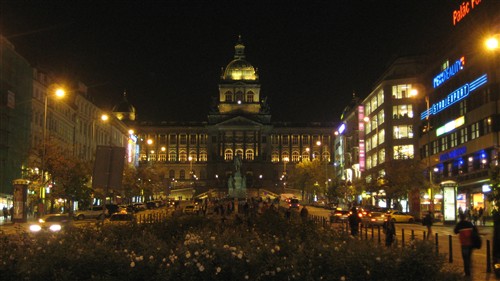
We loved Prague. It is easily one of the most beautiful cities in Europe – a city in which we spent more of our time walking starry-eyed through the streets and watching the world go by than delving into the museums, art and literature, religious influence, and the fascinating history of the Communist grip. Mysterious, hypnotic, jazzy and full of life, Prague’s intrigue and inspiration for artists and writers is easy to imagine. Even days after leaving, visions of Prague are still spinning through my mind and I am utterly fascinated. I am dazzled.

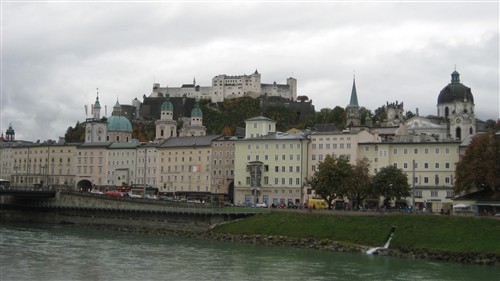
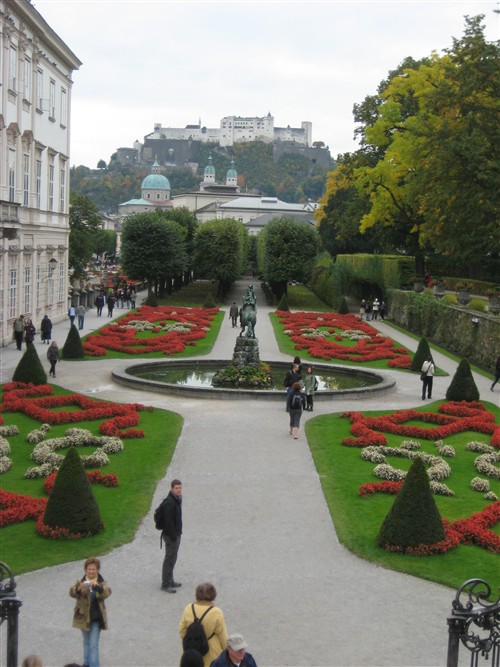 Rain was in the forecast during our brief two-night stay in Salzburg and, while we generally avoid tour groups, this was a perfect example of an exceptional time when joining the herd was advantageous: we had little time, no guide book, and wanted to visit several places that were spread out around the city and in the surrounding countryside.
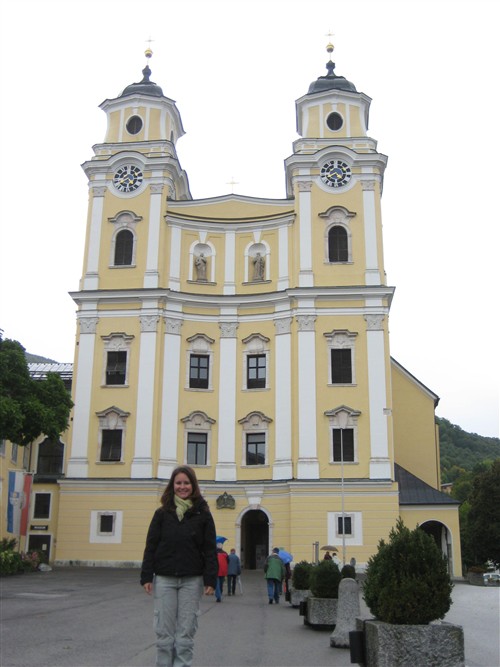 The highlight of our tour was a stop in the charming little town of Mondsee. We visited St. Michael’s Church, where the Von Trapp wedding scene was filmed, and then sat down at a cozy café for some “crisp apple strudel” with hot vanilla sauce. We couldn’t find any schnitzel with noodles. The tour was cheesy but delightful and that first afternoon in Salzburg turned out to be the last good weather before the rains came. We walked around town a bit on our own – admiring the architecture, stopping by Mozart’s house, and browsing the pretty Christmas shops in the old town – but the cold and rain motivated us to spend most of the next day hibernating in our room.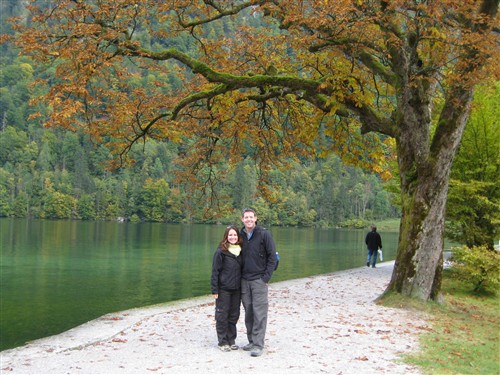
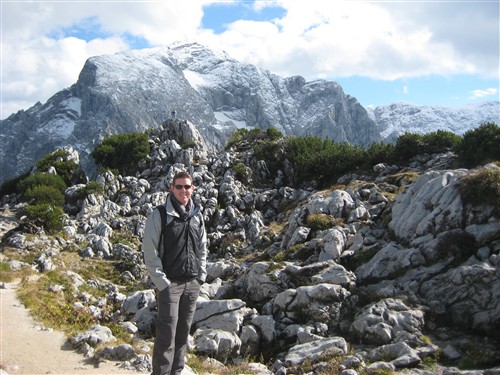 After Oktoberfest, we needed a place to dry out and relax for a few days. Berchtesgaden was only a couple of hours from Munich by train and sounded like the perfect escape from the urban chaos. In Munich, buildings grazed in cement pastures and raucous pedestrians filled the streets. As the train whisked us away, the cityscape gave way to magnificent forest-covered mountains, dusted with the colors of fall. Peaceful alpine villages dotted the sweeping green valleys and cows grazed in wide open spaces. Cheerful guesthouses were covered with flower boxes, each overflowing with bright-colored blooms. Even in the confines of the train, we began to breathe easier.
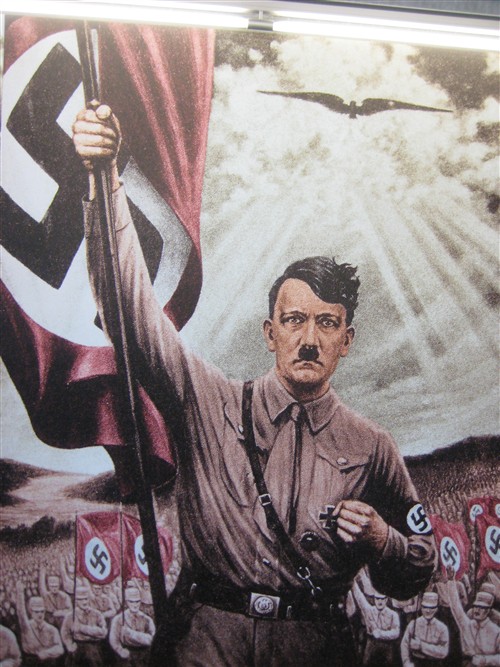 Similar to Yad Vashem, the most interesting part of the presentation at Dokumentation Obersalzberg dealt not with the specific horrific acts perpetrated in the death camps but rather how a deranged maniac like Hitler came to power and influenced a nation toward genocide. The propaganda campaign, conceived and implemented by Dr. Joseph Goebbels, one of Hitler’s most loyal followers, was one of the most ingenious in history. While Yad Vashem approached the propaganda element by highlighting Hitler’s powerful rhetoric and anti-Semitic caricatures, Obersalzberg displayed more photographs of the Führer himself than we have ever seen – posters and other propaganda photos, staged to create and sell an image of Hitler as a man of the people, as a humanitarian, which slowly elevated the depraved lunatic to God-like status in the hearts and minds of his followers. The photos were both fascinating and haunting. I looked into those narrow dark eyes and saw evil but hindsight is twenty-twenty. Would I have seen it then? Would I have been able to see through the propaganda to the madman?
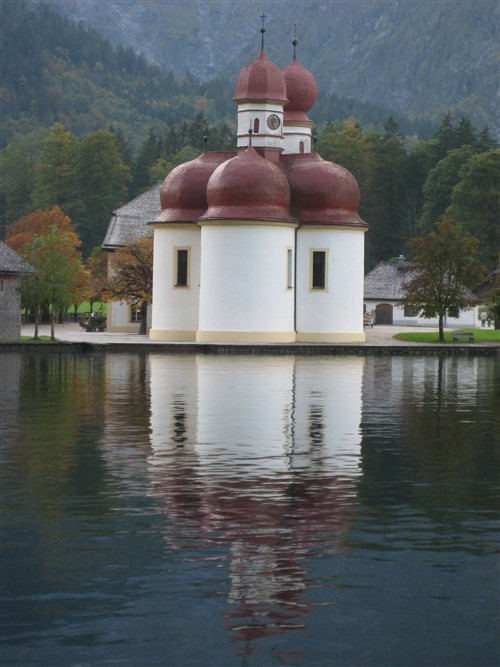 When we spotted St Bartholoma in the distance, we were disappointed to discover that the western mountains had already cast its postcard-perfect view in shadow. As we neared the dock, however, we saw that the soft light created a wintry pall, an ethereal glow, across the lakeshore. Stepping off the boat, we walked among the autumn trees and along the emerald green lake. The chapel doors were open and we found the interior modestly appointed with iconography and a simple altar. The chapel, which is accessible only by long hike or by boat, was quaint and lovely.
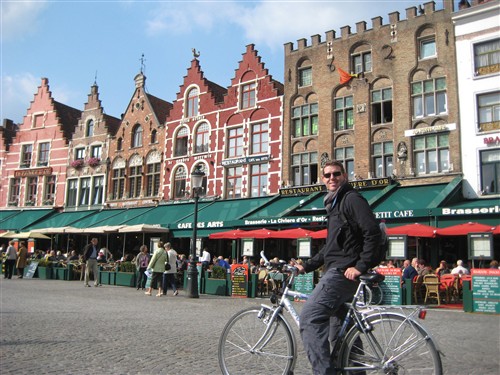
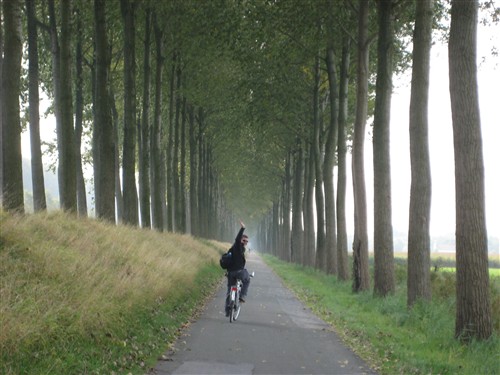
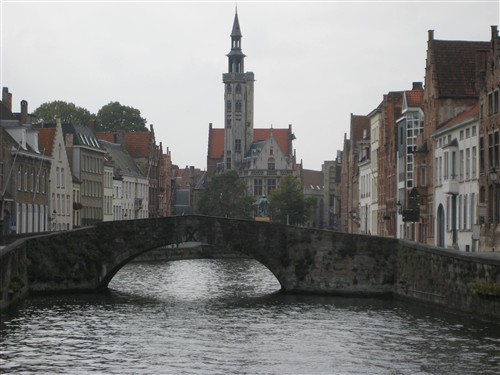 On our second day in Bruges, we rented bicycles and cruised out of town, following a trail along a pretty tree-lined canal that led all the way to the sea. We didn’t make it that far though, stopping instead in the village of Damme. Parking the bikes in the small square, we wandered through the quaint, cozy village. The air was brisk and the sun was shining – it was a beautiful day! We sat outside at a restaurant that boasted over 100 kinds of pannekoeken (crepe-style pancakes), ordered some hot drinks and one each of the sweet and savory varieties of pancakes. Ladies and gentlemen, in addition to frites, chocolate, waffles, mussels, and beer, the Belgians do pancakes…well! Mine was so stuffed with fresh spinach that it resembled a burrito, smothered in cheese and cream sauce…the gluttony continues.
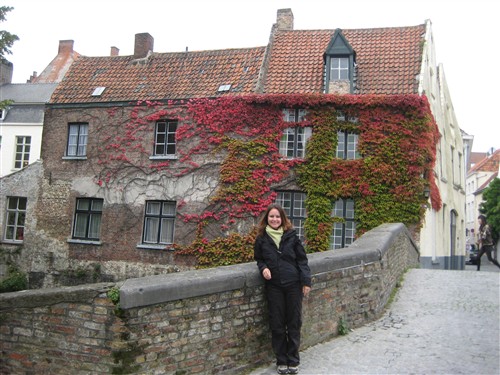 Our last day in Bruges, my 33rd birthday, was wonderfully uneventful. While our travel pace has been significantly more relaxed in Belgium than it was in Italy, we had still spent most of every day pounding the pavement. I wanted a day of rest and the cozy common room of our hostel provided a perfect place to hibernate with good books and free Wi-fi. When we finally did emerge in the afternoon, we meandered toward the canal and bought tickets for a canal boat ride. Unlike the Venice of Italy with its canals full of personal, municipal, gondola and commercial boat traffic, the canals in Bruges transport only small, motor-powered tourist boats. We had seen them everywhere – with tourists packed in like sardines – and it seemed like something we just had to do. Our boat was equally crowded and the thirty-minute ride seemed rushed but it did afford views of charming waterside homes and other historical gems that could not be seen from the street. The excursion was pleasant but I would have preferred a canoe.