 From Tangier, the fast ferry carried us only 35 minutes to Tarifa on the southern coast of Spain but disembarking that ship was like stepping into an old familiar world…and that world was full of boobs! Hooters, knockers, jugs, chi chis…whatever you want to call them, Mediterranean sun-tanned boobs were bulging out of push-up bras, bouncing and jiggling above plunging necklines. After Morocco, it was a bit of a reverse culture shock but we weren’t complaining. Although these were my first steps on Spanish soil, I felt myself thinking, It’s good to be back! Only when you’ve spent time in an ultra-conservative environment, like a Muslim community or perhaps a convent, do you come to truly appreciate the ways that women beautify the earth like bright summer flowers.
From Tarifa, we still had a long day of travel ahead. We had narrowly missed the morning bus to Seville and had to wait hours for the next one…but we were in Spain! We finally arrived in Seville in the early afternoon and humped our packs about a kilometer from the bus station to our hostel in El Centro. The summer sun emitted a heat as intense and oppressive as the Moroccan desert and we found ourselves running for shade at every opportunity.
The first thing we noticed about Spain (after the boobs) was the architecture. Ornate, colorful building facades lined narrow winding alleys, pedestrian walkways and romantic plazas. The unique exteriors were adorned with sculpture in a variety of styles; stark white molding and wrought-iron ornaments leapt off vibrant painted backgrounds. Lush tree-shaded parks and public fountains completed the town’s storybook appeal. By day, the streets were thronged with summer tourists scurrying between Seville’s two main historical sights – the Cathedral and the Alcazar – but, as we would later discover, the city of bullfighting, flamenco and tapas bars comes alive at night.
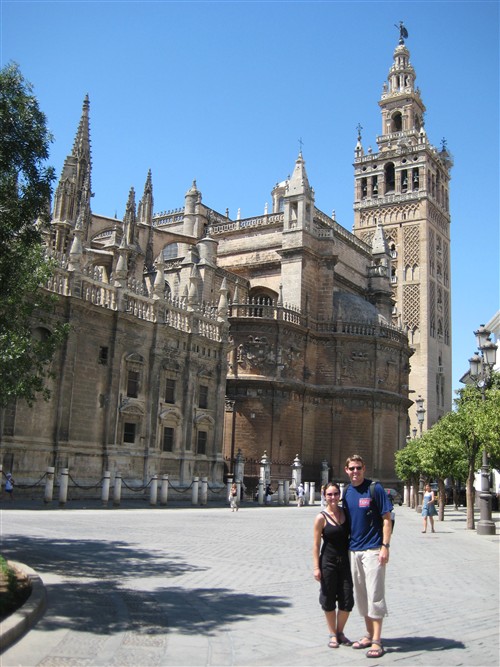
The Cathedral and the Alcazar are Seville’s fascinating architectural remnants symbolizing the entanglement of Muslims and Christians in southern Spain’s war-torn history. “In the 12th century, a strict Islamic sect from Morocco, the Almohads, took over Muslim Spain and made Seville the capital of their whole realm, building a great mosque where the cathedral now stands. Almohad power eventually crumbled and Seville fell to Fernando III (El Santo, the Saint) of Castilla in 1248” (Lonely Planet Spain, March 2007). For a century and a half, the ruling Christians used the existing mosque as a church before eventually deciding to tear down the mosque and build a church so extravagant as to defy the laws of reason. Interestingly, they decided to preserve the original mosque’s minaret (the Giralda), which now stands at the cathedral’s northeastern corner.
The inside of the five-naved cathedral is extraordinarily ornate; the sacristies and chapels are heavily ornamented with sculpture, deep-hued stained glass, stunning iconography, and other grandiose religious artwork. The cathedral’s main altarpiece, the Capilla Mayor, is reputedly the largest altarpiece in the world. The Gothic vaulted ceilings imbue a sense of reaching into the Heavens. The top of the Giralda – a crowded, claustrophobic climb – offers the best panoramas of the city. The Cathedral’s most interesting feature is the tomb of Christopher Columbus, marked by a grand monument of four sepulcher-bearers representing the four kingdoms of Spain at the time of Columbus’ famous voyage in 1492. (Lonely Planet Spain, March 2007)
 The Alcazar, a palace complex expanded and modified over eleven centuries to suit the tastes of the Muslim and Christian rulers, is a polyglot of Arab-Islamic and European architecture. The main building is distinctly Arabic – a grand rectangular structure built around an open garden courtyard. The interior walls are adorned with beautiful tile work, intricate lace patterns and Arabesque inscriptions etched into plaster. Stucco stalactite detail drips from arched entryways. Marble and granite columns abound. Elaborately carved and painted wood ceilings loom overhead. The style is identical to that of the palaces and medersas of Morocco. The tone of the design is cool, quiet, and clean.
Beyond the main building are the additions of the Christian rulers – new wings of residential quarters, entertaining halls, and a chapel – all lavishly decorated with paintings and tapestries. The tone of the Christian additions is contrastingly warm. The most interesting work of art inside the Alcazar is a painting reputed to be the oldest known depiction of Christopher Columbus’ discovery of America. The contrast of the Islamic and European styles is obvious but one look at the exquisite beauty of the Islamic designs immediately clarifies the Christians’ reluctance to destroy them.
After the Cathedral and the Alcazar, our heads were spinning with intrigue from the sensory overload of religion, art, architecture and history. We were overwhelmed and exhausted. We desperately needed what is commonly referred to in Spain as a “siesta”. Similar to Arab cultures, the Spanish seem to relish the afternoon snooze. Shops and restaurants close down in the afternoon hours and reopen at night. Dinner time is around 9pm and nightlife begins around eleven. The only way to embark on a full day of sightseeing and then sample the nocturnal delights for which Spain is famous is to succumb to your body’s natural desire to melt into dreamland in an air-conditioned room during the hottest hours of the day.
We slept…and when time had turned the day’s hot yellow light to the smoky blue of dusk and when our thirtysomething batteries had been sufficiently recharged, we resurfaced with a zest for the fest! Seville’s quiet streets have pockets of nightlife with a casual, laid back atmosphere – tiny watering holes with ham legs hanging from the ceilings, overflowing tapas bars, incandescent restaurants with sidewalk seating, and inconspicuous live music venues. We chose a flamenco joint in the Barrio de Santa Cruz. There was no sign, just an address. We almost passed by it because of the silence around the entrance, so uncharacteristic of a bar, but we went in anyway to discover a big, empty room with a bar and a small stage. The barman affirmed the night’s flamenco performance and pointed us to a quiet garden courtyard where a dozen or so people sipped cocktails in chatty groups. We ordered a couple of Cruzcampos – the local cerveza – and grabbed a table. After our second round, we walked inside to a packed house with the flamenco performers already commanding the stage.
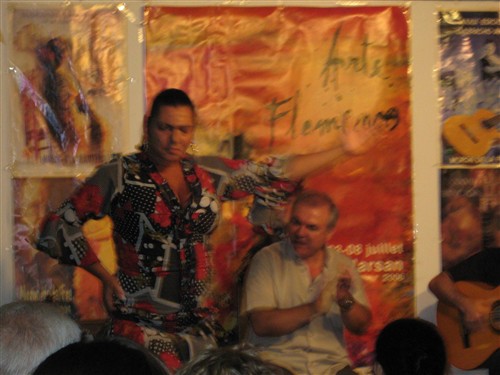 One guitarist, one singer, and one buxom dancer sat facing the beer-fueled crowd. The guitarist strummed the intro. The singer – a middle-aged man who was also the barkeep – intoned a passionate, soulful declaration while he and the buxom dancer clapped out a flamenco beat. A few more bars and then, suddenly, she was up! Clapping, stomping, and waving her arms, staring seductively through the crowd with her coal-black eyes. She was aged, heavyset, clad in a too-tight ruffled number with bulging cleavage, many would say unattractive, but she was all attitude. Her eyes were bold, her hips confident. She owned her audience who roared with generous applause. We were immediately drawn in by Spain’s spicy flamenco scene; however, despite our siesta, our thirty-year-old bodies were resisting the transition to night mode. We left just as the room was steaming up from the adrenalized performance and hit a tapas bar on the way “home”.
Andalucía is everything that is quintessentially Spanish. From the well-preserved remnants of the region’s riveting war-torn history to the relaxed tapas culture to the dazzling arts of flamenco and bullfighting, we are ready to drink it all in. Spain is vibrant, endearingly gaudy, and wonderfully uninhibited. It’s good to be back!
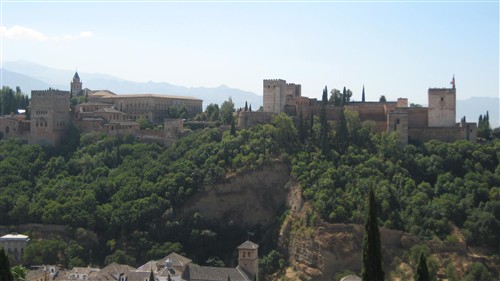
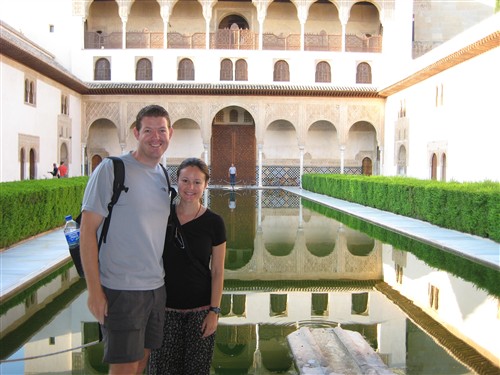 The palace was exquisite. The rooms were elaborately decorated with mosaic tilework, carved wooden ceilings, molded stucco walls with intricate lace patterns, and traditional Arabic calligraphy. There were picturesque courtyards with manicured gardens, reflecting pools and a labyrinth of covered corridors connecting it all. The design and décor of the Palacio Nazaries was similar to the other medersas and Arab-Islamic palaces that we’ve seen in Morocco and southern Spain but we were awed by it nonetheless. The sheer magnitude of the Alhambra was impressive. The Generalife, or architect’s garden, was a pristinely manicured labyrinth of hedged corridors, arbors, cypress trees, and flowers of every imaginable color. Its magic compelled even the most macho of men to pose giddily for photos among its storybook backdrops.
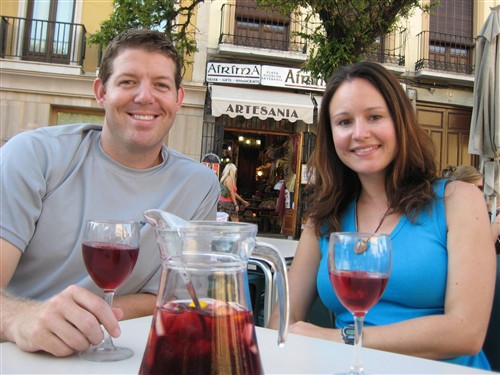 The Albayzin, the old Muslim quarter sprawling up a hill facing the Alhambra, afforded the best views of the fortress-palace. The Albayzin was a maze of narrow alleys meandering within the old stone ramparts. The neighborhood, though largely residential, had lovely plazas with outdoor cafes, small shops selling souvenirs and Moroccan imports, and remnants of mosques-turned-churches. The five kilometer walking tour, winding through zigzagging streets, up and down the hillside, was a great opportunity to stretch our legs and work off some of that gelato.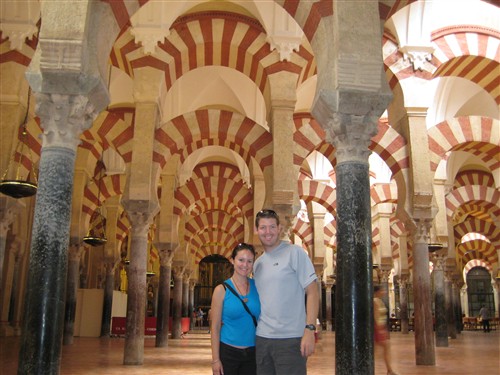
 After a casual lunch at one of the ubiquitous outdoor cafés, we made our way to Cordoba’s most impressive sight – the Mezquita, meaning mosque in Spanish. The Mezquita is also commonly referred to as the Cathedral of Cordoba, which seems contradictory until the story of its current incarnation unfolds.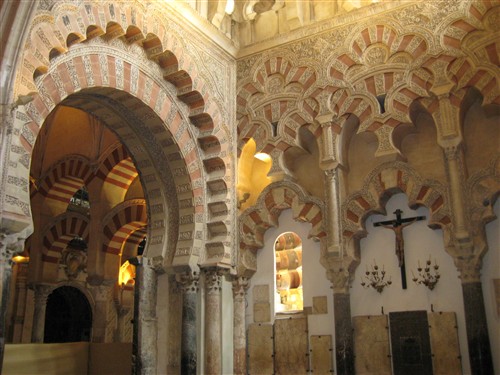
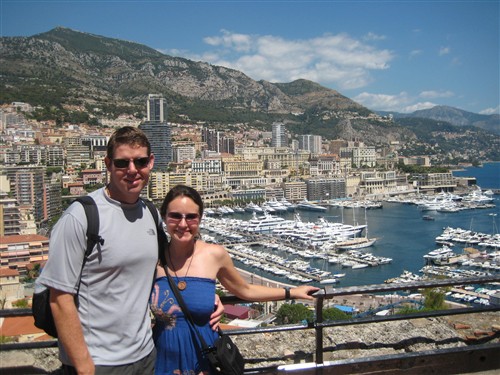
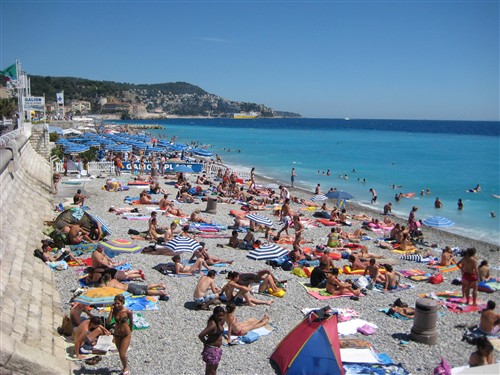
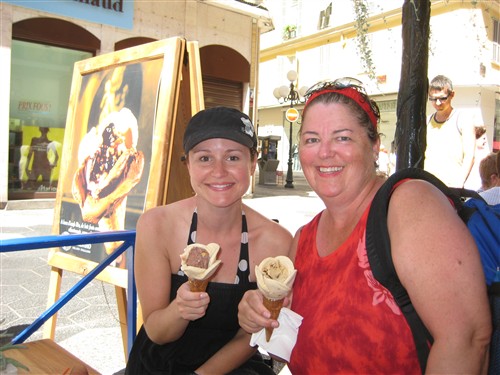 The Cote d’Azur was the perfect conclusion to our adventures in France. There is nothing like a sparkling beach to make you feel like you’re on vacation. Nice seemed like a relaxed and livable city, perhaps more so outside of tourist season. The cafés were surprisingly unpretentious; the food and wine were wonderful; and the streets were picturesque and full of life. It has been our pleasure to share our adventures in France with Aaron’s mother and we hope that her memories of the experience are as fond as ours.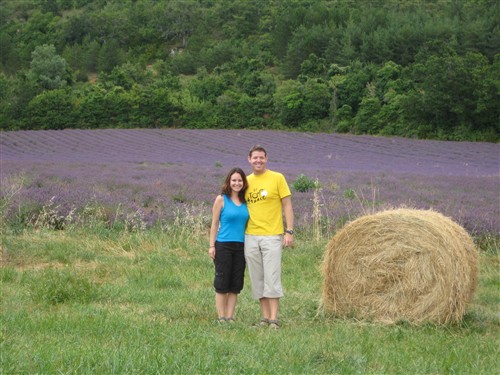
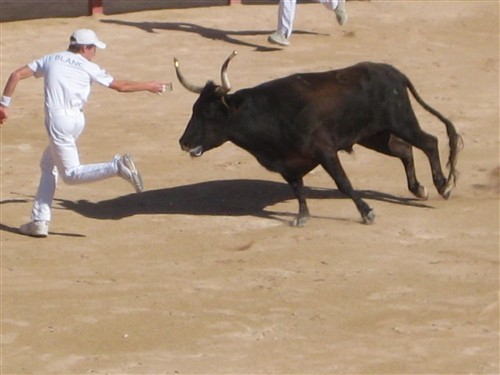 Built in the 1st and 2nd centuries, Arles’ Roman amphitheatre still serves as the venue for bullfighting and bull races. What is a bull race? Snarling, snorting trained bulls are pinned with special ribbons around their horns. A bull is released into the arena. Young, nimble men, dressed all in white, attempt to snatch the bull’s ribbons with tiny dull hooks. There are upwards of fifteen men playing simultaneously against a single bull and still the bull usually wins, inciting roars of applause from the fedora-clad spectators. The most exciting moments of the event are when the bull leaps over the arena wall and goes running around the perimeter until it is lured back inside. The crowd loves this. Each bull lasts about twenty minutes, daring the challengers to get close to its ferocious horns, and then the next bull enters in a rage of fury. Each bull has a unique fiery personality. Best of all, the bull is not killed at the end as it is in a bullfight. The bull lives to snarl another day!
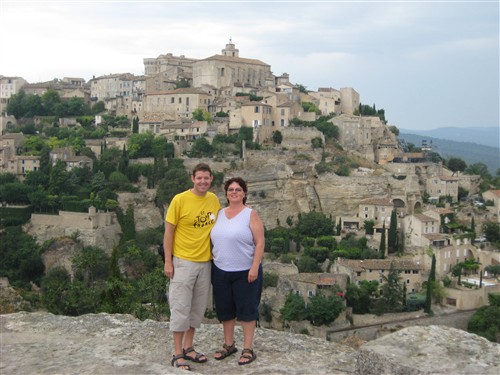 The most fruitful element of our Avignon stop was a visit to the tourist office where a woman explained in wonderful English where we could find the lavender. With renewed enthusiasm, we hopped back into the car and headed northeast toward Sault. It wasn’t long before we squealed with delight at our first glimpse of lavender fields near the golden city of Gordes, which was itself a hidden gem. Built entirely of stone and spilling down a steep mountainside, the picturesque cityscape was a stunning sight, bathed in the golden light of the late afternoon sun. Around Gordes, we discovered sweeping mountain valleys with plots of lavender and grapevines interwoven like a patchwork quilt. The car provided us unlimited freedom to span the countryside and, between Gordes and Sault, we found more and more lavender. We drove all day, arriving back in Arles weary and satisfied with the day’s adventures. Provence, with its charming towns, artistic history, and fields of lavender, exceeded our highest expectations.