Posted under Russia
For a taste of something different, we decided to take a day trip from Saint Petersburg. Petrodvorets, or Peter’s Palace, was located 30km west of the city, overlooking the Gulf of Finland, and reachable by a suburban train. Negotiating the Cyrillic-labeled signage in Russia has been challenging and the train station was no exception. There was no English-language signage but we had figured out the Russian word for tickets: Kacci. The ticketing agents did not speak English but, through trial and error (getting shooed away in curt Russian by several window dwellers), and with a series of gestures that resembled a hopeless game of Charades, we secured a couple of round trip tickets.
The highlight of our one-hour journey was the steady stream of vendors who arrived at the head of our car, recited a brief commercial, and sauntered down the aisle hoping for a sale. In addition to the magazines, pirated DVDs and snacks being sold by previous vendors, one man was selling an odd assortment of dish-washing sponges, drill bits and hand-held back massagers. Capitalism is alive and well in Russia.
We arrived at our train station knowing only that Petrodvorets was a long walk away and that local buses ran frequently to the palace complex. We stood in the cold at a bus stop near the station until one of the friendly locals helped us find the right bus.
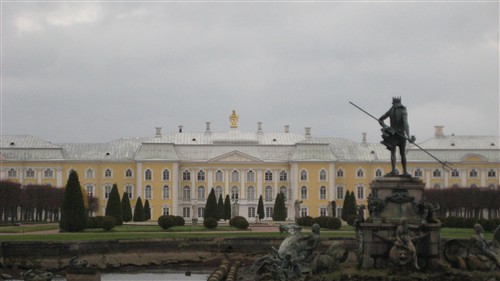
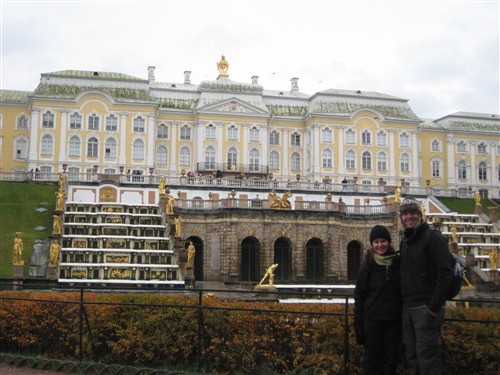
 Petrodvorets is a vast estate containing several stunning palaces, manicured gardens, and an impressive array of fountains and bronze statues. It was founded in the early 18th century by Peter the Great, who, on a visit to France, was impressed by Louis XIV’s Palace of Versailles and aspired to build his own, grander version. We entered the upper gardens at the rear of the estate and strolled through the clearly out of season gardens. The magnificent Grand Palace, its beautiful white and yellow façade flanked by two golden-domed chapels, was an impressive sight in the distance. The original palace was almost totally destroyed during the Nazi occupation of Russia in WWII and the Palace that is seen today is a reconstruction of the original.
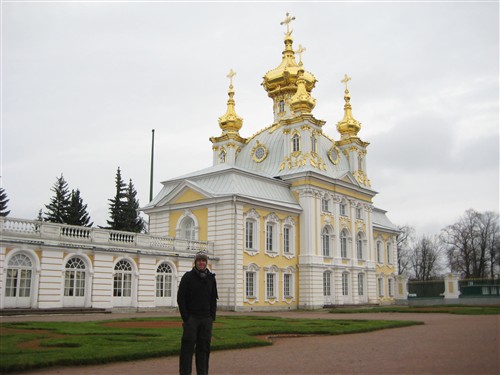
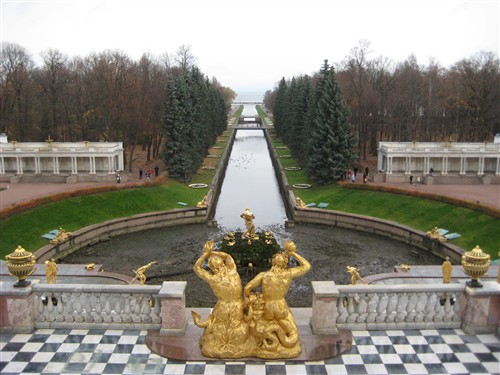 As we approached the front of the Palace we saw the water features for which Petrodvorets is most famous. The Grand Palace sits atop a hill, overlooking the magnificent Grand Cascade – a multi-tiered fountain stepping down the hill, enabling the water to cascade brilliantly downward into Water Avenue, a canal extending all the way to the Gulf of Finland. Petrodvorets has more than 150 fountains adorned with gilded statues but, unfortunately for us, none of them were working. I tried to envision the grandeur of Petrodvorets, but fountains without water are simply not very impressive. Disappointed by the fountains and uninspired by the photos of the interior that we saw in the gift shop, we decided not to go inside. Instead, we strolled leisurely around the palace grounds and then headed for the bus stop, stumbling upon a beautiful onion-domed Orthodox church along the way.
 When we finally reached the train station it was late afternoon. We had just missed the hourly train back to St. Petersburg. We had an hour to kill and we were starving. Our only option appeared to be a small restaurant/bar/discotheque just outside the train station. Unable to decipher the Russian menu, we ordered the few things that we recognized: shawerma sandwiches, a blini (Russian crepe) and beer. Our cashier, as uncomfortable with the language barrier as we were, eagerly obliged. We sat down at a table in the smoky, circular room (complete with dance floor and disco ball), watching and being watched by everyone else in the room. It was an educational hour.
As we sat there eating, our surrealistic day began to take focus. Russia is such an interesting place. It’s a place where there is no tourism infrastructure for foreigners, but friendly locals will still do their best to help. It’s a place where you still struggle to visit a top tourist destination – the “Russian Versailles” – as an independent traveler. It’s a place that has been open to the West for nearly twenty years, but remains shrouded in mystery. There is so much that we do not understand and so much more than meets the eye. Communism may be dead, but the intrigue remains.
Comments Off on Petrodvorets
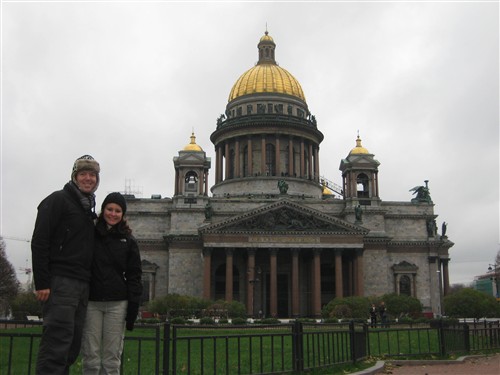
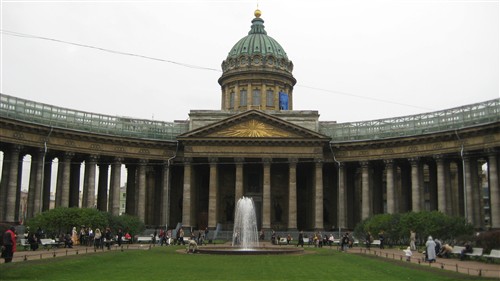
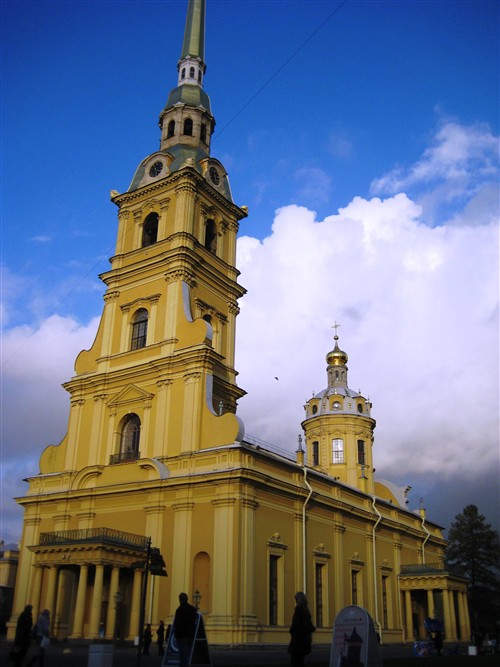
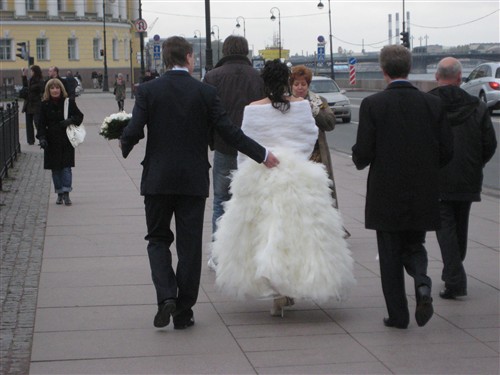 After St Isaacs, we finally headed to the river, across the bridge toward the St Peter & Paul Fortress. It was a Thursday afternoon so we were pleasantly surprised when we came upon several small wedding parties on the Strelka (tongue of land) on Vasilevsky Island. The young brides wore pristine white furs around their otherwise bare shoulders. The happy couples were surrounded by musicians and boisterous revelers. We observed two interesting wedding traditions as we discreetly watched from above. At the river’s edge are several granite spheres and the couple must simultaneously throw two glasses against the sphere, smashing them to pieces and inciting cheers from the crowd. Then they light the wick of a small cannon, which shoots firecrackers over the Neva to the sound of more applause.
 Tired and cold after our busy program, we walked briskly toward the nearest metro stop. On the way, we spotted some blue mosaic onion domes protruding above the tree line. We detoured a few steps to get a closer look and realized that we had stumbled upon the Saint Petersburg Mosque – the most northerly mosque in the world. When it was built in 1913, it was the largest mosque in Europe.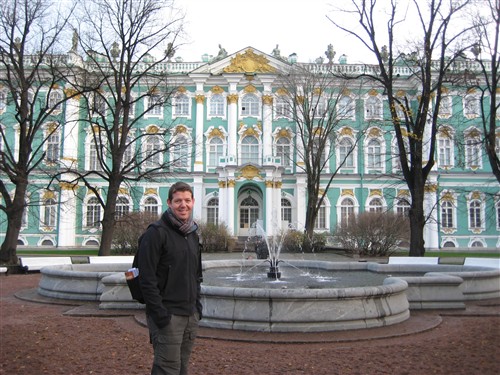
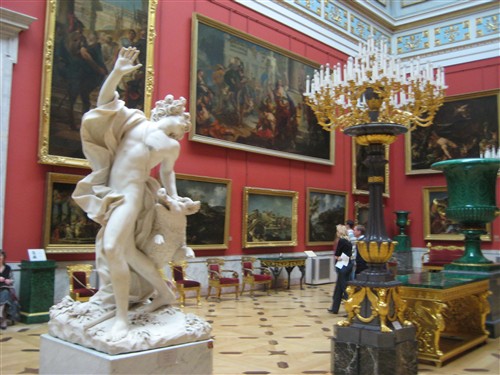 Back at the Hermitage, we bought our tickets, checked our backpack and coats in the cloakroom (every place has a cloakroom and its usually free), and began to explore. We had a list of recommended highlights and decided to search them all out before concentrating the bulk of our culture-absorbing energy on the European paintings.
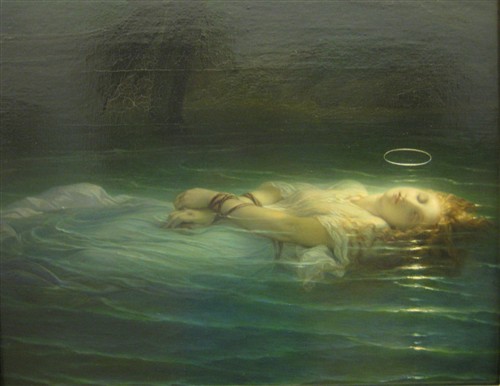 The Hermitage is remarkable for the sheer size of its collection, the number of well-known paintings, and particularly for the number of works by famous European painters. The collection was mostly amassed by Catherine the Great. Among the famous artists represented are Matisse, Van Gogh, Renoir, Rubens, Cezanne, Monet, Degas, Picasso, Pissarro, Gauguin, da Vinci, Rembrandt, Rodin and Michelangelo. In the Hermitage’s collection, you don’t see one or two Picassos or Matisses or Rembrandts but rather entire rooms full of Matisses, Picassos and Rembrandts. The works, themselves, are brilliant, of course, but we were simply gobsmacked by the volume of famous work in the museum. It was impressive.
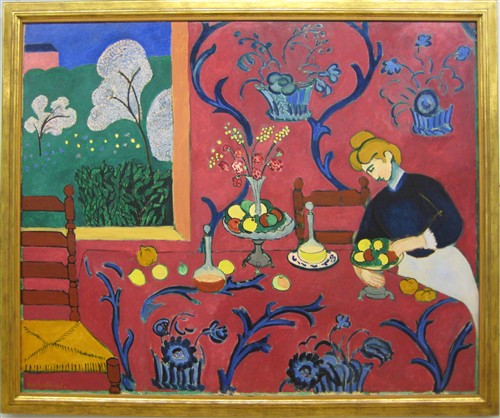 That said, while the collections of art and artifacts were on par with other world class museums, the Hermitage fell short of the bar in the “user-friendliness-for-foreign-citizens” category. The best example of this is the lack of English-language captions in almost all galleries other than the European paintings. In this age of globalization, in which English is the international language of business, we found it both disappointing and telling that such a prestigious national museum has failed to modernize. The European paintings were the highlight for us – they did have English captions – and Hermitage was still a great experience.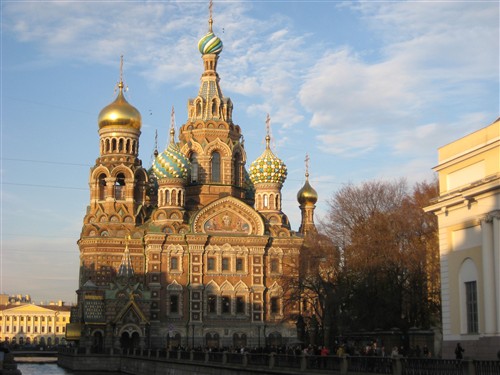
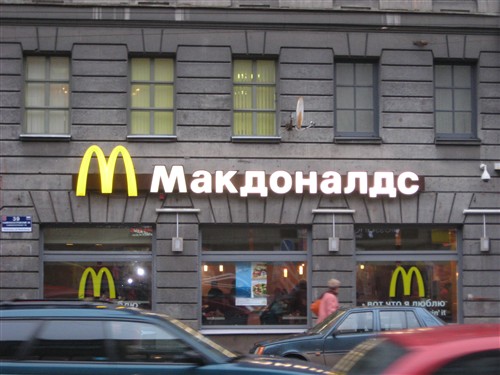 From the bus stop, we struggled a bit to find the metro station but eventually found ourselves descending into the cavernous recesses of the underground railway system. Disconcerted by the lack of metro maps around the stations, we did find one map that listed the stops in both English and Russian characters. We were astonished by the frequency of the trains – arriving every minute-and-a-half or so compared to the five-to-seven minute intervals in other busy international cities – and also by the masses of riders on each train.
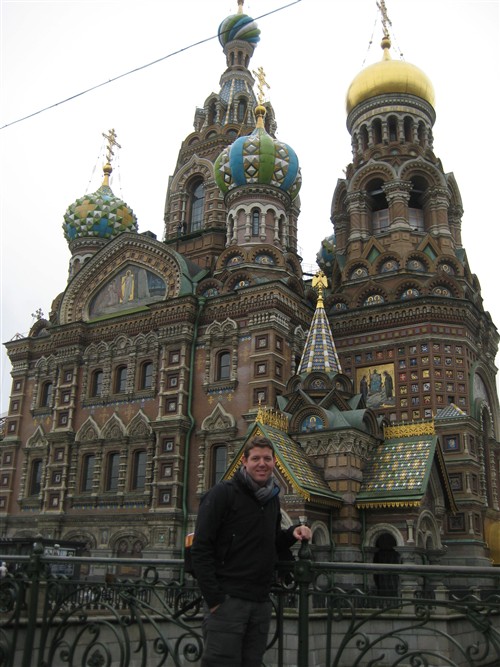 That afternoon, we were headed toward the Church on the Spilled Blood, constructed on the spot where Alexander II, Emperor of Russia, was mortally wounded in 1881. Built from 1883 – 1907, the colorful, onion-domed church contrasts the city’s overwhelmingly baroque style though it manifests the quintessential style of Russian Orthodox churches of the 17th century.
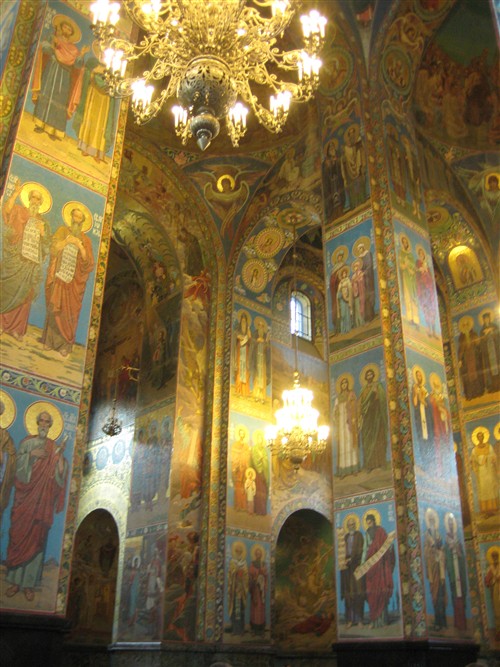 At first glance, the interior walls looked to be covered in soft, golden murals but we soon realized that the medium was mosaic. Scenes from the New Testament in beautiful, bright-colored mosaic ran from the semi-precious stone base to the ceiling, covering every window frame, support beam and arch. The arrangement of the subjects in the mosaics corresponded to the canons of Orthodox iconography. The southern wall portrayed the Nativity and the Baptism of Christ. The northern wall was devoted to scenes of the miracles performed by the Savior. The western wall featured scenes from the Passion. The iconostasis was a masterwork of lace-cut Italian marble. The floor, made from various kinds of Italian marble, was designed to look like a mosaic carpet.