Posted under Russia
Famous for vodka, oil communism and gangsters, we felt confident that Russia would be a powerful conclusion to our round-the-world adventure. With our knowledge of the world’s largest country limited to its political history, its reputation as a bureaucratic abyss, and its recent cameos in the world media, and, of course, Hollywood, our illusions of Russian culture were mysteriously opaque.
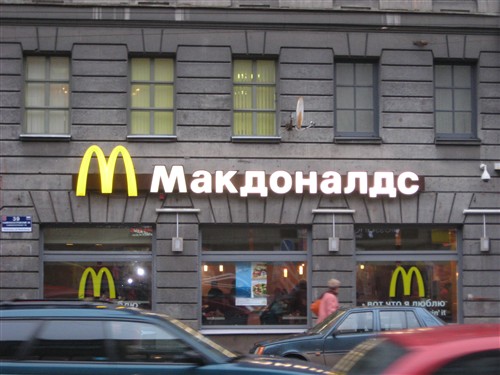
Finding our way from the airport in Saint Petersburg to our hostel in the city center was, ready or not, our first opportunity to test the infrastructure. We caught a bus from the airport to the city center and quickly concluded, as we looked for our stop, that Russia has less English-language signage than any other country that we have visited. The Russian alphabet, known as Cyrillic and adopted from Bulgaria, seems to be a hybrid of Greek and Roman characters. Though most of the signage is in Russian, one can, with a basic knowledge of the Greek alphabet, decipher just enough of it to survive.
 From the bus stop, we struggled a bit to find the metro station but eventually found ourselves descending into the cavernous recesses of the underground railway system. Disconcerted by the lack of metro maps around the stations, we did find one map that listed the stops in both English and Russian characters. We were astonished by the frequency of the trains – arriving every minute-and-a-half or so compared to the five-to-seven minute intervals in other busy international cities – and also by the masses of riders on each train.
Our hostel was located a few blocks off of Nevsky Prospekt – Saint Petersburg’s main shopping thoroughfare. It was several blocks walking from the metro stop, during which we immediately noticed the inadequate number of crosswalks over the busy six-to-eight lane streets. By the time we reached the wrought-iron security gate of our building, I was cursing the albatross on my back. Once inside, we climbed a single set of filthy cement stairs that reeked of sewage and stepped into a tiny, warm reception area. Thankfully, the check-in process was brief and we were soon shown to a small cell with two metal twin beds and some other plain furnishings. The place screamed communism and seemed both frighteningly and delightfully appropriate. It didn’t take us long to spread out our meager but warmly familiar possessions and make ourselves at home. It was already late afternoon but, as it has been on our first day in almost every new city, we were anxious to get out and explore.
Often called the “Venice of the North”, Saint Petersburg has a super-sized European feel with large Italianate mansions and juxtaposed buildings along wide canal streets. It is Europe on steroids.
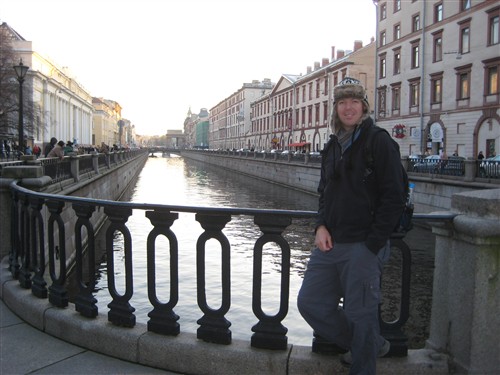
People-watching on Nevsky Prospekt was fascinating! Largely due to the “pain-in-the-ass” factor of getting a Russian visa, there are very few foreign tourists on the streets. Add to that the fall-that-feels-like-winter weather and you have Saint Petersburg almost all to yourself. Upon first walking around the city, one cannot help but admire the beauty of the young Russian women. They all seem to have gorgeous long hair, ice-blue eyes, and never-ending legs with tall stiletto-heeled boots. You don’t see an athletic shoe on anyone – only black or brown leather dress shoes. Fashion is highly embellished with stones, studs and shiny accessories. P.E.T.A. supporters beware: fur is very much in vogue. Everyone who can afford to wear it, does.
There is a noticeable military and police presence in Saint Petersburg. We must have seen five different types of uniforms on our first day alone. Naturally, I wanted photos of all of the officers but their cold, serious facial expressions and rumors of corruption have so far left me uncharacteristically timid. We have already heard stories from other travelers about police harassment and, for the first time in fourteen months, we are wearing our passports on our persons. So far, we have not received even a sideways glance but are keeping our heads down nonetheless.
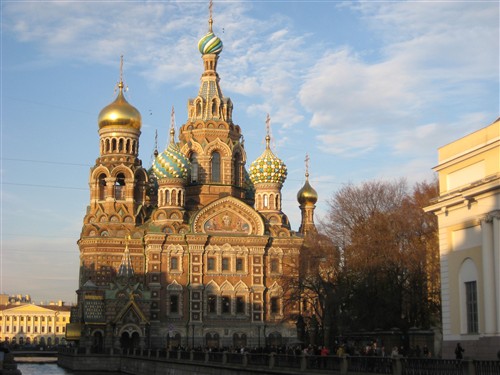
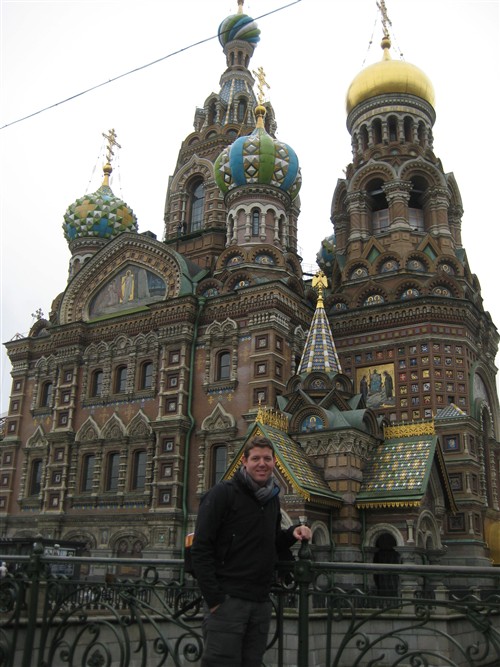 That afternoon, we were headed toward the Church on the Spilled Blood, constructed on the spot where Alexander II, Emperor of Russia, was mortally wounded in 1881. Built from 1883 – 1907, the colorful, onion-domed church contrasts the city’s overwhelmingly baroque style though it manifests the quintessential style of Russian Orthodox churches of the 17th century.
As we turned the corner from Nevsky Prospekt onto the canal street that ran along the church, we spotted a handgun sitting unattended on the outside window sill of a gift shop. We looked around, suspiciously, but no one else seemed to notice it. We certainly were NOT going to touch it! “Welcome to Russia!” we laughed, as we walked on toward the church.
The sun was already setting and a third of the church’s magnificent façade was already cast in shadow so we snapped a few quick pictures outside and then walked around back to the entrance.
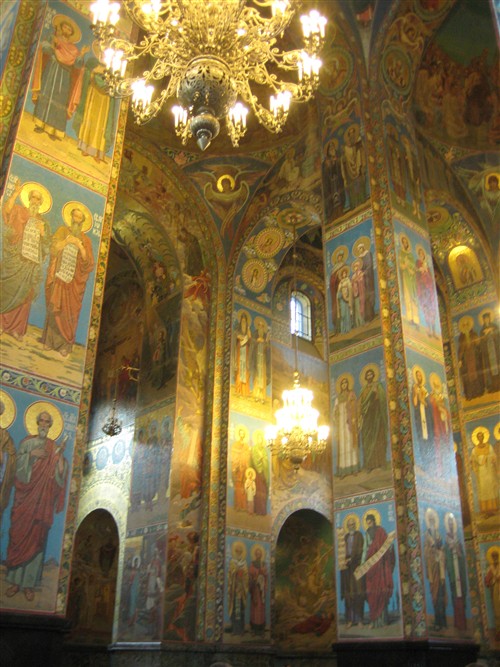 At first glance, the interior walls looked to be covered in soft, golden murals but we soon realized that the medium was mosaic. Scenes from the New Testament in beautiful, bright-colored mosaic ran from the semi-precious stone base to the ceiling, covering every window frame, support beam and arch. The arrangement of the subjects in the mosaics corresponded to the canons of Orthodox iconography. The southern wall portrayed the Nativity and the Baptism of Christ. The northern wall was devoted to scenes of the miracles performed by the Savior. The western wall featured scenes from the Passion. The iconostasis was a masterwork of lace-cut Italian marble. The floor, made from various kinds of Italian marble, was designed to look like a mosaic carpet.
Prior to 1917, the church was used solely for commemoration services for the departed Alexander II. In 1917, it became a regular parish church but, in 1930, it was closed and used for storage. For forty years, this magnificent church was used to store potatoes! Oh, the humanity. Finally, in 1970, restoration work began and the church was opened as a museum in 1997. The Church on the Spilled Blood is truly an awe-inspiring masterpiece and it is unfortunate that a place of such divine beauty is not used for religious services, though, in judging by the admission price, its current use is the more lucrative one.
So far, Russia is every bit as intriguing as we dreamed it would be. With five more nights in Saint Petersburg – the country’s cultural capital – there is just no telling what other discoveries lay in store.
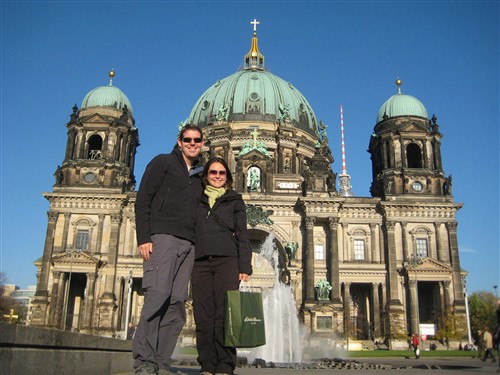
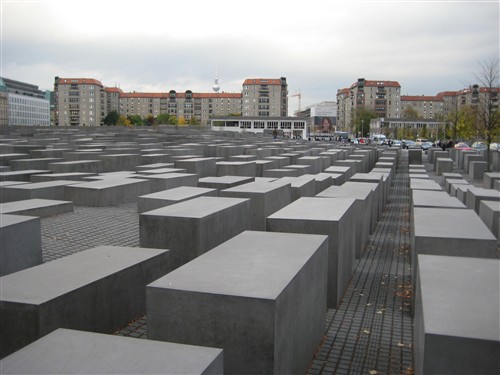 Reloaded, we began at Potsdamer Platz, an area once divided by the Wall and abandoned after WWII; it’s now a model of urban renewal. We strolled along the sidewalks in the shadows of glass-covered skyscrapers and flashy new buildings. The Sunday crowds were out in force, visiting the museums, cinemas, restaurants and bars that now populate the area. Slowly we made our way to Berlin’s Holocaust Memorial, an urban area covered with 2,711 gray concrete stelae, which bore a striking similarity to a cemetery. It was fascinating and poignant memorial for the victims of one of history’s most heinous crimes.
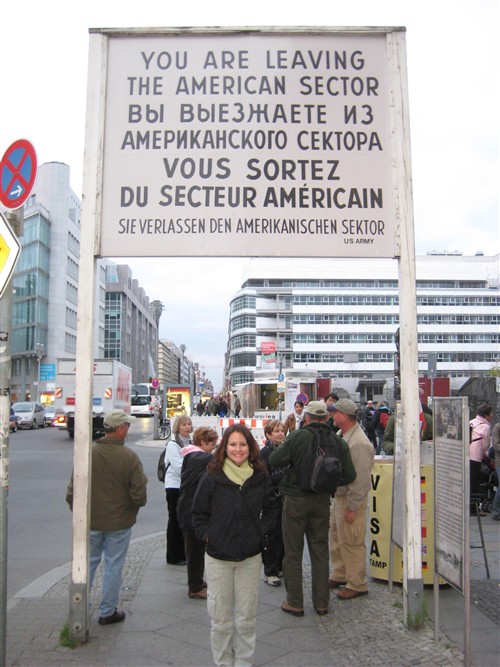 We finally arrived at Checkpoint Charlie, the main gateway through the Berlin Wall for Allies and diplomats between East and West Germany during their tumultuous thirty year separation. Today the “checkpoint” is nothing more than a reconstructed guardhouse, a couple of replica signs, and the requisite tourist shops, but from 1961 to 1989, Checkpoint Charlie was the symbolic centerpiece of the Cold War. A nearby row of billboards provided us with a synopsis of the major events in the global struggle between Communism and Capitalism and the important role played by the two Berlins separated by the Wall. It was an enlightening exhibit and the perfect precursor to our Russian visit.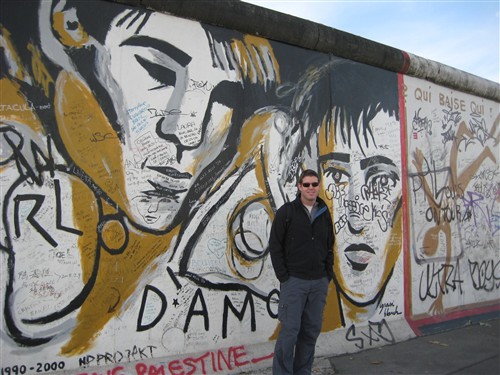
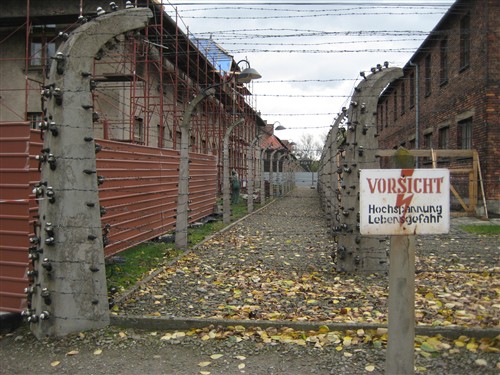
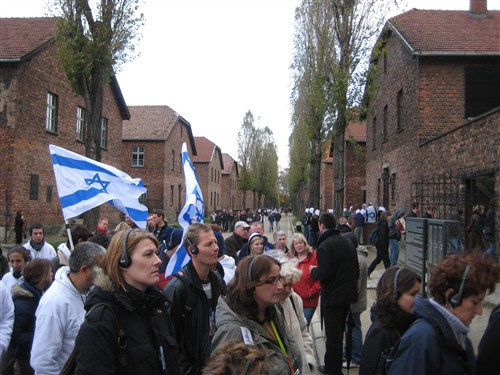 The most noticeable demographic among the tour groups that day were Hebrew-speaking young adults who were draped in and waving Israeli flags. When asked where the majority of visitors come from, our guide answered “America, Britain, and Poland.” It struck me as odd that certain other European countries didn’t top that list.
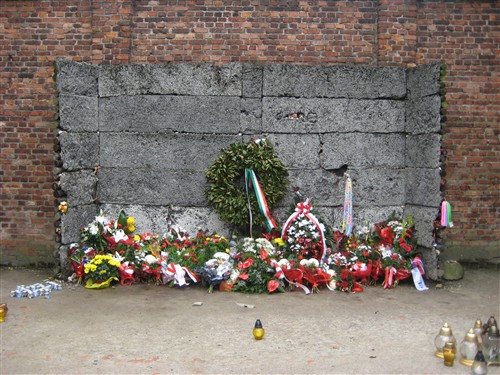 Inside one of the buildings were vast collections of clothes, shoes, spectacles, suitcases, crutches, canes, prosthetic limbs and literally TONS of human hair. The Nazis took everything. They transported the valuables to Germany by the train load. The human hair was used in the textile industry to fashion cloth, nets, and other fabrics. We know this because in their haste to depart, the Nazis left evidence behind. We saw the huge piles of hair and also some samples of cloth and netting that had been made from it.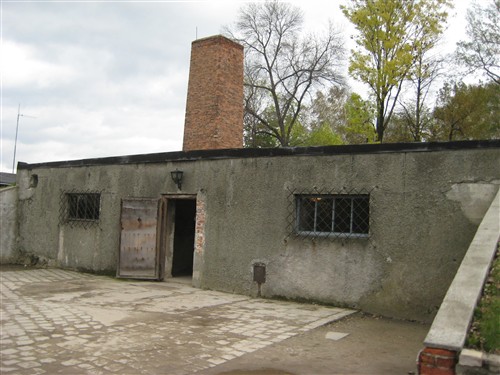
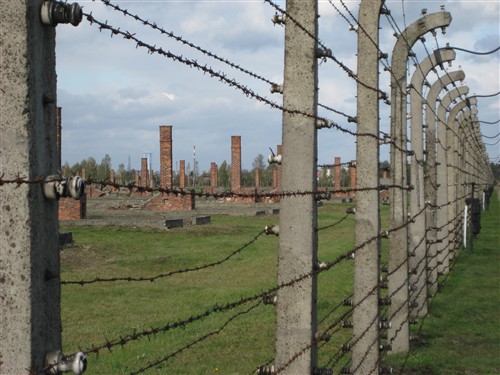
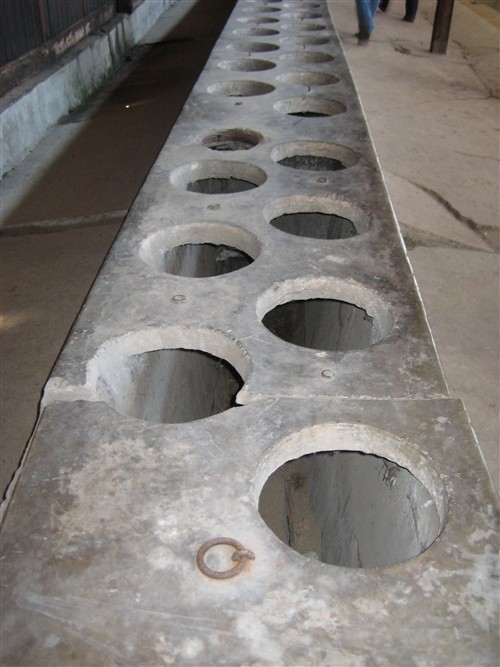 The latrine building was an eye-opener that came with yet another sad story. Inside the rectangular structure, a long trench had been dug down the center. A single long piece of white construction material, with holes cut into it, was laid across low cement blocks on either side of the trench. These were the toilets. According to our guide, every aspect of the prisoners’ existence was strictly controlled by the guards, including their use of the toilet. Prisoners were allowed to use the toilet only twice per day: once in the morning and then once in the evening, after their eleven-hour work shift. There was only a short window of time allowed for the toilet use and the long rows of holes were insufficient for the number of prisoners who needed to use them. Often prisoners would miss one of the two toilet opportunities. Use of toilet without permission was cause for punishment. Sadly, this regimen was actually an improvement over the conditions in the early years of the camp’s existence where prisoners were prohibited from using water to wash themselves.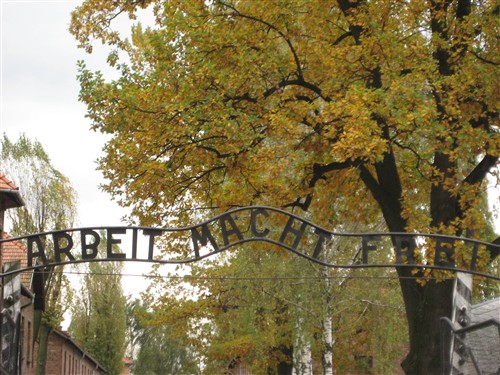
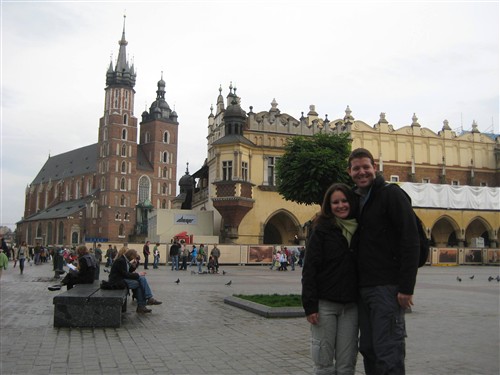
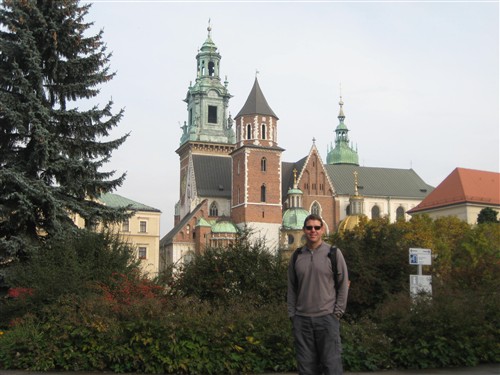 The most remarkable feature of the cathedral was its bell tower which contained the country’s largest bell, made from the melted metal weapons of defeated foreign armies, and weighing in at 11 tons. We climbed the steep wooden staircase to the top of the tower and were rewarded with superb views of the city.
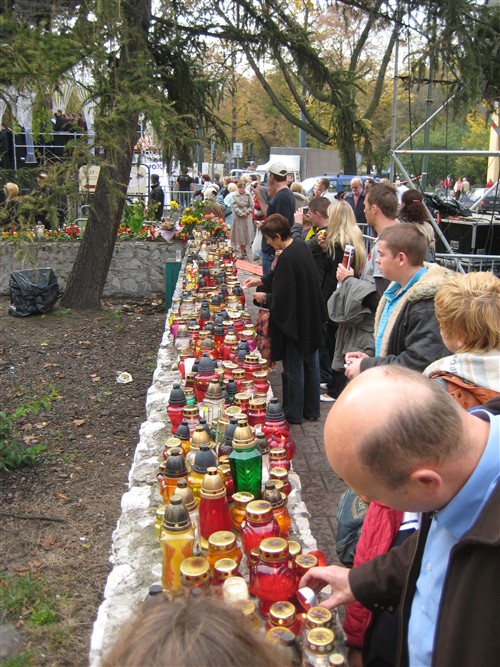 We happened upon a grand celebration during our visit to Krakow – the 30th anniversary of the inauguration of Pope John Paul II. The late pope was Krakow’s most beloved son and his memory is honored throughout the city with banners, statues, and various other monuments. The celebration took place just outside the Franciscan Church – known for its Art Nouveau stained-glass windows. We had heard symphony music from down the block and followed our ears to the church, where a symphony orchestra, complete with vocalists, was entertaining a gathering crowd. Outside the church hung banners of the pope; a big-screen TV played a video medley of his public appearances; and a ledge along the sidewalk was covered with colorful memorial candles. It was a lovely tribute – the reverence of the people shone in their faces. And the stained-glass windows inside the Franciscan Church were magnificent!
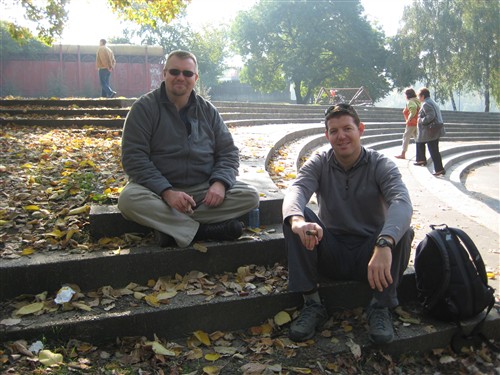 On our first morning, we all purchased three-day unlimited public transport passes and began to explore the city. We began our foray into Budapest culture at Varosliget, the city park in the north of Pest. The vast greenspace enclosed a peaceful lake, a zoo, a children’s circus, an exhibition hall, a fine arts museum and a public bath. We walked under a canopy of autumn trees to a daily flea market that Jennifer had read about. The old saying “One man’s trash is another man’s treasure” was manifest in Varosliget that day as we wandered along row upon row of rummage tables. George and Aaron lost interest almost immediately and disappeared into the park to smoke cigars. The treasures laid out for my perusing pleasure, in addition to the usual used clothes, shoes, books and household items, included jewelry, antiques, kitschy Hungarian handicrafts and knickknacks. Surely there lurked some shiny treasures amid the embroidered linens and ceramic figurines but I didn’t have the patience to dig for them and soon joined the men who had made it as far as the first tree outside the flea market before copping a squat and lighting up.
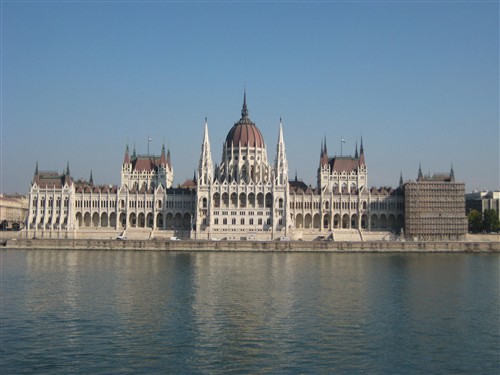
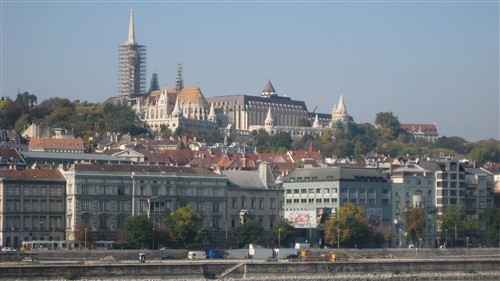
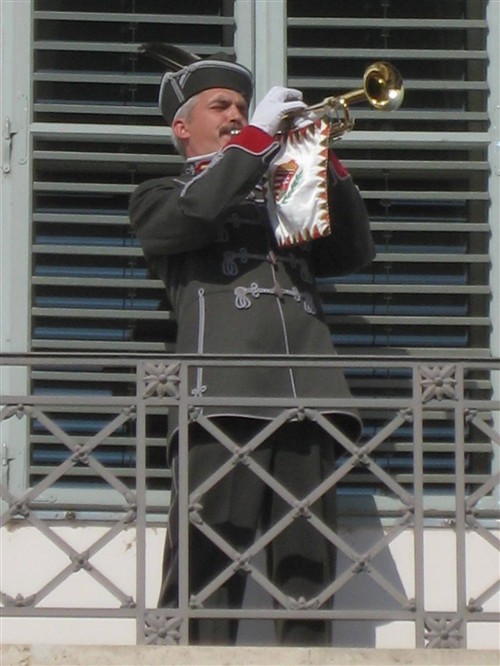 Intrigued by the sleepy hills of Buda, Aaron and I set out the next morning for a closer look. We walked across the Chain Bridge and rode the funicular up to Castle Hill. Too antsy to join the royal palace tour, we joined the crowd to watch the daily changing of the guard, took in the views of Pest from the hill, and then wandered through the old streets. I popped into Matthias Church, known as much for its magnificent interior murals as its kaleidoscopic tiled roof. Our final stop in Buda was the riverbank across from Budapest’s most photographed architectural masterpiece – the Parliament. After Budapest was united in 1873, the design of the House of Parliament was conceived as a symbol of the sovereignty of the nation. With its central dome and Gothic turrets, it stands as boldly on the western embankment of the Danube, its reflection almost pristinely cast on the river’s calm surface.