Posted under Slovakia
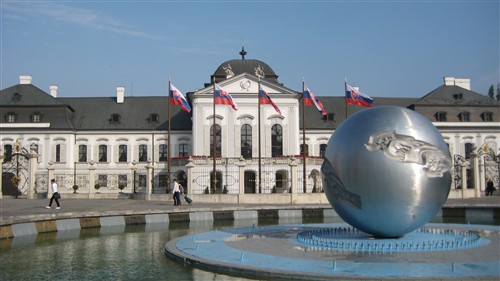
I was the only one of our group who had any desire to see Bratislava, the capital city of Slovakia, and a mere one-hour train ride from Vienna. Part of my motivation was to see a new country (I admit, I’m a closet box-checker), but the other part was my desire to see a city, and country, truly in transition – from Cold War communism to EU membership capitalism. Slovakia is one of the newest European Union member states and is eagerly shedding the remnants of its 45-year communist occupation. Growing up, I was too young to comprehend Reaganomics, the Cold War, or how the world changed when the Berlin Wall fell, but now that I’m older, I’m fascinated by this time in world history. I’m fascinated by Russia. As an ardent capitalist I’m surprised that communism lasted as long as it did. In my lifetime, the balance of power in the world has shifted and I’m eager to learn more.
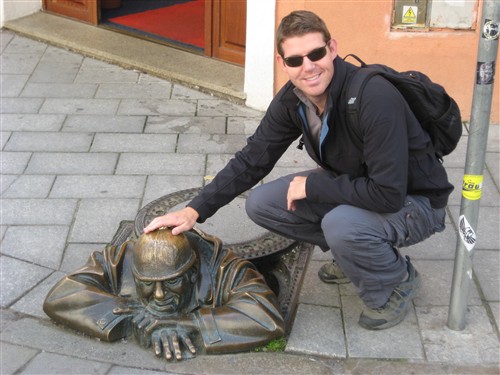 I have traveled alone often for business and occasionally for pleasure, but after more than a year traveling with the perfect partner I had forgotten how different it is to fly solo. After the initial disorientation of arriving in a new city (and at the wrong train station), I found my way onto a local bus that soon deposited me near the historic city center. Bratislava isn’t a top tourist destination and there isn’t a list of “must sees”, so I decided to roam the mazelike alleys and cobblestone roads of the city center to feel Slovakia’s beating heart. The brisk mid-morning air quickened my step and the liberation of being alone was invigorating. I thought, I can do whatever I want. I’m free to explore to my heart’s content. I am the master of my own domain. So I spent the next hour wandering the vibrant historic streets lined with ornate, colorful, old buildings. Street carts peddled souvenirs to crowds of tour groups in the main square and outdoor patio seating crowded even the most generous spaces.
Ready for a change of scenery, I headed up to Bratislava Castle, a 15th century hilltop fortress overlooking the Danube River. The original castle was mostly destroyed by a 19th century fire and reconstructed in the 1950’s; it was inexplicably closed for renovations when I arrived. However the views were impressive and they provided a different perspective on the city. From the 1970’s era “UFO” Bridge spanning the Danube (the bridge literally has a spaceship-like structure at its apex) to the monolithic housing complexes and other communist-era buildings appearing in the distance, the cityscape retained a Cold War feel. But Bratislava’s race toward modernity was also evident; enormous billboards with consumer-enticing advertisements were omnipresent, cloud-piercing cranes stoically erected new modern buildings, and a disproportionate number of German luxury sedans paced the streets. Beneath the autumnal haze, a city was being transformed.
Returning to the city center I now noticed real estate sales offices (with signs in English), internet cafés, art exhibits and a glut of Starbucks-like coffee shops. Notices posted opportunities for foreign investors. I was surrounded by capitalism in a city that not long before was a bastion of communism. As I continued exploring, I noticed two enormous signs, both covering the entire side of their respective buildings, which proclaimed Slovakia’s currency conversion to the Euro in 2009 – a proud achievement for this developing nation.
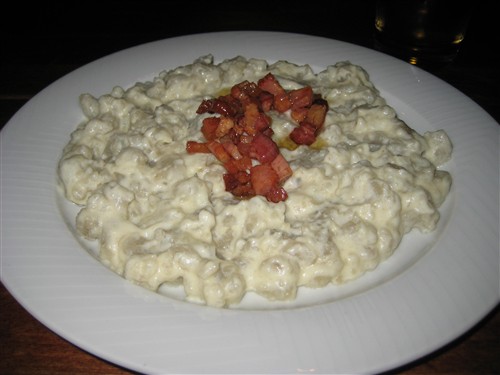 My last stop in Bratislava was at a recommended local restaurant called Prasna Basta. After nearly four hours of walking my feet ached for a rest, and as I opened the heavy wooden door and entered a dimly lit, cavernous room full of locals, I knew I was in for a treat. I came here for one reason – to try Slovakia’s national dish, bryndzove halusky. The gnocchi-like dumplings were topped with a generous serving of creamy sheep’s cheese and sprinkled with bacon bits. Paired with a local Slovak beer, the meal was divinely gluttonous.
With just enough koruna left in my pocket to buy a bus ticket to the main train station, I left the restaurant fat, happy, rejuvenated and ready for the train ride “home”.
My daytrip to Bratislava was a great mini adventure; an empowering confirmation that I can still travel alone, self-sufficient and capable in a foreign country. But I missed sharing the experience with the other half of Team Young – my wife, my wonderful travel partner, and the love of my life. Over the last 14 months, Tina and I have shared so many different experiences. Some have been traumatic and stressful, others have been exhilarating and wonderful, but these experiences are a common bond, a special private pact that will always be uniquely ours. I often take for granted how lucky we are to have each other – two crazy adventurers who quit their jobs, sold everything, and traveled the world. I couldn’t imagine doing this with anyone else. Daydreaming, I often flash forward to a time when we’re old with gray hair and wrinkles, sitting together reminiscing about our trip around the world. And I smile.
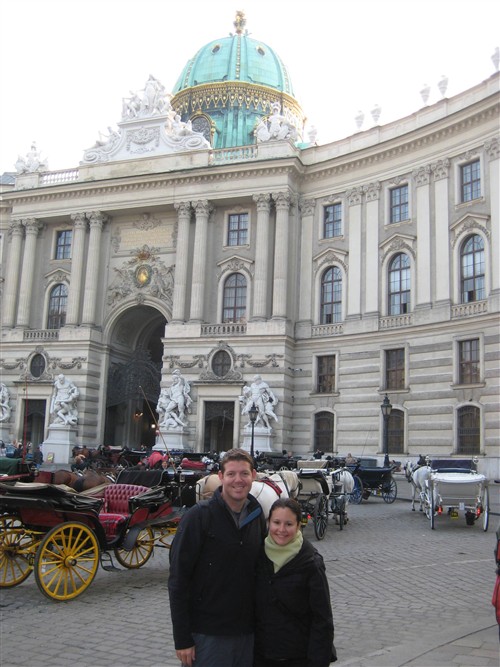 Two days in Vienna began with a comfortable three-hour train ride from Prague, followed by two legs of Viennese public transport. Jennifer had arranged our accommodation at an adorable little flat in a quiet residential area of town and we settled in immediately. It was already mid-afternoon by the time we went out on a walk to have a look around.
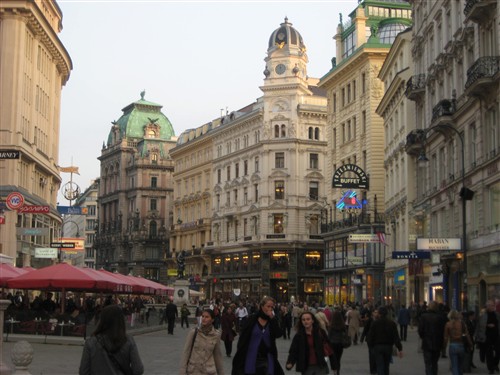 As resident city of the Hapsburg dynasties, which ruled much of Europe from the fifteenth century through the early nineteenth century, Vienna amassed a vast collection of treasures from all over Europe. Today, many of those treasures are displayed in the city’s museums. With so many museums to choose from and only one day, I selected the Belvedere Museum and the Leopold Museum. At the Leopold, I spent hours in the presence of masterpieces by prominent Austrian artists such as Gustav Klimt and Egon Shiele and an impressive special exhibition of German artist Christian Schad. An art museum is the perfect venue for a day alone because it is quiet, there are plenty of stimuli for your right brain, and you can stay as long as you like in front of your favorite paintings. When I had absorbed more culture than my cranium could process, I wandered upstairs to the lovely museum café for a decadent lunch, lingering over tasty curry while giddily taking advantage of the free Wi-Fi.
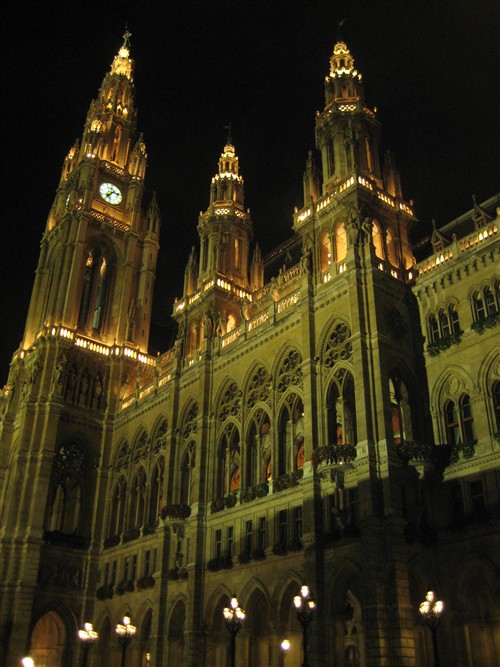 Soon realizing that I didn’t have the stamina for the Belvedere, I sat down on a park bench with my mediocre map to figure out where I was. Glancing up, I happened to spot St. Stephan’s Cathedral in the distance and quickly headed in that direction. The restaurant and retail rue seemed even livelier than before. As I passed one particular sidewalk café, I caught a glimpse of a layered chocolate tart on someone’s plate and, without a second thought, without having to justify the indulgence or cater to anyone else’s desires, I wandered in and sat down at a small table with an excellent view of passersby. I ordered a gargantuan slab of sour cherry strudel and, for the next twenty minutes, relished the near-orgasmic sensation of each mouthful of plump, juicy sour cherries. It was a divine experience and the cherry on top of my blissful day alone in Vienna.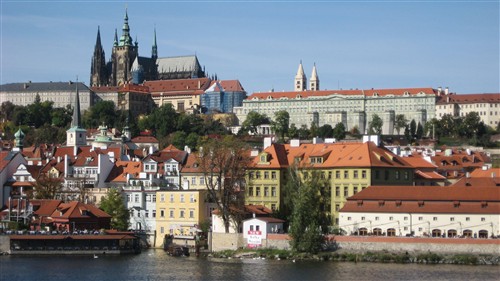
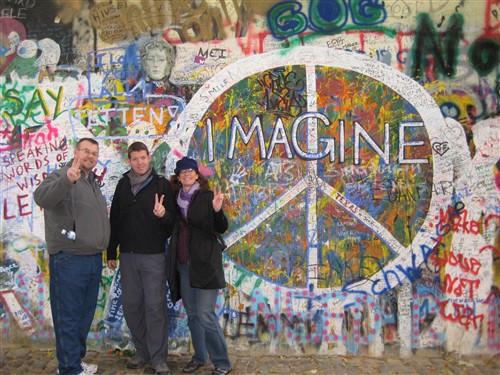 Of course, there are hidden treasures all around the city – a graffiti-covered John Lennon memorial wall, an Italian palace garden with a stalactite wall revealing faces likely conjured by Dante’s Inferno, and obscure modern sculptures by local artist David Cerny – that inspire touristic scavenger hunts, the hidden fruits of which are discoveries of interesting streets, pretty parks, and romantic nooks along the way.
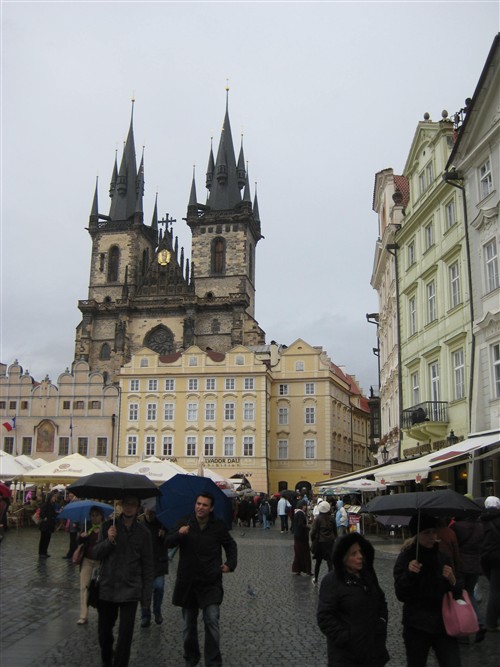 With our cheery traveling companions, George (who graciously hosts our website) and Jennifer, we spent five nights in the historic, romanticized city of Prague. We sampled a smorgasbord of Czech beers – the crisp fall air and cloudy skies always seemed to set the mood for a round – and cautiously dabbled in the local cuisine. Like German and Austrian fare, Czech food is heavy on meats, hearty stews, cheese, cabbage, potatoes, bread and dumplings. Street food in the form of pastries and sausages is omnipresent and cheap.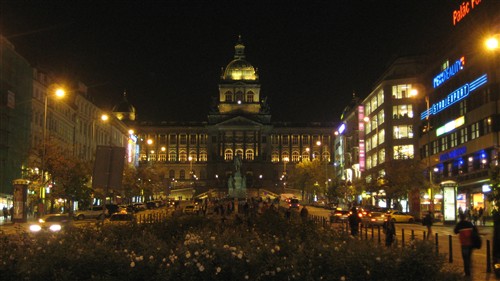

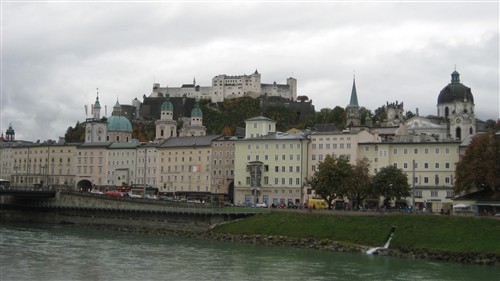
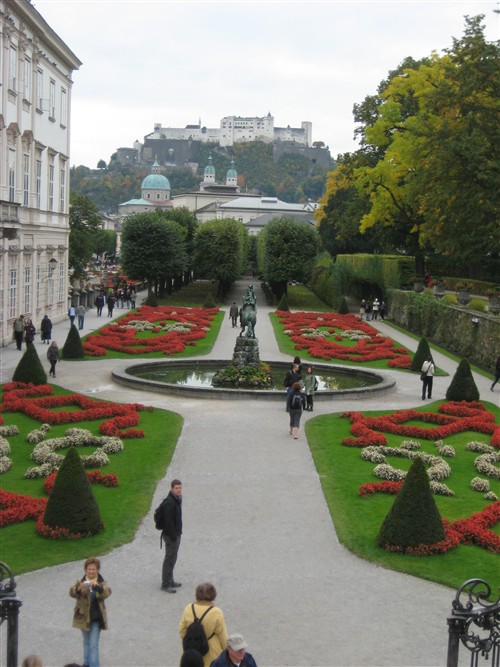 Rain was in the forecast during our brief two-night stay in Salzburg and, while we generally avoid tour groups, this was a perfect example of an exceptional time when joining the herd was advantageous: we had little time, no guide book, and wanted to visit several places that were spread out around the city and in the surrounding countryside.
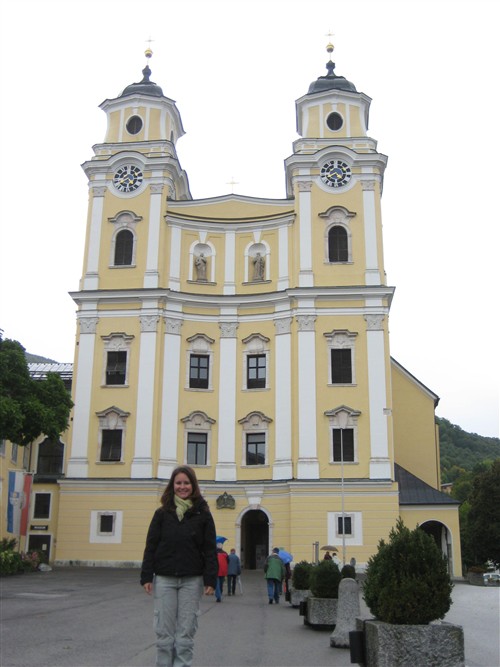 The highlight of our tour was a stop in the charming little town of Mondsee. We visited St. Michael’s Church, where the Von Trapp wedding scene was filmed, and then sat down at a cozy café for some “crisp apple strudel” with hot vanilla sauce. We couldn’t find any schnitzel with noodles. The tour was cheesy but delightful and that first afternoon in Salzburg turned out to be the last good weather before the rains came. We walked around town a bit on our own – admiring the architecture, stopping by Mozart’s house, and browsing the pretty Christmas shops in the old town – but the cold and rain motivated us to spend most of the next day hibernating in our room.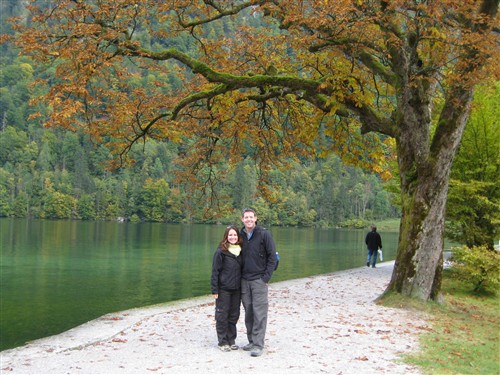
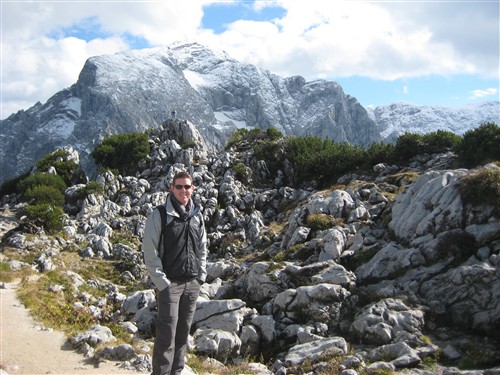 After Oktoberfest, we needed a place to dry out and relax for a few days. Berchtesgaden was only a couple of hours from Munich by train and sounded like the perfect escape from the urban chaos. In Munich, buildings grazed in cement pastures and raucous pedestrians filled the streets. As the train whisked us away, the cityscape gave way to magnificent forest-covered mountains, dusted with the colors of fall. Peaceful alpine villages dotted the sweeping green valleys and cows grazed in wide open spaces. Cheerful guesthouses were covered with flower boxes, each overflowing with bright-colored blooms. Even in the confines of the train, we began to breathe easier.
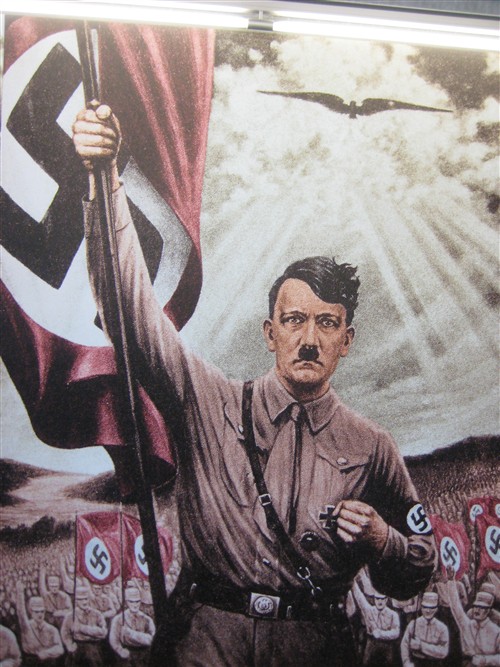 Similar to Yad Vashem, the most interesting part of the presentation at Dokumentation Obersalzberg dealt not with the specific horrific acts perpetrated in the death camps but rather how a deranged maniac like Hitler came to power and influenced a nation toward genocide. The propaganda campaign, conceived and implemented by Dr. Joseph Goebbels, one of Hitler’s most loyal followers, was one of the most ingenious in history. While Yad Vashem approached the propaganda element by highlighting Hitler’s powerful rhetoric and anti-Semitic caricatures, Obersalzberg displayed more photographs of the Führer himself than we have ever seen – posters and other propaganda photos, staged to create and sell an image of Hitler as a man of the people, as a humanitarian, which slowly elevated the depraved lunatic to God-like status in the hearts and minds of his followers. The photos were both fascinating and haunting. I looked into those narrow dark eyes and saw evil but hindsight is twenty-twenty. Would I have seen it then? Would I have been able to see through the propaganda to the madman?
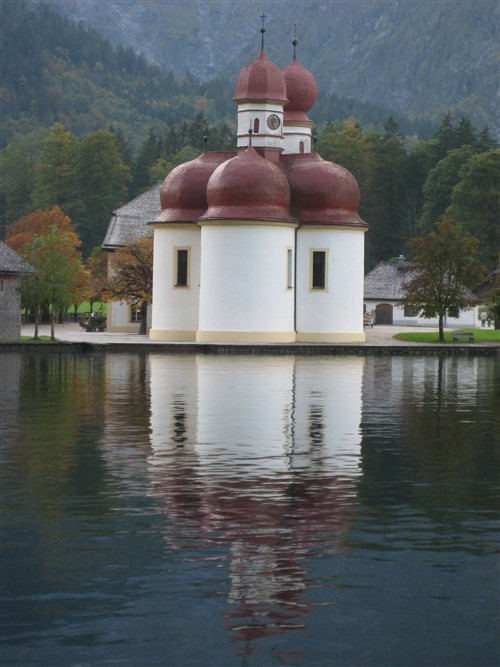 When we spotted St Bartholoma in the distance, we were disappointed to discover that the western mountains had already cast its postcard-perfect view in shadow. As we neared the dock, however, we saw that the soft light created a wintry pall, an ethereal glow, across the lakeshore. Stepping off the boat, we walked among the autumn trees and along the emerald green lake. The chapel doors were open and we found the interior modestly appointed with iconography and a simple altar. The chapel, which is accessible only by long hike or by boat, was quaint and lovely.