We flew from Siem Reap to Vietnam’s capital city of Hanoi in the north, arriving late in the evening and departing early the next morning on a three day trip to Halong Bay. During our scenic three-hour bus ride to Halong City on the northeastern coast, we were entertained by some clever and interesting uses of motorbikes, which are often the sole source of transportation. As mentioned in earlier posts, ducks are an integral part of rice cultivation, eating pests and leaving fertilizer as they waddle through the sopping paddies. From the confines of our minibus, we spotted someone carrying at least two hundred live ducks on a moped. The ducks were tightly packed into two topless crates attached to both sides of the bike, their heads sticking up curiously and quacking all the way. The spillover ducks seemed to be standing on the back of the seat, though they must have been fastened down somehow. Soon we came upon a similar setup of live chickens, only the chickens were tied together by their feet and hanging upside down from a wooden stick. It seemed rather cruel, actually, but I couldn’t help staring until they were out of sight. Aaron’s favorite moped sighting of the day involved a farmer with a gigantic live pig, strapped perpendicularly on the seat, on its back with its little pig hooves flailing in the air. We broke into hysterics over that one and just as we began to settle down, another identical pig setup cruised by. In America we take our big trucks for granted. The Vietnamese endeavor to accomplish similar tasks of transport with inferior equipment, relying on their creativity to get the job done. We have the utmost respect for their determination and ingenuity and thank them for keeping our long bus rides entertaining with such feats of bug-eyed hilarity.
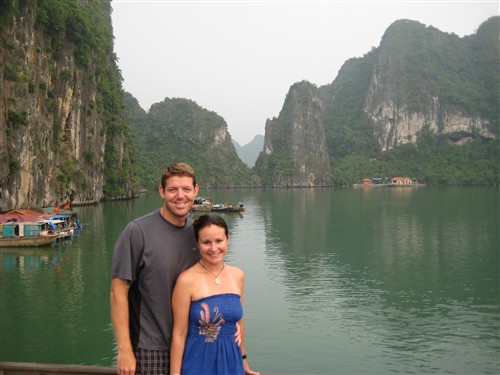
We reached Halong City in pleasant spirits and boarded our junk, a traditional Chinese wooden boat, for the first phase of our adventure. We sat down to a relaxing, family-style lunch as the ship cruised into the bay and began getting acquainted with our shipmates. The sky was thick with hazy mist, which partially obscured the magnificent rock formations jutting out of the emerald water in all directions. After lunch, we settled into our surprisingly comfortable cabins with A/C, private bath and hot water. We cruised around for several hours, admiring many of the bay’s more than two thousand limestone islands from the comfort of our sun deck.
We docked briefly at one island to explore an enormous cave full of stalactites and stalagmites, illuminated with dim, colorful lights to intensify the incredible formations. It was the most amazing cave that I had ever seen; created by thousands of years of ocean waves eroding the island from the inside. The cave was so large that we spent almost an hour inside, exploring its mystical hollows. We exited onto a terrace with an elevated view of ships on the bay that lit up each person’s face as he first beheld it.
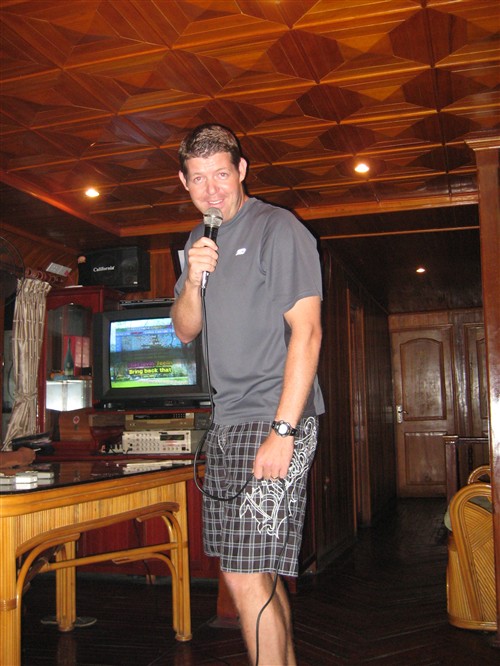 Back on the boat, the rest of the day invited total relaxation. Some people went kayaking while the less ambitious of us lounged on the sun deck and basked in the picturesque tranquility of Halong Bay. It was a wonderfully lazy afternoon. Dinner was served around seven, followed by a raucous evening of karaoke. I must clarify, for the record, that I am not a fan of karaoke. While my mother has the voice of an angel, my tone-deaf attempts at singing anything over and above childish ditties incite cringing unpleasantness. There is a reason that karaoke is always set up in alcoholic venues and, having foregone the alcoholic offerings at dinner, I was adamantly against participating in karaoke, and against karaoke altogether, if the truth be told. But my attitude softened when my little ham serenaded me with “You’ve Lost That Lovin’ Feeling”; the other guys on the ship joined in for the refrain which made everyone laugh. It was downhill from there.
Early the next morning, about half of us boarded a smaller boat to continue the journey while others, who had only booked the one-night adventure, sailed back to port. Our excursion for the second day was a visit to one of the sparsely inhabited islands in the bay. Our small boat docked near a stall with bicycles and motorbikes, on which we could ride around the island for a couple of hours. Aaron and I chose bicycles, each with a basket and a bell, and off we went. Some of our group chose motorbikes and others opted to walk so we were on our own. The road was hilly and winding, eventually opening up to a stunning green valley in the middle of the island. We coasted through fields of rice with grazing water buffaloes and paddy-hat-wearing fieldworkers. A tiny village of simple farmers straddled the road and we waved to the villagers as we passed slowly. There were many baby animals, including puppies, kittens, piglets and chicks. Little boys lazed in a hammock on the front porch of their simple house. The adults walked and rode old bicycles to and fro, attending to their daily tasks. The experience was very authentic and beautiful. The people had clearly seen enough tourists so as not to be shocked by two bell-ringing pale faces cruising through but not enough to take us for walking dollar signs.
Riding leisurely, we eventually reached a small shaded café, where our friends were waiting with refreshments. We stopped to rest a while, cracking open a couple of lukewarm sodas (ice is at a premium in places like this). A family of chickens pecked around outside the café while inside, our guide, Huy, offered us a free sample of Vietnamese moonshine. A popular spirit among locals and daring tourists alike, this Vietnamese specialty, called ruon ran is actually rice wine with a pickled snake marinating in it. This particularly nasty brew, served in a large plastic jar, contained a snake, gecko and a baby bird. It is believed to increase virility in men and cure everything from night blindness to impotence. “Who wants to try?” Huy asked with a mischievous grin, as he removed the lid to give us a closer look at the trifecta of foulness inside.
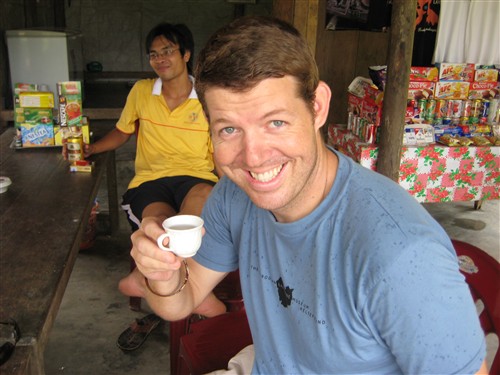 The two Aussies and the Kiwi in our group took little convincing. Aaron teetered for about five seconds, as we continued to inspect the contents, and then not only acquiesced but pressured me to succumb as well. Of course, I wasn’t having any part of it. “Hell no! My body is a shrine. I’m very discriminating about what goes into it,” I snapped, which immediately conjured up flashbacks of all the bad things that I have allowed into my shrine in the past. There was a time in my life when my insatiable appetite for experience dominated over my judgment – when I would probably have been the first to down the snake wine – but those days are long gone. I had the time of my life but now enjoy my current status as living proof that there is rest for the wicked.
Without further delay, Huy poured one cup of snake wine in turn for each of the takers who winced at the thought before pouring it quickly down the hatch. Aaron said that it wasn’t bad – it tasted like saké. One of the Aussie’s reported a bird-like aftertaste, the mere thought of which made me nauseous. Everyone lived to tell the tale.
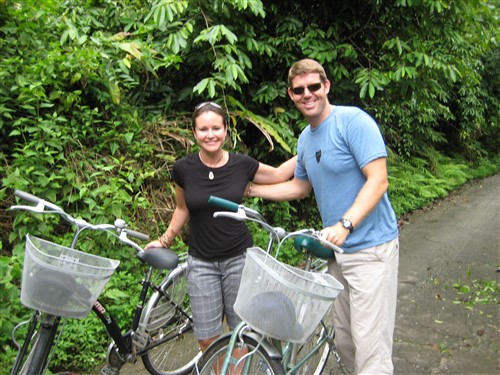 After our rather exciting rest at the café, we took a very brief and mildly pleasant walk into a dense, green national park and then hopped back onto our bikes and headed for the dock. The ride was food for the spirit as we pedaled along, oblivious to time and worldly cares, stopping for photos of the landscape and ringing our bells for the village kiddos. We were happy and light, smiling into the drizzle that broke the heat of the afternoon sun. About a kilometer from the dock, my front tire went flat, probably from all of the potholes on the unsealed road, but it did not deflate my high as my darling husband, ever the gentleman, insisted on walking my bike while I rode the last stretch on his.
Lunch was waiting for us on the boat and, as we dined, the boat cruised toward Cat Ba Island, where we would spend our second night in a hotel. We checked into our room, which was quite luxurious by our standards, and collapsed onto the bed. I flipped on the television, quickly found the movie channels, and refused to leave the room, even for dinner. There was supposedly a nice beach on the island and others from our group met for drinks after dinner but I had fallen victim to the curse of comfort. It sounds backwards, I realize, but we have discussed often throughout our travels how accommodation that is too luxurious and inclusive can be a hindrance to one’s experience. When we are too comfortable in our room, we tend to hibernate inside instead of exploring the culture and landscapes beyond the confines of our hotel. We actually prefer rooms that are just uncomfortable enough to keep us out all day.
Early the next morning, we departed for Halong City, savoring our last hours on the junk. Our Halong Bay cruise was like a mini-vacation. The gentle rocking of the boat lulled us into a happy, contemplative daze as we stared across some of Vietnam’s most spectacular scenery. The excursions were interesting and required minimal physical or mental effort. The meals were all included and we were allotted plenty of free time to socialize or laze about and retreat into our solitary thoughts. We didn’t have a single worry and that, my friends, is what a good vacation makes.
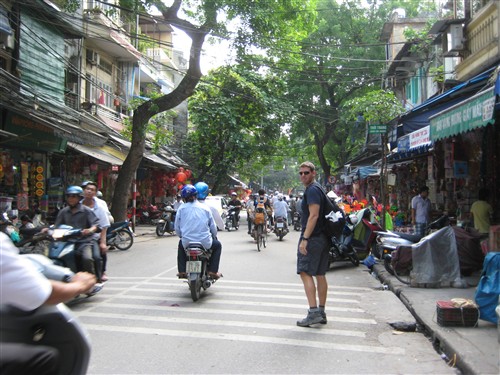 Upon returning to Hanoi from our peaceful cruise on Halong Bay, we had a day-and-a-half to putter around the city before departing once again for Sapa. Our budget hotel was a tall, narrow building in the Old Quarter – a maze of noisy, congested lanes. We spent one full day exploring the area and quickly determined that to be sufficient.
 Begun in the 1960s as an indigenous revolutionary movement, the Khmer Rouge gained significant power in the early 1970s as thousands of people were killed or made refugees by the widespread covert bombing of Cambodia during the Vietnam-American War. After years of brutal conflict, the Khmer Rouge finally ascended to power in 1975, displacing the weak, corrupt Lon Nol government. The majority peasant class jubilantly celebrated this changing of the guard but the master plan was yet to be revealed; the complete transformation of Cambodia into a Maoist, peasant-dominated agrarian cooperative. Within days, the capital city of Phnom Penh and other provincial cities became ghost towns; everyone in the cities was ordered into the countryside and forced into slave labor. “Enemies of the state”, basically anyone the new regime disliked or distrusted, were summarily executed. Cambodia became Democratic Kampuchea, currency was abolished, public services halted, and the year 1975 became Year Zero. Pol Pot, the mastermind and architect of this new government became Prime Minister. Over the next three years, eight months and 21 days the Khmer Rouge regime killed nearly two million people, eliminating nearly twenty five percent of the population.
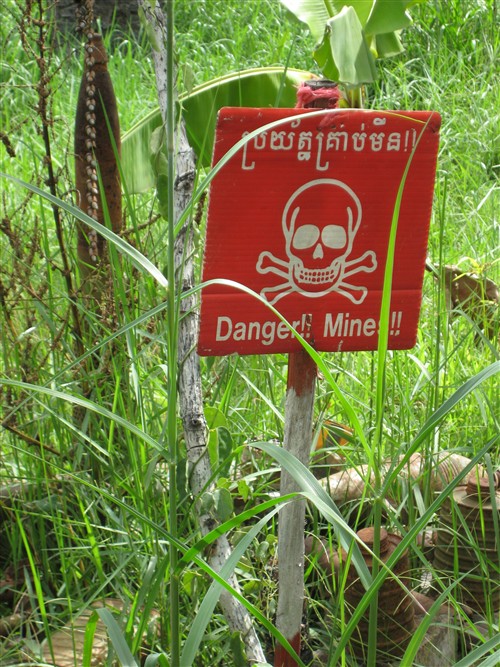
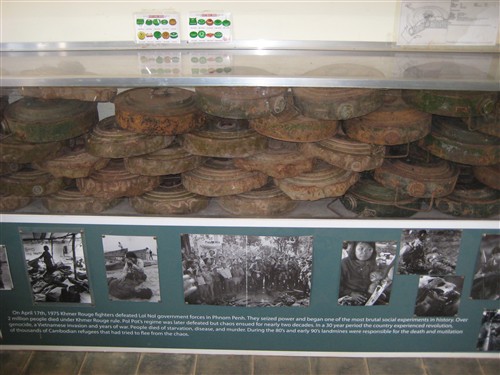 On our second day in Siem Reap, we visited the Cambodian Land Mine Museum, created by former Khmer Rouge soldier, Aki Ra. Aki Ra laid thousands of land mines during the war as a young, naïve recruit of the Khmer Rouge. When he realized later what horrific damage was done by the mines to his own people, he singlehandedly began to organize an extensive mine clearing program. Over the years, he has cleared thousands of land mines and has collected enough war remnants to stock his small but impressive museum.
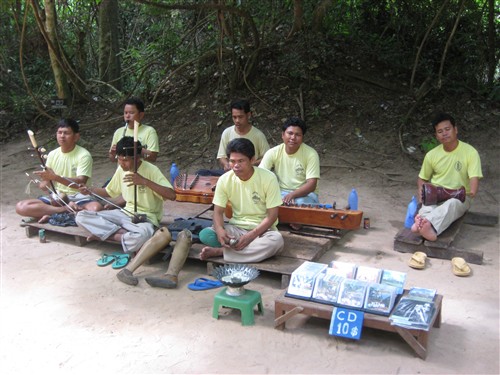 We encountered a startling number of amputees on the streets of Siem Reap. It was heartbreaking to see so many people whose lives were visibly altered by the travesty of war. Much to our surprise, however, the land mine victims did not beg on the streets but rather made honorable attempts to earn a living by selling books and souvenirs on the streets or playing music outside the temples. We were so overwhelmed with respect and admiration for their efforts that we found ourselves buying whatever they were selling. A one-legged man hobbled around the city streets on crutches all day in the hot sun with a small box of books suspended from his neck. Another man with no legs wheeled an arm-powered cart, peddling books and souvenirs. A man who had lost both arms from the elbow down sold beautiful postcard-sized paintings. We didn’t discriminate; we bought it all.
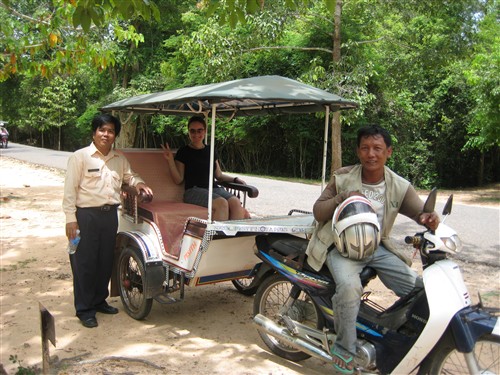 In recent months, our emotions regarding poverty have come full circle. Our sense of compassion, once lost, has returned. It is heart-wrenching to see such desperation – the kind of desperation understood only by those who have known true hunger and the heartbreak of malnourished children – on so many Cambodian faces. In a country with so little economic opportunity, Cambodians simply want to work and provide for their families. Every person with whom we transacted during our brief stay – the little girls who sold bracelets outside the temples; the bookselling amputees; our driver, Pisith, and our guide, Sadith – were overwhelmingly appreciative of our business. We were inspired and humbled by the graciousness and hope of the people. In a war-ravaged country like Cambodia, not so very far from Year Zero, little things truly mean a lot.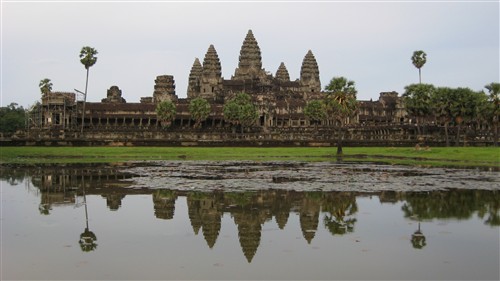
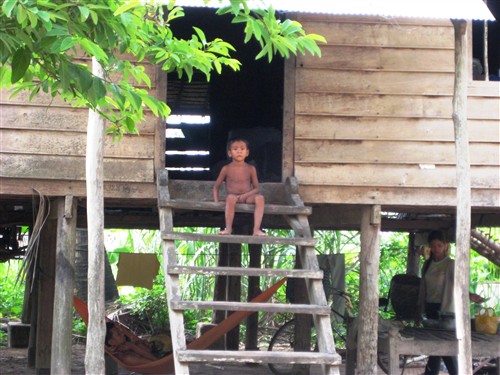 Many homes along the roadside were made of woven leaves and bamboo poles while others were built more solidly of wood or stone; almost all of the were built upon stilts, creating a shaded living area underneath, used for storage, lounging and cooking. The homes separated the main road from a vast expanse of glistening rice fields. Chickens ran wild in the villages. Giant gray water buffaloes grazed the fields and soaked in pools of water collected in the trough-shaped paddies. The youngest children ran around stark naked and many older children had no shoes. Animal-powered carts and bicycles were the most common modes of transportation outside the city. The poverty and the landscape bore a striking resemblance to certain parts of Africa, particularly Mozambique. The distant expressions on the faces of the men and women indicated that survival in Cambodia is a daily struggle.
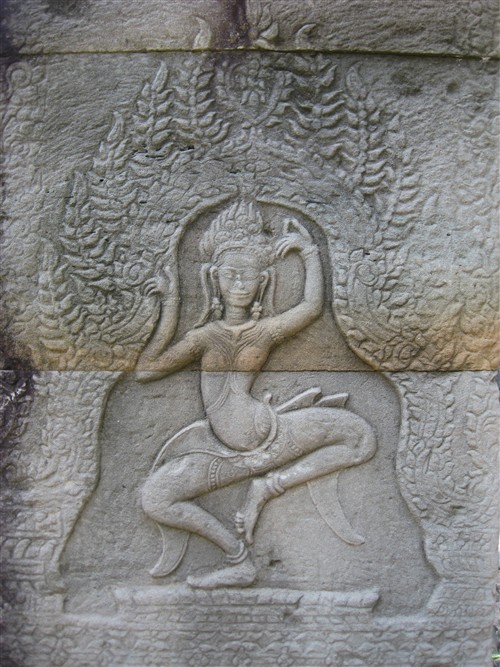 Angkor Wat, meaning temple city, is the flagship of the Temples of Angkor. It is thought to be the largest religious structure in the world. It is surrounded by a moat so wide (190 meters) that I thought it was a river at first glance. As we crossed the moat over the sandstone causeway and walked through the richly decorated stone entrance, the remarkable silhouette of Angkor Wat stood majestically in the distance, its domed towers pointing to the sky. As we approached the central structure, large pools on each side of the main walkway caught the temple’s reflection for a dazzling effect.
 Nearby Ta Prohm was a Buddhist temple dedicated to the mother of Jayavarman VII. It is much less well-preserved than some of the other temples – with piles of rubble from fallen stones – and sits rotting in a greenish pall. The temple was built from large blocks of porous lava rock and sandstone, which are now blackened from acid rain and covered in thin moss. Walking through the corridors, it was fascinating to note that the slanted roof was made constructed by laying the heavy stones in balance with one another; there is no mortar holding them together.
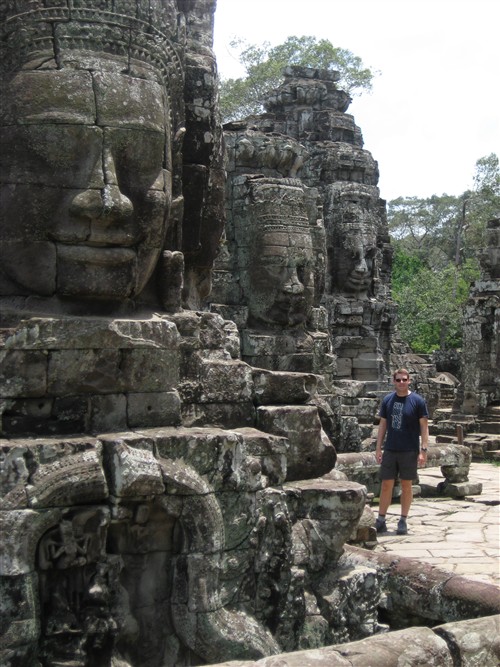 The temple was also built by Jayavarman VII and the faces are said to closely resemble his own. The faces are said to represent the four tenets of Buddhism: love & kindness, compassion, sympathy, equanimity. Even without an understanding of Buddhism, one cannot escape the powerful, disarming sensation of being watched by so many faces at once. It is easy to imagine the awe and intimidation that Bayon once commanded of the masses.
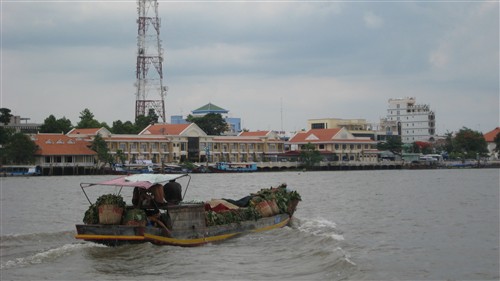
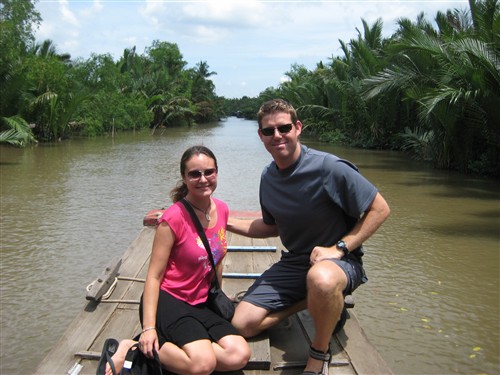 The Mekong River begins in the highlands of Tibet, where the melting snows run down the mountains and flow 4,500 km through China, Myanmar, Laos, Cambodia and Vietnam to the South China Sea. Its delta is one of the world’s largest, producing more than enough rice to feed all of Vietnam as well as fruit, coconut, sugarcane and abundant fish. Indigenous villages of farmers and fisherman are woven into the densely populated network of canals and rivulets. The Mekong River is the lifeblood of this fertile and industrious region.