Warning: Use of undefined constant ‘wppa_setup’ - assumed '‘wppa_setup’' (this will throw an Error in a future version of PHP) in /home/youngs/public_html/wp-content/plugins/wp-photo-album/wppa.php on line 28
Youngs Around the World
January 26th 2008 by Tina
Varanasi

Posted under India

It was far away from anywhere else we wanted to go in India. It would be a long train ride for just a few days stay but we had to go…to see the spectacle of Varanasi for ourselves. Situated along the western bank of the Ganges River, Varanasi is one of India’s oldest and most holy cities. Hindus believe that dying in the sacred city of Shiva offers moksha – breaking of the cycle of reincarnation to rest with God. Tourists flock to Varanasi to witness one of its oldest rituals – the cremation of the dead – which takes place in public at the city’s designated burning ghats along the river’s edge. Varanasi had been described to us as the filthiest city in India and since, in our three weeks in India we had come to observe that Indians treat their beloved motherland like a public toilet, spittoon and gas chamber – making it by far the filthiest, most polluted country we’ve seen thus far – we understood the intensity of that claim and prepared our senses for the ultimate foulness, the bowels of the earth.

Our train arrived more than three hours late – we have come to expect this – and we stepped outside the station and into the madness. We had been toting around an extra bag which held “Big Greenie” as well as an accumulation of bubble pants, trinkets and baubles that we intended to ship home at the earliest opportunity. This additional bag, the biggest, cheapest canvas tote that we could find, was a colossal albatross which incited murmured cursing from whichever of us was encumbered by it at the moment. We had not made any reservations for a place to stay but had a hotel in mind to check out first. We walked into the salivating pack of rickshaw-wallahs and began the intense negotiation.

The drivers outside the bus stations and train stations are always the most cunning and ruthless and that initial negotiation in a new city is always tricky. The traveler’s foremost advantage lies in the sheer number of rickshaws in any given place. When the first guy quotes you some outlandish fare, you can very conspicuously dismiss him and move on to the next as a show that you are too insulted to haggle with him. This signals to the others that this isn’t your first day in India. The guide book usually provides a standard rickshaw fare, as a point of reference, but that fare does not account for the “fatigue premium”, which inevitably works to the advantage of the drivers. They see you weighted down by your four bags and they know that you’ve just arrived, weary and dulled, on an overnight train. You know and they know that the fair price is thirty rupees; the impatience on your face – impossible to conceal behind exhausted eyes – tells them you’ll pay fifty (a difference of less than $1 to you but a world of difference to them) and you acquiesce, relieved to have ended the energy-sucking banter, the charade of principle over practicality.

And so we found ourselves and our baggage stuffed into the back of a rickshaw, racing through the polluted streets of Varanasi, our immediate fate in the hands of an ornery, sour-faced driver. After trying in vain to steer us to another hotel – where undoubtedly a fat commission awaited him – he finally stopped the rickshaw on the edge of the galis, a maze of alleyways which are too narrow for traffic. We adamantly refused to let him guide us to the hotel, knowing full well that the price quoted for the room would be drastically inflated to cover his commission. He made a general hateful remark about tourists and demanded his money, which we happily paid just to be rid of him.

Strapped once again with our heavy load, we entered the galis. The narrow lanes between the centuries-old stone buildings were putrid and foul-smelling and littered with trash and feces. The maze was dizzying and even Aaron’s natural compass was ineffective in finding the way. We asked directions a few times and no less than five different people assured us that the hotel we sought, Hotel Alka, was full, definitely full. We persevered, bearing our load like stubborn mules and cursing all the while. “Are we in Hell?” I asked, after about twenty solid minutes of navigating through the fecal landmines like a slalom course. It was a test of strength, both mental and physical. Finally, a young boy spryly showed us the way through what seemed like another ten minutes of maddening twists and turns. The hotel had a room for us and, as he waited patiently in the lobby for his commission from the proprietor, I slipped him a little something extra for appearing at that precise moment when I was about to drop my bags in a pile of cow shit and declare defeat. Timing is everything.

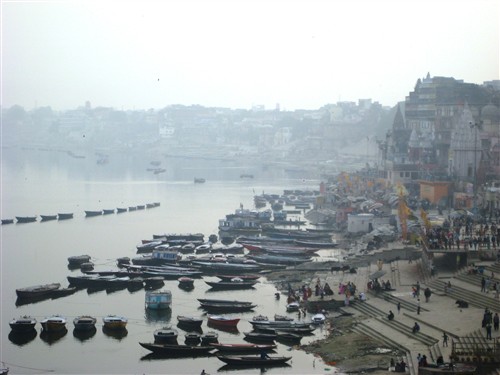
The hotel room was basic but fine; our room opened to a lovely terrace restaurant overlooking the ghats on the riverbank. Hindus consider the Ganges to be a holy river and tens of thousands of pilgrims come to Varanasi every year to bathe in its spiritual healing waters. The seven kilometer stretch of river that runs from the northernmost Raj Ghat to the southernmost Nagwa Ghat seems not to flow at all but rather to maintain a quiet stillness on its surface. In the same stretch of water where people bathe, swim and wash their clothes and dishes, thirty large sewers continually discharge into the river; corpses are soaked and washed before being laid upon the funeral pyre; the burned bones of the dead are pulled from the piles of ash with giant tongs and placed into the water. “The Ganges River is so heavily polluted at Varanasi that the water is septic – no dissolved oxygen exists. The statistics get worse. Samples from the river show the water has 1.5 million faecal coliform bacteria per 100 mL of water. In water that is safe for bathing, this figure should be less than 500!” (Lonely Planet, India, 2005).
The ghats were full of activity and, although we were tired from our long journey and subsequent stress, our curiosity got the better of us and we went out for a stroll. Walking north from the Meer Ghat, where our hotel was located, we almost startlingly stumbled onto the most esteemed cremation ghat, called Manikarnika Ghat. We approached carefully, uncertain of the protocol for spectators and of our initial reaction to the sight of a burning corpse. Visitors are welcome to witness the ritual cremations but photography is strictly prohibited. The scene is vivid in my memory…

On the edge of the riverbank, many groups of men stand around, some attending to one or another of the six funeral pyres burning simultaneously while others engage in casual discourse or simply watch the spectacle. The upper stairs of the ghats are lined with observers – tourists and locals – who are all entranced in the ritual unfolding before their eyes. Young children meekly work their way through the mesmerized crowd, selling cups of hot chai. A new pyre is being built. Lean, sinewy laborers, with the grave faces of outcasts who are resigned to their fate, carry thick pieces of wood from a pile near the river up the many steps of the ghat to a grand scale at the top. Many of the logs appear to weigh twice the body weight of the man but the laborers balance them on their heads as they slowly, carefully ascend the steps again and again. Their bodies tremble and they stagger under the heavy burden, assisting one another in the final steps. The weight of the wood used to build the funeral pyre determines the price of the cremation.

At the sight of the pyre, two large, sturdy logs are placed parallel to one another on the ground, about three feet apart. Next, many logs are placed on top of the base, perpendicular to the first two, until the pile is about waist high. There is skill in determining the minimum amount of wood needed to fully incinerate a body. Meanwhile, the body is carried through the Old City on a bamboo stretcher, swathed in red, pink and orange cloth with gold leaf appliqué and adorned with garlands of bright orange flowers. The body is brought down the steps of the ghat and the stretcher is placed in the shallow river, submerging the body almost completely while men splash water over the top. The soaked body is then lifted from the stretcher and placed onto the pyre. More logs are placed on top. A man wearing only a white cloth gathered around his pelvic area leads a brief procession around the pyre, holding the burning kindling, which resembles a long, thick bunch of reeds or palm fronds. Finally, the burning kindling is placed under the pyre as the crowd watches in silence, waiting for the flames. The many fires burning at once are all in differing stages, some exposing heads and feet at the ends. Paralyzed by an eerie, morbid fascination, we cannot move or look away. Another man removes remnants of burned bone from the piles of ash and gently places them into the river. Packs of stray dogs attempt to scrounge through the remnants and are beaten away with sticks and rocks. Bodies are continually carried down and the ritual is repeated, over and over, day after day. A local onlooker boasted that three hundred bodies are burned each day at the ghat.

As we stood on the steps of the ghat, watching the astonishing scene play out, I was overcome by the sensation that this surreal vision was a scene from an Oliver Stone movie. If the smell of fire didn’t infiltrate my nose, even through the cover of my scarf; if the haze of ash didn’t burn my eyes, I would have sworn that it was a dream. Having witnessed the spectacle with my own two eyes, my mind paints an exaggerated picture of raging bonfires against a black night sky, tribal drums and brightly-clad dancers, stomping out the beats of my heart in a hypnotic rhythm. While the actual vision possessed the same intensity, it was somehow less ceremonious, less emotional than I’d expected. No women participated in the cremations and not a tear was detected on the cheeks of men. Perhaps it is because of the moksha; because Hindus consider it an honor to die in Varanasi and escape the cycle of rebirth.

Ironically, in the midst of so many blazing fires, I found the matter-of-factness, the assembly-line repetition, the business aspect of the cremations somewhat chilling but I know that to be due in part to my Greek Orthodox upbringing where funerals are met with guttural sobbing and rivers of tears. In my life, I have lost only one person to whom my heart strings were tied so tightly that I never thought I could bear the pain of losing her. Even now, the slightest thought of her and how much I miss her chokes me with tears and bittersweet sorrow because I believe that her soul is in Heaven. While I hold firmly to my beliefs, I find myself uncontrollably fascinated by the way other cultures and religions regard death. I must admit that I get lost in translation when it comes to Hinduism. The multiple deities, the cartoon-like idols with both superhuman and animal features, little altars everywhere, holy cows, arranged marriages, the caste system and the notion of reincarnation are enough to send me spinning but also to intrigue me to learn more. Hinduism, a faith that binds over 80% of India’s population and allows it to live in relative peace despite rampant overcrowding, toxic levels of air pollution and stark poverty, deserves a more thorough study.

Beyond the ghats and behind the galis of the Old City of Varanasi lies a throbbing, pulsating city. The streets are congested with traffic yet only about one in twenty-five vehicles has a motor and most of those are motorcycles; bicycles and bicycle rickshaws fight for position on the chaotic roads and roundabouts. Varanasi is known for its silk, particularly its tailor-made silk saris, and the streets are lined with sari shops; stacked from floor-to-ceiling with vibrant bolts of fine silks, their mannequins donning the most exquisite ensembles that I have seen anywhere in India. But the madness of the bazaar with its noisy traffic, endless touts, beckoning merchants, dizzying whirl of colors and the deafening machine gun rattle of enormous power generators drove me to the brink of insanity and we actually sought solace in the quiet filth of the Old City.

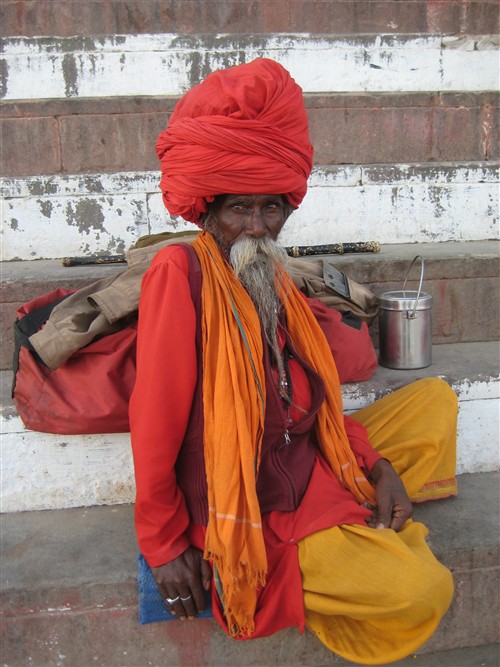
We spent the majority of our time in Varanasi wandering up and down the ghats. There was always activity – so much life unfolds on the banks of the Ganges. The holiest sites always seem to draw the most colorful, eccentric mix of people. On the ghats, we saw all of the usual able-bodied beggars and their ragged children, other children set to work at tender ages, and the brightly-clad, face-painted babas, or self-appointed holy men who sit on the steps with their shiny collection buckets, always ready to accept rupees for a photo or sliver of imparted wisdom from the many dreadlocked soul-searchers and journeymen who seek them out. There are families and businessmen, operating shops that have been passed down through generations. Young boys fly kites and play cricket on the ghat steps. Men pray or meditate by the river’s edge. Cows, goats, stray dogs and monkeys roam the ghats, scrounging through trash and living in harmony with the people and with each other. There is an intimacy about Varanasi; a sense that everyone knows each other, protects each other, and that unbreakable familial alliances have been formed and cultivated through generations of arranged marriages. Happiness and heartbreak permeate the dense, ashy air and there is a comfortable certainty in the practice of age-old traditions.

There is a flame at the top of Manikarnika Ghat – used to light every funeral pyre – that is said to have been burning continuously for two thousand years. In only three days of observation, I cannot begin or pretend to comprehend the spiritual power of this place. Its mysteries remain just that. Our brief experience in Varanasi – saturated with death and spirituality – naturally invokes thoughts of life; so precious and wonderful and painfully brief. The more we see of this world, the more we realize how much there is to see and to know and how few waking hours we are granted to absorb it all. In our current realm of no work and all play, we have many opportunities to reflect on the blessings in our lives. So many nights we spend lying in some grungy hostel bed, overflowing with love and humble gratitude for the good fortune of health and happiness and the ability to continue this grand adventure. In these tender moments, we are afraid to pinch ourselves – afraid we might wake too soon from this incredible dream.
2 Comments

January 20th 2008 by Aaron & Tina
The Taj

Posted under India


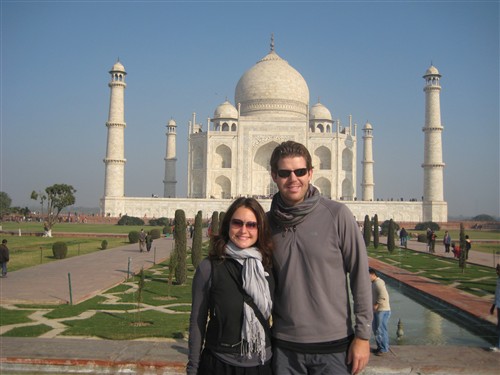
Spectacular! The Taj Mahal is even more beautiful in person than I imagined in my mind’s eye given the dozens of photographs that I’ve seen in my lifetime. We entered at the East Gate and approached from the front, through the lush landscaped mall. Beaming in all of its majestic greatness, the Taj Mahal is a mausoleum. Built by Emperor Shah Jahan as a memorial for his second wife, Mumtaz Mahal, who died giving birth to their fourteenth child in 1631, the white marble monument is breathtaking. The Taj was finished in 1653 after more than twenty years and the labor of 20,000 people from India, Central Asia and Europe. The exquisitely carved marble screens inside with thousands of inlaid semiprecious stones, and pietra dura (marble inlay work) combine to create a stunning masterpiece. We spent several hours exploring the spacious grounds, walking around the ornamental gardens with perfectly symmetrical pools and fountains, viewing the false cenotaphs of the Shah and his wife below the main dome (the remains are kept in a private room which cannot be viewed), and trying to avoid the enormous groups of Indian and Asian tourists moving about en masse. The Taj is meticulously cared for. It sits on a high marble platform on the bank of a low river. The aesthetic beauty and architectural genius of the Taj easily qualify it as a world wonder but, in our minds, the love story behind its creation is its most awe-inspiring feature. Knowing the story, you cannot gaze upon this significant artistic and architectural feat without actually feeling the emperor’s pain over the loss of his greatest love.

3 Comments

January 19th 2008 by Tina
Indian Good Luck, a Camel Safari and Magic Cookies

Posted under India

We arrived in the evening to Jaisalmer after a six-hour bus ride and were pleasantly surprised to find a young boy holding our hotel’s sign and a card with our names on it. The boy helped us into a rickshaw and rode with us to the entrance to the fort. The fort in Jaisalmer is unique to the other forts in Rajasthan in that there is a fully functioning old city inside the walls. From the fort entrance, we walked through a maze of narrow alleyways, barely wide enough for a single motorcycle, and lined with shops, restaurants and guest houses. The streets are filled with shop owners, tourists, children, dogs, and cows and accordingly dotted with cow pies like a mine field. When Aaron unwittingly stepped on a steaming pile of poo, one of the shop owners laughed and told us that it was Indian good luck.

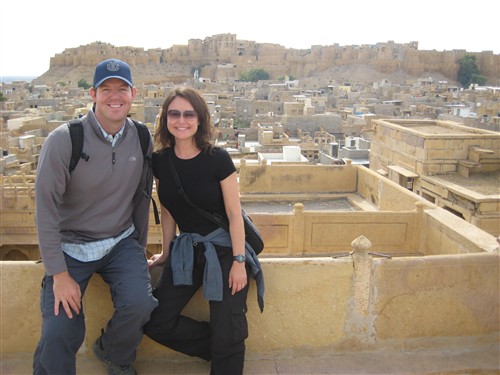
We checked into the Ganesh Guest House, which had been recommended by some travelers in our cooking class, and settled in for the night. The next morning, we booked a camel safari – Jaisalmer’s token tourist adventure – for the following day. That left us with a beautiful sunny day to explore the 350-year-old sandstone city. After a mediocre Italian lunch, our first attempt to stray from Indian fare, we hired a rickshaw to take us to Patwa-ki-haveli, an extravagant haveli built between 1800-1860 by five Jain brothers who were involved in the lucrative opium trade of Jaisalmer’s early days. We’ve seen, by now, scores of havelis (traditional Indian residences) but this one was particularly impressive due to the intricate details used in carving the sandstone façade and courtyard walls into delicate golden lace patterns. We wove through a series of corridors; dark, narrow stairways (full of sleeping bats!); tranquil courtyards and rooms that had clearly been beautiful once with ornate artwork on the walls and ceilings but have not been well-preserved. The beautiful ceilings – originally made of wood – have peeled and eroded quite substantially but one can still imagine their former opulence. The rooftop afforded us spectacular views of the elevated fort and the surrounding golden city below. Afterwards, we were offered a tour of a family’s private Jain temple inside a haveli next door. As we entered, a pigeon flew inside the door; the sound of its fluttering wings overhead causing me to shriek and cower. “No problem, Madame,” said the man inside, “it is Indian good luck!”

After the haveli tour, we ventured back into the fort for a leisurely and fruitful day of shopping. All of the shopkeepers have brilliant displays of their colorful wares hanging on all of the alley walls and doorways. The merchant in every shop, be it textiles, miniature paintings, massage, henna paint, internet services or refreshments, sits outside his shop each day with a welcoming smile, inviting you inside for a look. At times, this phenomenon can be overwhelming, especially when you sense the desperation in their voices, but I have decided that it is ultimately personal and endearing. You begin to feel like royalty as you walk through the streets while beautiful items are presented for your pleasure and approval. All of the people that we interacted with in Jaisalmer seemed kind and genuine. The remote desert city in western Rajasthan thrives solely on the tourism industry and, according to several beautiful, salt-of-the-Earth shop owners whom we spoke to, business has slowed quite a bit over the last couple of years; you can really see the worry in their faces and hear it in their voices. They seem like such nice people so we don’t regret going a little overboard with our purchases.

My love of bubble pants, also called Ali Baba pants by the locals, has not subsided and Jaisalmer was the bubble pant utopia. They were everywhere; calling to me from display wires and racks. I acquired another eight pairs from all over the city! Aaron’s affinity is for tailor-made garments – Asia is definitely his cup of tea – and he commissioned two pairs of pajama pants in the softest cotton. After our long, enjoyable day of retail indulgence, we walked through the main bazaar outside the fort to a rooftop restaurant called Saffron. On the way, we stopped at a street vendor to sample a fried snack called vegetable pakora. It is a mix of chickpea batter, hot peppers and vegetables spooned into dumplings and then deep fried and sold by weight in a page of newsprint. We had seen it several times in India and Aaron was dying to try it. He definitely has the more adventurous palate when it comes to fried street food and sickening sweet Asian pastries. Saffron was dimly lit and creatively decorated with an interesting mix of antique and trendy accents…a very eclectic ambience. Dinner was excellent and we hurried back to the hotel to rest up for our grand adventure – the camel safari!

To preface the upcoming account, I would like to establish that, one, we have ridden camels once before and both agreed that it was a box to check and an experience likely not to be repeated; two, we’ve been camping once before on this trip – it was both dramatic and slightly traumatic, which naturally led me to the conclusion that we wouldn’t go down that road again. However, several events and epiphanies which have transpired between then and now have inspired me to embrace my elusive granola persona and further test the limits of my tolerance for grunge, germs and simple, natural living. I’m proud to report that I’ve come a long way on that spectrum in recent months and when my husband sheepishly inquired about my willingness to endure a full day of riding on a camel in remote stretches of desert and sleeping totally exposed on a sand dune, I dared to affirm.

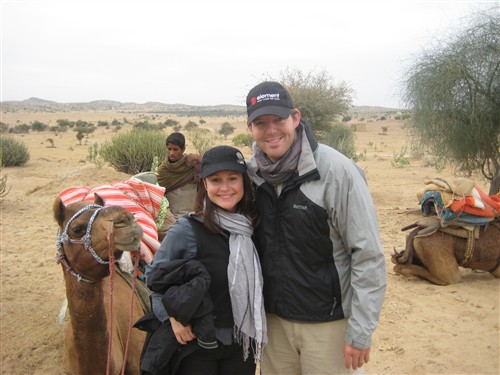
On the morning that began our safari, we woke early, checked out of our hotel, stowed our packs – now literally overflowing with bubble pants – in the hotel’s locked storage room, and walked to the travel office, just a few minutes away. The day’s safari-goers all met for breakfast on the rooftop of the travel office and secured last-minute safari provisions before heading to the fort entrance where Jeeps were waiting to whisk us away to the desert. We had happily rejoined a couple from our cooking class, Matthew and Carla who, as fate would have it, were also booked on the same departing train the following afternoon. The Jeep dropped us off at a remote spot, about forty-five minutes outside of town. The camels were already saddled with blankets and provisions and were resting at ease. With several different groups coordinating simultaneously, it took about an hour of standing around before we were on our way. In the meantime, the camels entertained with their repertoire of grunts, yawns, tongue tricks, pellet piles and unabashed power farts.

Our caravan consisted of Matthew, Carla, four South Korean students and a band of guides who expertly attended to every detail of our comfort. The day began with two hours of slow camel trekking through the Great Thar Desert. The terrain was brushy with hearty breeds of goats and sheep grazing on prickly cactus arms. Only about ten minutes into our two-hour morning stretch, we stopped outside a village of small, decrepit dwellings. The guide described it as a village of Untouchables. India has lived by the caste system of determining social status for generations. The Hindus believe that people are born into one of several castes which broadly equate to priests, nobles and commoners. A person cannot change castes in a human lifetime but living a moral life increases his chances of being born into a higher caste in the next life. Caste determines such things as the type of jobs one can hold, level of education, and marriage prospects. Untouchables are considered to be below the lowest caste.
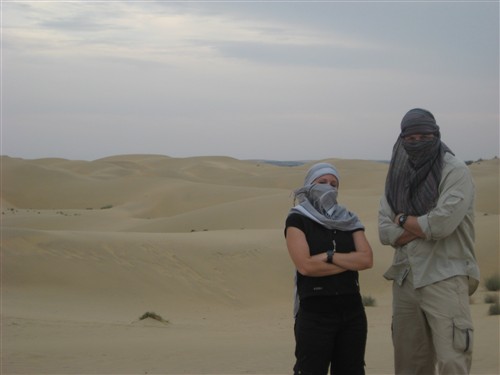
As we dismounted and mentally prepared ourselves for the familiar awkwardness of being thrust into extreme poverty in a tastelessly clichéd manner, the guide warned us to “be careful with the village children” who are sadly accustomed to groups of “rich, white tourists” parading through the village like Santa Clause, their pockets bulging with candy and rupees to naively bestow on the conditioned beggars. We were almost immediately swarmed by the wretched-looking children, covered in filth from greasy, inquisitive little heads to blackened toes. We were invited inside one of the homes by an adult couple for a brief informal tour. Before I realized what was happening, the woman stuck her thumb between my eyebrows, affixing an unsolicited bindi and subsequently demanding rupees. The couple seemed humble and gracious so I handed the woman a ten (about 25 cents) and made a beeline toward the camels with Aaron close behind. We have been exposed to several similar opportunities for “cultural enlightenment”, usually as part of a packaged tour, and each encounter has left us disenchanted. They might as well just put a sign on the front of each village saying “Welcome to the extreme poverty circus. Please take as many photos as you like and feel obliged to deposit cash on your way out. Thanks. Come again.”

The remainder of our morning ride was pleasant and we reached the site of our lunch break and mid-day siesta just as the early symptoms of saddle-soreness were beginning to manifest. The team of guides quickly relieved the camels of their heavy burdens and hobbled them by tying their two front legs together with rope and leaving a short length in between, which allowed them to walk freely without going too far. Once the camels had been attended, the guides set about cooking lunch while the riders relaxed on tarps under a shady tree. They swiftly chopped vegetables while whipping up a steaming batch of chai tea. After that, the diced vegetables were transformed into a deliciously spicy pakora appetizer, followed by deep fried vegetable chips and curried vegetables with fresh made chapati. It was a simple and satisfying meal and, afterwards, we watched in amazement as pots, pans and plates were washed by filling them with desert sand, rubbing it around for a long while, dumping it out and wiping them “clean”. In a logical world, this sight would be quite disturbing; however, when considering that the hands that lovingly prepared the meal you just ate have recently touched every conceivable part of a camel and were only rinsed with water, if even that, before handling food, then the “Desert Palmolive” notion starts to seem like a small thing.

After the break, we mounted our camels once again and continued our journey to the campsite with the guides walking cheerily alongside the camel caravan. The campsite was on the edge of barren, rolling sand dunes and, as the guides set up camp, we raced up the dunes like child explorers. We jumped around, took silly pictures, made sand angels and a rather unsuccessful attempt at dune surfing, which, incidentally, doesn’t work well without a surfboard.
As the sun began to set, we huddled around a campfire and visited with other travelers while the guides fed the camels and boiled a big pot of chai before starting dinner. At one point, the campfire conversation turned to the availability of “magically enhanced” food and beverage items at a place called the Bhang Shop in Jaisalmer. My ears perked up. Apparently, there were many similar government-sanctioned shops in India where one could purchase cookies, chocolate, lassis and juices, all containing that “magic” ingredient. I must say that I found it rather shocking that a country that reputedly disallows birth control pills to be dispensed would sanction cannabis cookies. I filed the information in my mental Rolodex and planned to investigate further upon our return to Jaisalmer.

We ate dinner around the fire after the sun had gone down and continued talking long afterwards. The South Korean students mysteriously disappeared into the dunes until late at night but we had a great time with the guides who sang Indian songs for us while keeping the beat on an empty water jug. We returned the favor with the few American songs that we could think of including “In Heaven There Is No Beer,” which turned out to be their favorite.

The guides had distributed the mattresses and blankets into several piles and helped us set up our beds. Aaron and I had brought along our “big greenie” and that, in addition to the three other blankets provided, was an insulated cocoon against the night chill. Honestly, I was much less concerned about staying warm than I was about the dune beetles and yellow ants that I had run into every time I went behind the bushes. The mattresses, which were more like thick blankets, didn’t do much to cushion my pointed bones from the hard dune even with the help of my natural padding. We tossed and turned for a while, looking for the most comfortable position under the mass of blankets and eventually nodded off. I woke once during the night, around 2:30, in need of my usual potty visit. In the pitch blackness I could hear muffled crunching sounds but I couldn’t tell exactly where they were coming from. I lay still for several minutes, listening and debating whether to awaken my soundly (by the sound of his light snoring) sleeping husband. After what seemed an excruciating length of time, but was in reality only ten minutes, I determined that the crunching sound must be wild pigs rummaging through our camp. I hadn’t actually seen any pigs in the desert but I was well beyond common logic by this point. I nudged Aaron until he woke and explained my suspicions about the pigs. He said that I had a vivid imagination but still humored me in turning on our headlamps together on the count of three. Nothing. We shined our lights from side to side, over the faces of the sleeping Koreans, and still no animals in sight other than the resting camels crunching on their cud. We went briefly behind the bushes and then bedded down again. Aaron later said that it took him about an hour to fall asleep again and I slept sporadically until sunrise.

By the time we sat up in our covers, tea was already boiling. We ate a quick breakfast of boiled eggs and toast and then collected ourselves and our belongings while the guides prepared the camels. We had made it through the night with only a little drama and no real bother from the insect population and actually woke refreshed in the crisp morning air. We mounted the camels, with only moderately bruised and chafed seats, and rode two hours to the rendezvous point where a Jeep was waiting to drive us back to Jaisalmer. Relieved to be off the camels, we climbed into the back of the Jeep while three happy young Indian guys climbed into the front. As the Jeep pulled onto the road, the guys explained to us that the Jeep was powered by human urine. It was a magic Jeep with a magic driver. They were each smoking a hand rolled cigarette which smelled a bit magical to me. I felt reasonably certain that the Bhang Shop was probably legit and that these three were regulars. They next offered to serenade us all the way back to town for ten rupees which then changed to three cups of chai. I really enjoyed their songs, once again accompanied by the empty water jug drum, as the Jeep sped down the narrow blacktop road. We reached the fort and walked with the guys to the chai stand.

We walked into the fort and made our way back to the hostel where we had stashed our backpacks. We had checked out of our room before the safari but, for fifty rupees (about $1.25), we were permitted the use of the shower on the hostel rooftop. We carried our packs up four flights of stairs to the roof and took turns taking cold showers. The entire state of Rajasthan has planned rolling blackouts, which means that, at certain hours of the day, electricity to the cities is cut off. Some businesses have generators to compensate for the power loss but many others simply turn away patrons during those hours. The energy rations also selectively apply to hot water availability so you may only get hot showers within a small window in the morning and at night. That’s just the way it is. So we showered and dressed on the roof, with little privacy, and then set out to kill a few hours before meeting Matthew and Carla at the Bhang Shop to quickly investigate on our way out of town. We wandered through the narrow streets, taking in our lasts breaths of Jaisalmer, and found our way to a restaurant that had caught Aaron’s eye earlier. As usual, the dining area was on the roof but what made this rooftop unique were five flights of the steepest, darkest, winding haunted house stairs that we’ve ever encountered! We ascended one mountainous flight after another only to find a steeper stretch ahead – it seemed like an ancient architect’s cruel joke. Eventually, the darkness gave way to light and we found ourselves on a crowded sunny terrace. My reaction to the crowd was that of someone who’s just reached the summit of Kilimanjaro or Everest only to find twenty other people already there having coffee. It just seemed odd. We took a table and ordered our usual spicy veg fare. It felt good to sit and relax in the sun after all of our running around.

Suddenly, I felt a rumble in my lower abdomen. Certain events of the morning had begun to allude to a delayed dose of intestinal discomfort, likely due to the Desert Palmolive. In any case, the situation required urgent attention. I grabbed our traveling roll of toilet paper from the day pack and scanned the rooftop for a restroom. No dice. When the waiter indicated that it was downstairs, the realization of what “downstairs” entailed in this particular establishment didn’t actually register until I was halfway down the first flight. I stopped for a moment, briefly contemplating whether to turn back and try to hold it until after lunch. My stomach settled that debate. I was going down. If the ascent was mountainous, the descent was sheer insanity. Encumbered by my roll of paper and with nothing to hold onto anyway but a pale blue stone wall, I carefully worked my way down, feeling like I was in a video game with nimble young waiters running by and flashes of pastel blue walls. I reached a dim, dingy stall at the bottom and hurriedly commenced my Indian toilet ritual of arranging myself such that minimal contact is made between any part of me and any surface area. My stomach was in such knots from the near-death experience of the stairs that I couldn’t even go! I made the climb one last time to the roof. Not quite ready to share the intensity of my experience with Aaron, I quietly, reflectively finished the meal; he would encounter the stairs himself soon enough.

We met Matthew and Carla as planned at the Bhang Shop and stepped inside…for informational purposes only, of course. Inside the tiny stall – four stone walls with some plastic patio stools – the merchant presented us with the menu. It listed many varieties of lassis, juices, chocolate, cookies and other baked goods and also laid out various interesting claims about the safety of cannabis use: it’s non-habit forming; only 10% is transmitted through breast milk, etc. He then pulled out two types of cookies to show us from a plastic chest in the corner. The merchant said that, as long as you have his business card in your possession, you can safely carry the products throughout India with no problems. Interesting. We thanked the merchant for his time and headed for the rickshaws.

As we rode away, I felt a strange nostalgia for the tiny desert town, as if I was leaving a place that I’ve always known and regarded with fondness. There is a sense of simplicity, purity and humbleness that permeates the streets. You feel warmth and intimacy in the touch of a stranger’s hand. The people here seem truly goodhearted and gracious; they simply want to run an honest business and feed their families. Jaisalmer, the land of camel safaris, Indian good luck, and magic cookies, is a very special place.

Comments Off on Indian Good Luck, a Camel Safari and Magic Cookies

January 18th 2008 by Tina
Masala Cheese Omelettes & Makhania Lassi

Posted under India

Udaipur. We were taking the overnight bus to Jodhpur that evening. A couple whom we’d met in our cooking class warned us that the sleeper berths get really cold at night so we decided to leave early to try to buy a blanket on the way to the bus station. We visited so long after dinner, however, that by the time we left, all of the shops were closed. We walked back to the hotel where we had stashed our bags for the day and layered on as many warm clothes as we could comfortably bear: two pairs of pants, three shirts, jackets and scarves. We were bundled to capacity and beyond.

We boarded the sleeper bus, which had both chairs and fully enclosed two-person sleeper compartments. Our berth was on the upper level, right behind the driver’s seat. It seemed cozy and we were as excited as two kids at their first slumber party. The bus departed around ten p.m. At twelve-thirty, we stopped for an hour-and-a-half at the Indian version of a truck stop: a dirty squat toilet with no sink, soap or toilet paper; a man cooking something under a tent and a few random locals standing around selling refreshments and baked goods. At this particular stop, we were treated to a chorus of Bollywood show tunes blasting out over an old school loudspeaker. Just about that time, as we huddled in our compartment, we began to notice that it was starting to get cold outside…and also inside. The chilly night air seeped in through the sliding glass window that wouldn’t stay closed and seemed to circulate through crevices in the sliding door to the main cabin. As bundled as we were, we could not get warm all night long and spent most of the night not sleeping but shivering. After trying countless heat-sharing cuddle positions, we arrived in a quiet, dimly lit parking lot in Jodhpur around seven a.m. – two hours late!

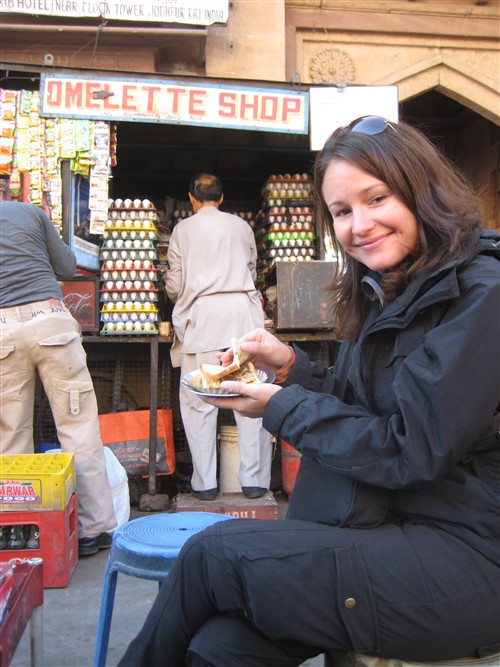
Our hostel in Jodhpur had supposedly sent someone to collect us from the bus stop but he was nowhere to be found so we took a rickshaw to the hostel. Having slept in short, intermittent segments, we collapsed onto the bed and slept late into the day. Because of our restless journey, we both woke at an odd hour, groggy and irritable, and craving a hot, greasy breakfast. The day began on a sweet note. We walked just a few short steps to the main market entrance to the legendary Omelette Shop, which was more like an omelette cart. We sat on plastic patio stools while devouring two of the house specialty – the masala cheese omelette. I never would have guessed that the world’s only orgasmic omelette was being served daily from a little cart in Jodhpur, Rajasthan. Aaron tried to get the omelette man to divulge his secret ingredient but the man just threw his head back and laughed a laugh that said “I’m taking this one to the grave, son.” Little did we know that our taste buds were in for another colossal treat. Sushma, our cooking class chef, had told us to try a makhania lassi – a yogurt drink made with green cardamom and saffron – when we went to Jodhpur and as we entered the market with happy bellies full of greasy omelettes, a big sign advertising makhania lassis suddenly appeared before us. We sat down and ordered one to share…and then another one. Makhania lassi is absolute Heaven on the palate! My addiction was immediate.
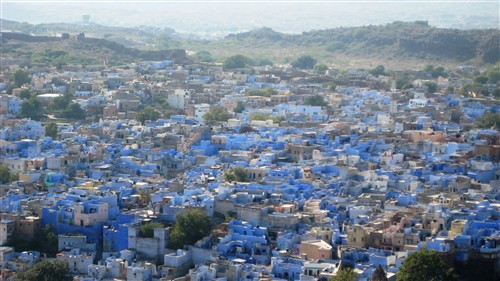
You wouldn’t think that a day with such a delicious start could turn sour but somehow, after the lassi, things started to go south. Likely, in part, because of our attitudes, we found the people on the streets of Jodhpur collectively disagreeable. So many of the children begged and the streets felt cold and unwelcoming. We decided to tour Meherangarh, meaning Majestic Fort, which was built on top of a steep hill at the edge of the city. The fort, once the residence of generations of rulers and now a museum – was interesting and the audio tour was well done. From the highest levels, we took in the best views of the blue city of Jodhpur. The houses are painted with indigo, which gives them a cool, pale blue hue.

From the fort, we walked about fifteen minutes down the road to a grand white marble cenotaph (tomb monument), called Jaswant Thada, which was commissioned by the wife of Maharaja Jaswant Singh II in his memory. The marble used to construct the memorial is so fine as to be almost translucent. Inside were photographs or drawings of all of the past maharajas of Jodhpur in silhouette. A small altar in the center with a photograph of the honored maharaja was adorned with colorful flowers, pictures of Hindu gods and burning incense. What strikes me as odd is that, while pedestrians are required to remove their shoes before entering the monument, the dome is covered with pigeons that “bless” the marble steps and terraces all day long. While I respect the cultural custom of removing shoes before entering a holy place, I’ll always remember leaving with pigeon poo all over the bottom of my last pair of clean socks.


By the time we left the cenotaph, I was beginning to fade, both physically and emotionally; I think we both were. I wanted to take a rickshaw back to the hotel but Aaron thought that it would be fun to walk the medium-length distance through a different part of town. I humored him, mostly because, as a woman of thirty-two, my back side can use all the exercise it can get, especially after many weeks of paneer butter masala. So we walked down a long, curving road and down some steep steps into the heart of the blue city. Before long we were joined by three young schoolgirls who begged us for school pens and rupees. In a normal state of mind, I have more patience with the kiddos but, in this case, we just tried the very scientific and strategic method of ignoring them. Just when we thought they had finally given up, one of the little scamps slapped me square on the back with all of her pre-pubescent might and then took off running down the narrow alley, followed by her two friends. My first instinct was to chase them down, just to scare them and teach them a lesson but I chose instead the much more mature and classy alternative of shouting profanity in a show of raised fists. The incident catalyzed my impatience to its apex and we stormed back to the hotel while completely ignoring everyone who spoke to us along the way. By way of unanimous consent, we sought out the most direct route to a rooftop restaurant that served wine. On the rooftop of Indique, our spirits gradually improved as we worked our way through two half-bottles of Rajasthani red wine while watching the sun set in a pink, blue and purple sky, then headed downstairs to an enclosed restaurant with glass walls overlooking a beautiful city fountain. With full bellies and a mellow wine buzz, we retired early but not before making arrangements to leave Jodhpur the next morning – a day earlier than we’d originally planned. We hired a rickshaw-wallah to pick us up the next morning, drive us to one last palace and wait with our bags while we took a brief tour, and then drop us off at the train station.

We woke early the next morning and walked into the market in search of a warm blanket – for future sleeper buses and trains – and haggled over a heavy green-and-white flowered one that is an absolute albatross to tote around. Our master plan was to grab one more makhania lassi and masala cheese omelette before we headed out of town. We found a lassi shop and inhaled one each before making our way to the Omelette Shop only to find it dark and closed! No! Heartbroken, we walked back to the hostel to meet the rickshaw driver and, in a sudden stroke of genius, decided to skip the palace and instead wait for the Omelette Shop to open! No regrets…the omelettes were amazing! Jodhpur was easily our least favorite stop in Rajasthan. Abused by schoolgirls and hassled by a host of other beggars, we felt a very chilly reception there and, with the exception of the unequaled omelettes and addictive makhania lassis, we were happy to watch Jodhpur fade into the distance.

Comments Off on Masala Cheese Omelettes & Makhania Lassi

January 17th 2008 by Tina
A Perfect Day in Udaipur

Posted under India

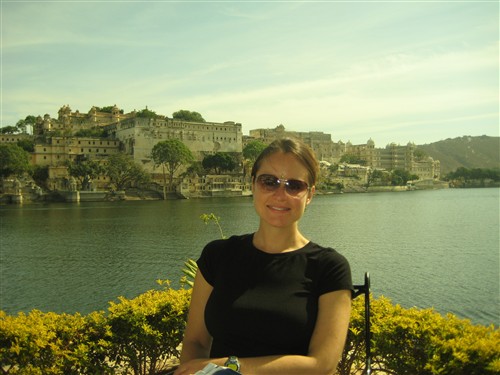
Set on the edge of a sparkling lake and nearly surrounded by mountains, the whimsical, romantic city of Udaipur has a distinctly European feel. From the sunny lakeside patio of Ambrai Restaurant, where we enjoyed our best meal in India, the afternoon sunlight glitters on the tiny ripples of the lake. Local men, women and children bathe and wash clothes at the sun-soaked ghats along the water’s edge. The sound of the women beating the wet clothes clean echoes across the town.
Our first day in Udaipur was blissful and stimulating – one of the best days we’ve had on the trip so far. The morning began with a quiet breakfast on the whitewashed rooftop of our hotel with panoramic views of the lake and the city. When we were sufficiently fueled by hot masala chai, we ventured out to wander the streets of Udaipur. The narrow city streets were lined with vendor stalls selling the usual array of textiles, jewelry, antiques, and miniature paintings; the shopkeepers all greeting us as we walked by and beckoning us inside. We stopped for an impromptu tour of a 350-year-old Jain temple – its interior made almost entirely of glass with many beautiful mosaics. Inside the inner altar, two men were worshipping as we tiptoed around them.

We continued down the road to the immaculate City Palace, one of four residences of the current maharaja of Udaipur, for a guided tour. The palace was elaborately decorated with glass mosaics, colorful stained glass windows, cheerfully painted apartments, tranquil courtyards, windows and entryways carved in traditional Rajasthani style. Rajasthanis have a particular affinity for bright colors and ornate designs, which usually include flower patterns, probably because there are few vivid colors or flowers in the natural desert terrain. From the City Palace balconies, we took in the best views of the city and of the glassy Lake Pichola. The serene lake, only twelve feet deep, surrounds two small islands both of which are entirely encompassed by palaces: the opulent, whitewashed Lake Palace Hotel and the equally magnificent palace on Jagmandir Island, which was built by Maharaja Karan Singh in 1620. Mughal emperor Shah Jahan, who commissioned the famous Taj Mahal, is said to have gained inspiration for the design of the Taj when he stayed on Jagmandir Island in 1623-24. Our City Palace tour came to an end at a series of government-run souvenir shops, which are said to donate sixty-percent of their profits to the poor citizens of Udaipur. The shops contained more beautiful, expertly-handcrafted, and more expensive versions of the wares available on the streets but we were already entranced by the romance of the city and wanted to wrap ourselves in its exotic rhythm. We walked through the buzzing streets and made our way back to the hotel for a quick siesta; then, in a brief recess from my fantasy, we ended up in a cardboard box-like internet café.

Let me digress for a moment to explain that many small towns in India have yet to comprehend the café aspect of internet café. In these depressing and claustrophobic venues, you walk into a tiny room with four cement walls and a few computer carrels. Not only are they devoid of character but there is ne’er a refreshment to be found. In this particular nameless internet café in Udaipur, the proprietor and his visiting acquaintance proceeded to light cigarettes in the unventilated cell. They were polite enough to leave the room when they noticed that I had covered my nose and mouth (and my disgusted scowl) with a handkerchief. When the proprietor returned later, he asked me if I had an allergy to cigarette smoke to which I replied, “No, I just don’t want to die from lung cancer.” He seemed taken aback by my matter-of-fact response but perhaps he’ll think twice before subjecting someone else to the increased prospects of a slow and painful death. In truth, I’ve probably inhaled enough first-and-secondhand smoke in my indulgent and fearless twenties to do the trick but JUST IN CASE I’ve somehow been spared the ultimate penalty for my smoky indiscretions, I don’t want to push the envelope by allowing unnecessary dirty air into my shrine. There’s enough air pollution on the streets of India already from auto emissions, burning trash and cow patties.

After surviving the internet café, we made our way on foot to the City Palace jetty for a sunset cruise on the lake. The boat departed promptly at five p.m. and glided leisurely along the city’s edge. The sun was beginning its slow descent on the opposite side of the lake, which brushed the majestic sandstone buildings and their watery reflection in a magical, golden luminescence. The boat continued along its course, rounding the beaming white Lake Palace Hotel and cruising toward Jagmandir Island, where we disembarked to explore the palace. Across the lake, the city of Udaipur had taken on a hazy glow and we joined the throngs of tourists snapping numerous photos from the scenic upper terrace. We walked around the palace courtyard with musicians playing soft melodies from one of many intimate, curtained alcoves in the opulent background. Tempted to further indulge in the tranquil ambience by sipping overpriced Indian wine at a candlelit cocktail table overlooking the water, we hurriedly boarded the boat before we had a chance to change our minds. We had plans to attend a musical performance of traditional Rajasthani dances across town. The show was called Dharohar and was performed in the courtyard of an 18th century haveli museum on the water’s edge. Havelis are traditional, ornately decorated, Rajasthani residences, many of which are now used as museums, restaurants and guest houses. We purchased our tickets with about an hour to spare and wandered through a city gate behind the haveli to one of the bathing ghats, where a kind-faced musician in colorful turban was demonstrating his handmade string instrument for a small crowd. In the pale moonlight, his tunes were mesmerizing and I found myself actually considering buying one of his exotic instruments. Thankfully, Aaron’s sweet tooth pulled me away to a small café across from the haveli before I was lured further down the path of almost certain buyer’s remorse.

Dharohar was a dazzling performance of music and dance. We, the gracious audience, sat on blankets in the small square courtyard while a succession of lovely ladies in bright-colored costumes with delicate embroidery and gold embellishments leapt and twirled to the sounds of three faithful musicians. Each dance had a fiery uniqueness: performers spun with potted flames upon their heads; two feisty divas rang out a choreographed tune on small cymbals sewn into unusual places on their costumes; gold glittered from spinning dresses; and, as the grand finale, a dancer pranced, swayed, stood on the edges of a pie plate and walked barefoot on glass with an astonishing stack of nine clay pots stacked on her head. The audience roared with excitement and applause as the show ended and everyone shuffled around in search of their shoes. We felt a natural euphoria in the air – everything seemed to be bathed in an incandescent glow – and we decided that an elegant dinner was in order.

We took a rickshaw across the bridge to a boutique hotel called Udai Kothi and ascended about five flights of dark, narrow stairs to its stunningly beautiful and serene rooftop restaurant. As we skirted the iridescent pool, lined with colorful cushions and low tables, the maitre d’ showed us to a table in the center of the candlelit dining area under a starry sky. Musicians played soft dinner music as we basked in our gorgeous surroundings, drank some of that overpriced Indian wine after all, and dined on saucy paneer and tandoori vegetables. It was the perfect end to a perfect day.

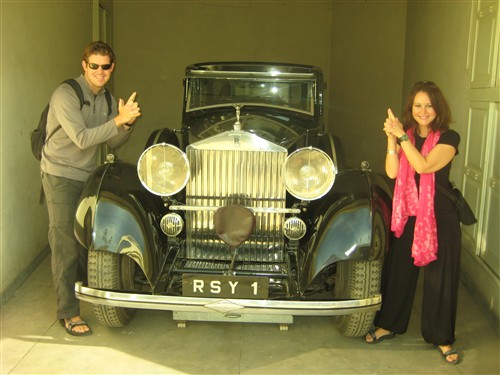
Our next two days in Udaipur were lovely. We lingered longer on sunny terraces, checked out a few shops, and kept our activities to a minimum. On day two, we took a rickshaw to see the maharaja’s vintage and classic car collection. Each of the twenty-two splendid automobiles had its own garage and an extraordinarily personable guard opened them, one by one, speaking of each car with pride and affection. Neither Aaron nor I are car buffs but we were awed by the beautifully restored historic vehicles nonetheless. Most impressive was the 1934 Phantom Rolls Royce used in the James Bond film Octopussy, which was partly filmed in Udaipur.

After viewing the cars, we asked our rickshaw driver to drive us to the Spice Box which, according to our guide book, offered recommended cooking classes. Since we are crazy about Indian cuisine and, in our past domestic life, both loved to cook, we thought a cooking class sounded wonderful. The driver dropped us off at a hotel and ushered us inside. “Is this the Spice Box?” I inquired of the proprietor as there was not a sign to be found. “Yes, yes.” he said and pointed us upstairs to the cooking classroom to make arrangements with the instructor personally. Her name was Sushma and we liked her immediately as she began to tell us about the class. Although the class fee was double what we’d expected to pay, we were more or less already sold when she let us sample some of the dishes that we would be learning to make and that definitely sealed the deal. Paneer butter masala – our favorite dish! We would join the cooking class at 3:30 the following afternoon and catch a sleeper bus to Jodhpur that same night at 10:15. We ran into an American couple whom we’d briefly met in Wilderness, South Africa, and told them all about our class and urged them to join.

At some point during the next morning, it suddenly occurred to me that the business card that Sushma had given us read Sushma’s Cooking Classes. It didn’t say anything about the Spice Box. I recalled various warnings in our guide book about rickshaw drivers taking you to a similar place to the one you requested and trying to pass it off as the requested place in order to receive commission from the proprietor. I also recalled our rickshaw driver sticking around the hotel lobby for a suspiciously long time after he’d dropped us off. We ran into the American couple later that day who said that they registered for the afternoon cooking class at the real Spice Box and, after their description confirmed that it was in fact a different place, I explained to them how we had unknowingly been scammed. Despite the hotel proprietor’s role in that deception, we were too excited about making paneer butter masala with Sushma to care.

We were the eager beavers of the cooking class, arriving first and grabbing two seats in the front row, center. We took copious notes throughout the class, took turns stirring, and exchanged delicious glances as we tasted each dish. After class, the ten students sat around a large table on the rooftop and dined on an extravagant meal of the dishes that had just been demonstrated: masala chai tea, paneer butter masala, eggplant bhurta, aloo ghobi (potato with cauliflower), dal makhani, saffron rice, stuffed paratha, and fresh made chapati. We stayed at the table long after dinner had ended, visiting with our classmates. It was a lovely evening and we were sad to go as we hurriedly departed to catch our bus to Jodhpur.

Udaipur was a jewel in the Rajasthani desert; the romantic rooftops, whirling beauties, picturesque cityscapes and sunset cruises collectively made our stay there feel like a second honeymoon. The streets were filled with that endearing Rajasthani chaos of cows, stray dogs, working donkeys, rickshaws, motorcycles, bicycles, beggars and chattering shop owners. So much life happens on the streets of Udaipur that your senses are constantly overloaded by the sights, sounds and smells. Even though the buzz can make you crazy at times, you find yourself strangely addicted to it.

Comments Off on A Perfect Day in Udaipur

« Prev - Next »