Posted under India
Tina:
We left Jaipur by train, headed for Ajmer. From there, we still needed to travel another thirty minutes to Pushkar. For the price of a Starbucks latté, we could have gone by taxi but we wanted to experience the public bus so we took an autorickshaw from the train station to the bus station and inquired about buses to Pushkar. Much like Africa, the buses leave when they are overflowing, rather than according to a schedule. As the bus traversed the winding mountain road to Pushkar, an attendant pushed his way through the standing passengers in the aisle to collect the fares. The bus stopped on the edge of town where a barrage of commission-seekers was eagerly waiting to lure us to their respective hotels. After lugging our backpacks through the narrow, maze-like streets to check out a few places, we settled on the Everest Hotel, a boxy, pastel-green tower with a rooftop restaurant overlooking the city. The enchantment of the town had already taken hold of us; we dropped our bags and immediately dove into the vibrant, glittering activity of the market.
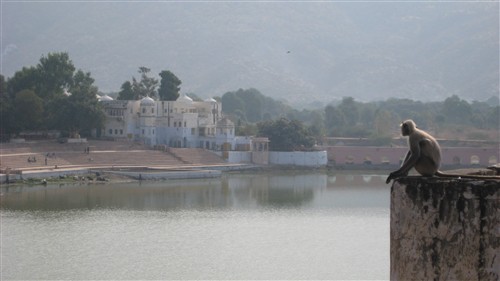
Pushkar is home to about fifteen thousand people. It is nestled in the dry desert mountains of Rajasthan and curves around a holy lake with fifty-two bathing ghats around the perimeter where pilgrims come to bathe in the sacred waters. The population is predominantly Hindu and the devout citizens insist that their conservative practices and religious customs be respected by all visitors. All food in Pushkar is vegetarian. There are no eggs, alcohol, drugs or public displays of affection allowed. The main area of town consists of narrow streets that yield to the curvature of the lake. The streets are lined with vibrant market stalls selling beautiful and inexpensive clothes, tailor-made saris and Rajasthani garments, silver and semi-precious gems, shimmering bangles in every imaginable color, incense and perfume, handicrafts, wall hangings and religious art. The traditional greeting is “Namaste”. The vendors are friendly and not overly aggressive so you can shop leisurely without feeling accosted. There are very few cars in Pushkar but motorcycles carrying as many as FIVE people honk and weave through the crowded market. Cows are everywhere! The beloved bovines roam freely wherever they please, grazing on trash or laying down in the middle of the road for an afternoon nap. There are also an unbelievable number of stray dogs in Pushkar. The locals do not keep dogs as pets but they gently tolerate the mangy street dogs which continue to procreate. They sleep anywhere and everywhere in town and can be heard throughout the night, howling at the moon; their echoes reverberating off the cement buildings and inciting a chorus of responses. Near the ghats, on the rooftops and on the outskirts of town, many families of gray-haired, black-faced monkeys frolic the days away and scrounge for scraps. Animals are a big part of the local culture but not as workers; they simply live in harmony with the people.
Kite flying is a very popular pastime for the children of Pushkar. On windy days, the children can be seen on the rooftops, manipulating their lines and staring up at their brightly colored kites, rising, soaring, darting through the air. There are several kite shops in town and it is easy to see how they stay in business; every tree in Pushkar is heavily ornamented with small plastic kites that became stuck in their branches.
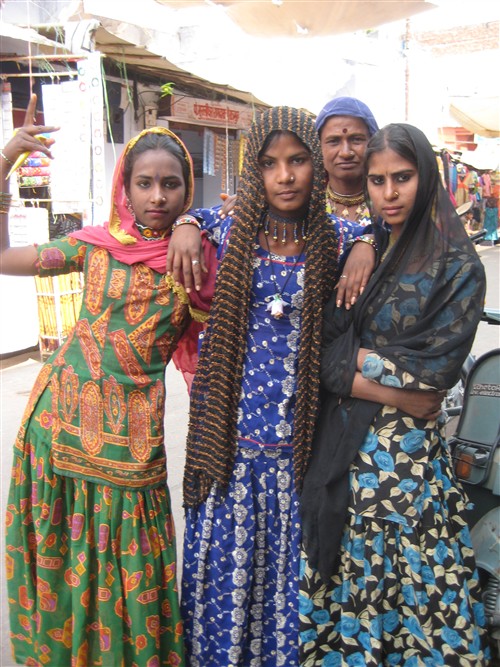 The people of Pushkar, and our ability to interact closely with so many of them, were by far the highlight of our visit. They are vibrant and charming and clad in even brighter and more vivid garments than those we have seen thus far in India. We could literally spend hours photographing each and every fascinating person and many people – especially the elderly panhandlers carrying their shiny collection buckets – are happy to be snapped for a few rupees. Now that we know the game, we always carry small change in our pockets and hand it out like Halloween candy. The elderly panhandlers are docile and entertaining but there are also the nasty little child beggars who are persistent and ruthless. One little girl was begging with a baby in her arms. When we tried to shoo her away, she lifted the baby’s garment to display its back full of red sores. Another boy tried, with average success, to engage us in a whole debate about the value of taking our money to the grave versus giving it all to him. The next day, the same boy followed us again. I told him that he should go to school. He replied, “If I go to school, who will get my Mama chapati?” That made me sad because it was probably true. So young to have such worries.
We sat inside one very kind artist’s stall for over an hour admiring his silk paintings while he talked to us about the beautiful Hindu religion, meditation, festivals in Pushkar, and education. He said that education in India has changed dramatically in recent decades, due to globalization and Western influence. Traditional education was once provided by gurus in the ashrams where students learned language, religion, culture, and how to prepare weapons for war. Now, Indian education is centered on preparing the student for today’s workforce. In that beautiful, tiny shop in the Pushkar market, the thought of losing old traditions in deference to the earn more, buy more, save more culture seemed a bit depressing. In my own experience, I have found that when culture is diluted over generations, the youngest generation cannot reclaim the beautiful traditions no matter how much they appreciate them. If they are not instilled with love from the very beginning and repeated through faith and love through the years, then they do not become a part of you. They remain forever lost. Still, sacrifices must be made to keep up with the Joneses, I suppose.
We spent our two days in Pushkar wandering the streets, indulging in the retail temptations. We’d maintained a solid anti-souvenir mentality until the Pushkar market tempted us with its tantalizing textiles and sparkling trinkets. I have discovered bubble pants! With elastic at the waist and ankles and lots of extra fabric in between, they have a funky, liberating fit that makes me feel like an Asian princess, a yogi, and a martial arts master all at once. I love them and I want more, more, more! None of the locals wear them, of course, but every female tourist, myself included, who is in Pushkar for more than a day is sporting a pair. Bubble pants are the gauchos of India!
We relaxed on rooftop restaurants overlooking the ethereal holy lake, watching the pilgrims and locals bathe at the ghats and make prayer offerings. We have discovered many new vegetarian dishes and swallowed enough Indian milk tea (hot spiced tea with milk and sugar) to fill a bath tub. One of us can easily convince the other to share a steaming pot of it morning, noon or night. Many restaurants in Pushkar serve a cold, refreshing drink, called Lemonana, which is made with mineral water, lemon juice, sugar and lots of pureed fresh mint so that it comes out green. It’s delicious! Note to self: when pregnant and craving a mojito, think Lemonana!
While Pushkar has a very Bohemian feel, the mystical realm of the Hindu religion pervades every street, building and narrow alley. The town boasts hundreds of temples, including one of the few Brahman Temples in the world. On the morning of our last day in Pushkar, we hadn’t toured any of them. The Brahma Temple was located on the edge of the market – we had passed by it at least four times – and, with our opportunities quickly fading into the distance, I sent Aaron in to scope it out while I waited outside with his shoes. He came out about twenty minutes later with some flowers and cardamom, which he said we were supposed to take to the lake. I smelled a tourist trap and said so but he was into it so I followed him down to the ghats and waited at the top for another twenty minutes while he disappeared down an alley toward the water’s edge. When he returned, he had a red smudge between his eyebrows and some grains of rice stuck into the smudge. “How much?” I asked.
Aaron:
I had barely walked ten feet toward the lake with sacrificial flowers in hand when I was accosted by the first of several “priests”. I swiftly dismissed the first and second priests but the third one persistently followed me, directing me to the proper place to leave my shoes and to the proper ghat for prayer. The priests are all plain-clothes men who approach with such fervor and purpose that they could just as easily be mistaken as touts for a camel ride or a budget hotel. As I reached the appropriate entrance to the ghat, I began descending the steps toward the lake where a mat was laid down before me and I was instructed to sit. The priest handed me a plate with an assortment of flowers, rice, spices, and sugar while his assistant took a metal bowl down to the lake to fetch some holy water. I protested more times that I can remember, weighing whether to leave immediately, abandoning my mission of placing my flowers in the lake as a respectful offering to the Hindu Gods, or to “hire” this priest and allow myself the privilege of participating in one of the most sacred and spiritual rituals in Hinduism. I relented and placed the flowers on the plate in front of me.
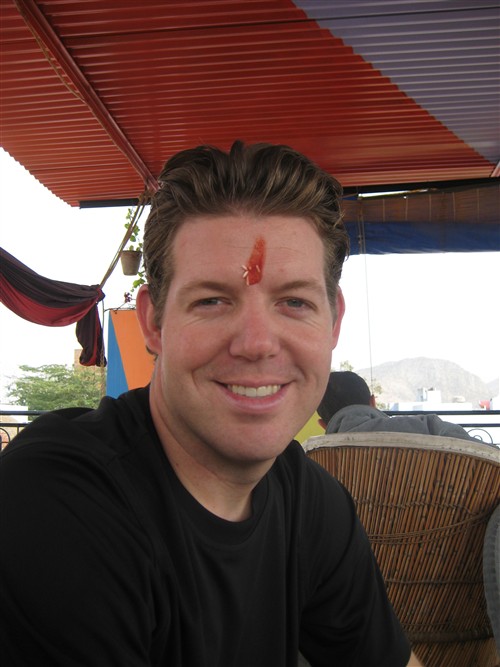 The priest led me through a series of prayers, alternating in heavily accented English and Hindi, with me repeating after him. I dutifully followed his instructions to wash my hands in the holy water, then place my wet fingers on my forehead, eyes, shoulders, heart and stomach, blessing each with my touch. I prayed for peace and love and good health and a long life and the same for those in my immediate family. At the conclusion of these prayers he dipped his wet thumb in the red powder on my plate, creating a red paste, and gently smeared it on my forehead between the eyes. I was finally allowed to walk to the water’s edge and pour the contents of my plate into the lake. I returned to the mat and the priest informed me that in order for the Gods to answer my prayers, I must make a donation to the poor, solemnly promising to feed no fewer that one thousand of India’s impoverished citizens. He spoke quickly, implying a minimum commitment of “One Food”, or one thousand rupees, about $25. Handing me a coconut and slowly dripping holy water onto it, he asked me repeatedly how many people I intended to feed. “One Food? Two Food? Three Food?” I initially balked at the promise, knowing that I had no intention of donating his asking price, but he would not let me complete my prayers without commitment. He again submerged his hand in the holy water, removing it and once again he let it drip methodically onto the outstretched coconut. “How many food?” His words clamped down like a vise on my conscience. I agreed to “One Food” and moments later, with my prayers official, I was ushered to a small table at the top of the steps where a man waited with an official receipt book.
As instructed, I filled out the form with my name, my father’s name, and my home address. Then the priest told me to write the donation that I had committed to, one thousand rupees, on the form. Nope. I told him that I would not, but that I was prepared to donate 100 rupees. He told me that I was reneging on the commitment that I’d made earlier. I was, in fact, but it was a commitment made under duress and instead of chastising him for using the high pressure tactics of an in-home vacuum cleaner salesman, I simply told him that was all that I could do. After a bit more banter, he agreed to edit the form and immediately demanded that I hand over my “donation”. I obliged and collected my official-looking receipt. Of course the final step in my spiritual journey was the donation to the priest for himself and his family. I pulled out 70 rupees from my pocket and begrudgingly handed it over with a forced smile. About $5 poorer, I walked briskly toward the exit before he could ask for more money.
The experience left me bitter and jaded and it was the second time in as many days. The previous day we had approached one of the ghats along the lake and we were besieged by a priest who would not leave us alone and who constantly said that we had to go down to the lake and place these flowers (the ones in his outstretched hand) as a sign of respect. I knew that he was trying to hit us up for a donation. I simply wanted to admire the beauty of the lake and respectfully participate from the top steps of the ghat. He could not understand my unwillingness to follow up and he continued with an barrage of comments about my lack of respect and my sacrilegious actions. I finally turned to him and asked if, as a priest, he was aware that some people worship in different ways. In the moment of his stunned silence I turned to walk away, clearly disgusted by the encounter.
From the beggars that literally line the street as you enter the Brahman Temple to the many priests offering their blessings for a price, everything about the Hindu sites in Pushkar seemed more human and commercialized than sacred. Since we began our trip around the world, we have had the opportunity to meet people of many different nationalities and religions. And one of the things that we most look forward to is learning more about the history, customs, and nuances of both. But more often than not we’re overcome by the human element which interjects to sour the experience and prematurely abort the lesson.
There are both pros and cons to visiting the heavily touristed destinations like Pushkar. The locals generally speak good English and are tolerant of photo-flashing tourists and eager to help. Unfortunately, many of the locals also become aggressive and demanding when trying to relieve tourists of their money. Many tourists, unaccustomed to such intimidating aggression and out of their element in a foreign country, succumb to the guiles of the touts and beggars. Even with our newly-toughened skins from repeated exposure to the same scams in different countries, we still occasionally re-surface from somewhere with a five dollar red smudge with rice pieces in it. We can only choose to be thankful for the inexpensive lessons. Despite the panhandlers and pushy priests, Pushkar has been one of our favorite stops so far. Hindus believe that Pushkar Lake was formed when Brahma, the holiest of all Hindi deities, dropped a lotus flower. While the concept of multiple gods is still overwhelming to our monotheistic minds, there is something serene and mystical about the iridescent glow of the glassy lake against mother-of-pearl sky. Pushkar is the kind of place where we could easily spend months, communing with the locals, studying yoga, reading the days away on tranquil rooftops, and pondering Pushkar’s magic. After only two nights, we leave with much of the city beyond the dazzling market unexplored but we are thrilled with the richness of our experience.
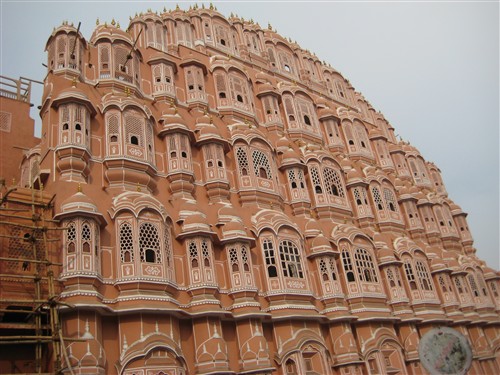 We flew from Mumbai to Jaipur, which is the capital of the Indian state of Rajasthan, and took a taxi to the Hotel Pearl Palace, near the city-center. Our room was not quite ready so we ventured up to the rooftop for a drink. Our room was tastefully decorated with local textiles and modern amenities. After settling in, we set out for a walk to the train station to purchase train tickets to our next few destinations. We only made it a half-block from the hotel before an autorickshaw-wallah convinced us to let him drive us around. Rickshaws are two or four-seater cabs or carts with a single driver’s seat in front. Autorickshaws have motors and can maneuver through traffic like a motorcycle. Bicycle rickshaws are slightly cheaper and good for short distances. We arrived at the train station and booked tickets to Ajmer, Udaipur and Jaisalmer. Our driver, Munna, was so friendly that we took him up on his offer to take us sightseeing around town for the rest of the day.
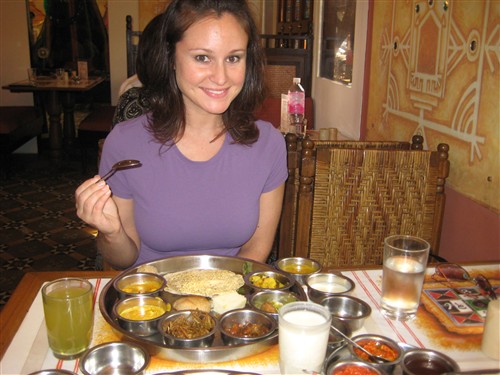
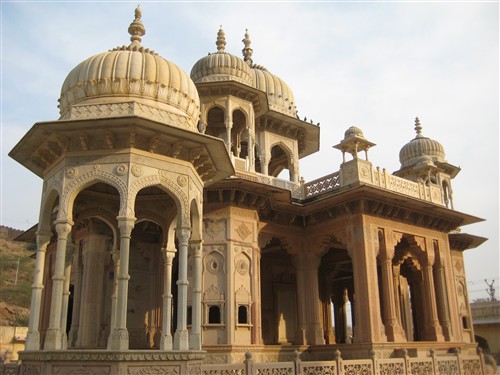 Munna recommended a good place for thali and we made a quick lunch stop before moving on. We were the only tourists inside the dim restaurant, which is a good sign. The thali was great, though much less elaborate than Chetana, and it energized us for our next stop: the Royal Gaitor. The royal cenotaphs, or tombs of the Maharajas of Jaipur, were set against dry, rocky mountains. They are beautifully carved monuments with intricate details, carved out of marble from Italy, India and many parts of Asia.
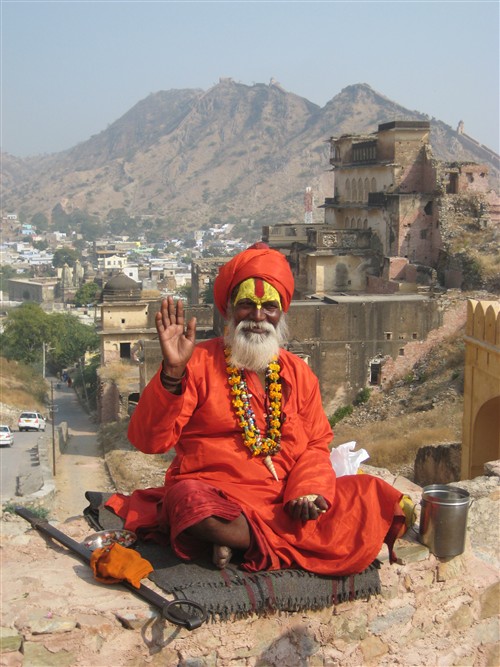 Next stop: Amber Fort. Set on a mountain top about 11km north of Jaipur, the pale pink looks vast enough to encapsulate a small city. We declined offers of jeep and painted elephant transport to traverse the road leading to the fort entrance on foot. The courtyard of the fort was full of activity and, while Aaron waited in line to buy tickets, I was accosted by every variety of trinket-seller. Luckily, my pest-evasion skills are sharp these days and I was able to escape them with minimal effort. As we wandered through the fort’s many buildings, courtyards and labyrinthine hallways (the Maharaja’s passageways to his various wives and concubines), we admired the traditional Rajasthani architecture: elaborate entryways, beautiful city views from corner towers, and the intricate designs in the Hall of Victory and Hall of Pleasure. We could easily envision the Maharaja attending to his amorous desires between royal responsibilities.
 After waiting almost two hours on the tarmac at O’Hare for our plane to be de-iced, we were off on a rather uneventful eighteen-hour journey to Mumbai (formerly Bombay). We enjoyed the spiciest and most delicious Indian airplane food; in one meal, I ate a pepper (which looked like a green bean) that set off a four alarm fire in my mouth. As the plane touched down at Mumbai International Airport, two friendly Indian women gave us homemade chapati (Indian flatbread, similar to a tortilla) after Aaron helped them with their bags. Before we had even set foot on Indian soil, we felt warmly welcomed.
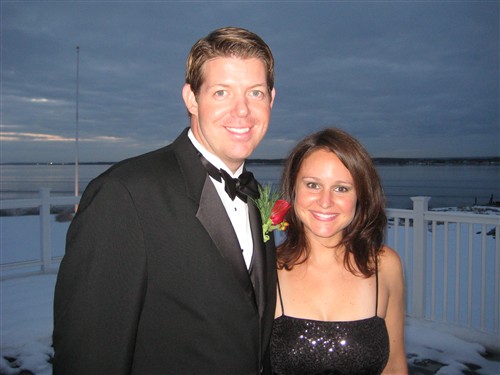 We left Johannesburg on the evening of December 18 and, after thirty-one hours and three connections, we arrived in Boston sleep deprived (neither of us can sleep on planes) but otherwise unscathed. As we arrived on American soil, I began to softly sing every patriotic song that I could think of. Mark picked us up and drove us to Providence where we met up with more of the Rooney clan. We all caught up over a quick drink in the hotel bar before they headed off to the Mulhearns’ for dinner and we passed out for a good twelve hours. When we finally re-surfaced, the pre-wedding festivities were already brewing as more friends and family began to arrive.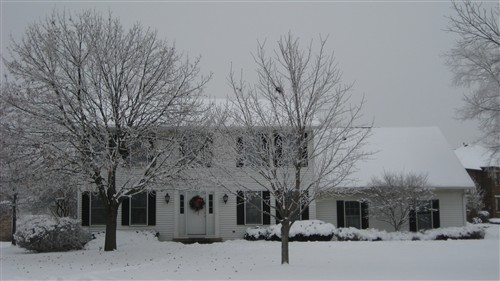
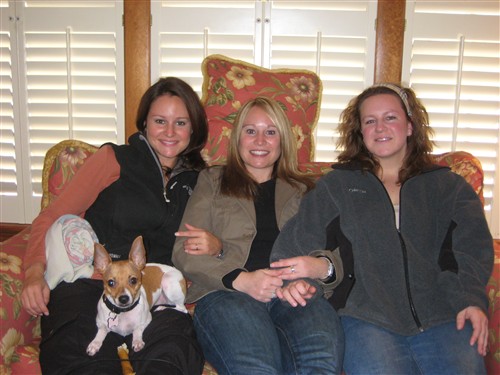 Lena stole the show for the entire week. My family is as crazy about her as we are and she went from one lap to another, received a minimum of a hundred kisses each day, and was the main topic of conversation. When we finally left, it was a toss up as to who they were more sad to say goodbye to, us or Lena. We loved every minute of being home for the holidays but it was hard to say goodbye. We would love to have our family and friends meet us somewhere along the way but we understand that, while we’re busy squandering our fortune, most other people’s lives are continuing on as usual. It will be initially hard to return to the hostel world after basking in the comforts of home for two wonderful weeks (I’m already bracing myself for the squat toilets in India) but whatever adventures and challenges the next fourteen months bring will be met with open minds and open hearts. On New Year’s eve, we are off to India with big dreams. The world is beautiful and, with a new year ahead full of promise, we feel blessed for this opportunity to see it.