Posted under Italy
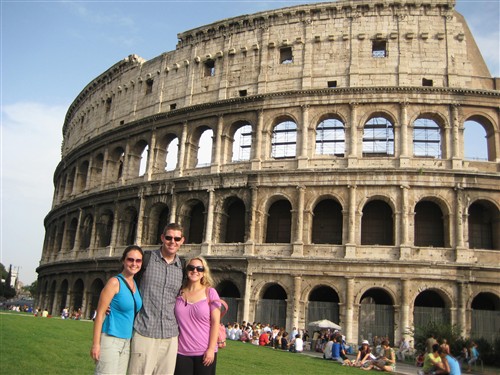
Between servings of pizza, pasta, caprese salad, and gelato, we managed to fit in a respectable number of sights: Pantheon, Piazza Navona, Campo de’Fiori, Colosseum, Circo Massimo, Villa Borghese, Spanish Steps, Trevi Fountain, Time Elevator, Chiesa di Santa Maria della Concezione, and the neighborhood of Trastavere. We started early both mornings and pounded the pavement until dinner. Like Paris, Barcelona and New York, Rome has so much to see and often the less significant stops are the most rewarding. In the interest of preserving my sanity, as we are already in Tuscany now, I will elaborate only on a few sights that especially moved me.
The Pantheon, dating back to AD 120, is ancient Rome’s best-preserved building. The name Pantheon derives from the Greek words pan (all) and theos (god); the original temple was dedicated to the classical Gods but the Pantheon has been a Christian church for most of its nearly 2000 years in existence. (Lonely Planet, Feb 2008)
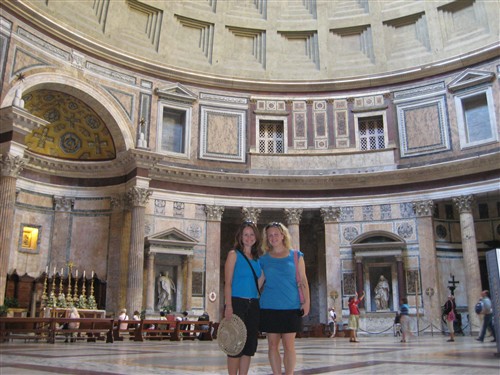 From the outside, it looks nothing like a church and much like a government building. Only after stepping inside do you begin to appreciate its architectural significance. The Pantheon is topped by the largest stone vault ever built – a perfect semisphere, meaning that the diameter (43.4 meters) of the dome is exactly equal to the height. There are no windows. The only natural light enters through a hole at the top of the dome and through the entrance when the tall bronze doors are open. The interior furnishings and embellishment are muted in comparison to other Christian buildings in Rome and elsewhere, with only a few marble sculptures and sparse iconography. Even the altar is decorated simply. The multi-hued stone and the vastness of the dome speak for the Pantheon’s magnificent beauty.
Later in the day, we were happily surprised to discover the breadth of significant artwork at the Borghese Museum & Gallery. It is so popular that you must call ahead to reserve a space in one of several two-hour time slots and, once you enter at the appointed time, you can only stay for two hours. The collection was amassed by Cardinal Scipione Borghese and was later purchased by the Italian state. It includes works by Bernini, Raphael, Botticelli, and Caravaggio to name a few. It is on this visit to Rome that Bernini has transitioned in our minds from a name in a book to one of the most gifted sculptors of all time. I can now identify a Bernini sculpture from across the room, standing out among others for the flawless texture of skin and the motion of his subjects. The most breathtaking example of this in the Borghese Gallery is Bernini’s Rape of Persephone (1621-22) in which Pluto discovers the virginal Persephone alone in a clearing and is so taken with her beauty that he grabs her and whisks her away despite her violent protests. Bernini’s sculpture captures the passionate struggle on the young Persephone’s face and her powerlessness against the virile Pluto. Most amazing, however, is how Bernini carved Pluto’s hand clutching Persephone’s supple young thigh, capturing the perfect indent in her thigh as it yields to his grasp. We lingered around the work, smiling as we watched others gasp and point at the same discovery. Two hours was much too little for the number of masterpieces on display here. We rushed by many works at which I would have liked to linger and if the curator’s aim in imposing such time limits is to leave you wanting more, then he has certainly achieved it.
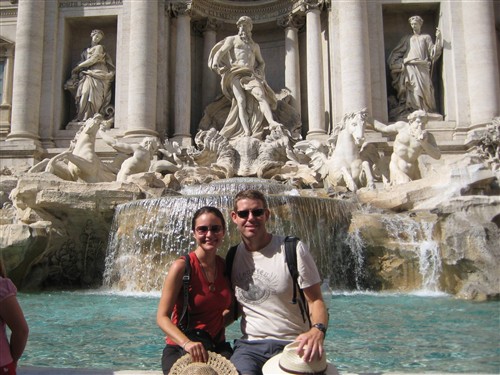 Rome is famous for its dreamy piazzas – open squares tucked into the city, often with a central fountain, coming alive on moonlit evenings. The Trevi Fountain – Rome’s most famous – is the focal point of one such piazza. “The baroque bonanza was designed by Nicola Salvi in 1732 and depicts Neptune’s chariot being led by Tritons with sea horses – one wild, one docile – representing the various moods of the sea.” (Lonely Planet, Feb 2008) The piazza was full of people snapping photos, enjoying cones of gelato, or just staring at the Trevi’s mesmerizing dance in its pool of aquamarine.
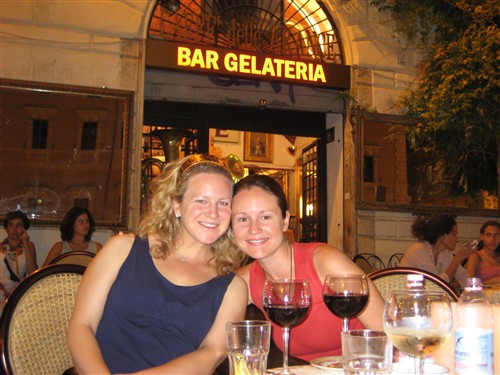
But all of the piazzas are better at night when the soft golden light of the streetlamps take over for the sun and the pretty squares are filled with poshly dressed revelers and couples out for a quiet stroll. The fountains are alight and candles flicker from restaurant patios. We chose the Trastavere neighborhood to have a few drinks out one evening and found ourselves in the exact piazza that I’ve just described. We settled down at a table on the edge of the action and watched the goings on over glasses of big, juicy Cabernet.
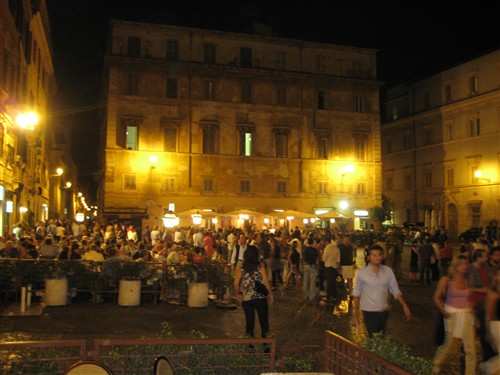
On the way home that night, our trio got separated. Italian public buses have a decidedly inconvenient system whereby you cannot pay your fare on the bus itself but rather you must buy bus tickets either in the metro station or in the corner tobacco shops, neither of which seems ever to be near the bus stop. We had however, earlier come across one bus with a machine that took coins for tickets. When our bus number pulled up to our stop, Aaron stepped on to see if that particular bus had a similar coin machine since we didn’t have tickets. The bus driver closed the doors behind him and would not let him off the bus even after he explained the situation. We waved to each other through the window as the bus pulled away. Natty and I hopped onto the next bus with our stop on its itinerary. About five minutes later, our bus stopped, far from our final destination, and everyone disembarked, including the driver. We got off with no idea where we were and no map because Aaron had it in his pocket when he was stolen by the first bus. After some initial confusion, we put our heads together and found our way home. Aaron arrived ten minutes after us, having had a similar experience. It had been a long wonderful night with a little adventure for dessert, and we were all happy to be home.
 The final stop that I want to mention is the Chiesa di Santa Maria della Concezione – a small, nondescript 17th century church near Piazza Barberini. What makes it one of the most fascinating stops on the tourist trail is the crypt which is decorated with the bones of 4,000 departed monks. We knew going in what we were going to see and still our jaws dropped at the sight of it. The crypt consists of five or six small rooms with dirt floors, each with an elaborate and mesmerizing display. Bones are used to make chandeliers, picture frames, flower patterns and a clock, among many other designs. Some of the skeletons are posed intact, dressed in the brown monks’ robes; some of the faces still have traces of flesh which has yet to decompose. The displays are eerily fascinating. Four thousand monks yield a lot of bones! Stacks of hundreds of femurs, tibias and fibulas line the walls in artistic forms. Hip bones become angel wings under smiling skulls. To see a sense of humor in the designs is both shocking and refreshing. In the last room along the hall, the collective epitaph of the monks is written on a small board: “What you are now we used to be; what we are now you will be.”
When in Rome, eat inordinate amounts of pizza, pasta, and gelato; walk until the bottoms of your feet feel bruised and you are asleep before your head hits the pillow.
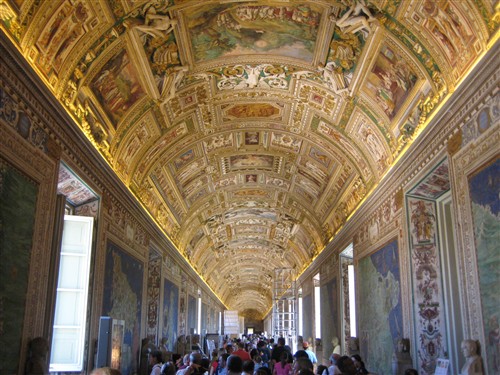 Inside the Pinacoteca, paintings by Raphael, Caravaggio and Da Vinci among others graced the walls. Other galleries contained hundreds of marble busts and statues, enormous tapestries, Etruscan artifacts, and stunning iconography. The Map Gallery was a long hall containing world maps painted in foregone centuries, enlightening the viewer as to the perception of the world long before satellites and Columbus. The private apartments of Pope Julius II were, like the whole of the Vatican Museum, remarkably opulent; every wall, ceiling, and corner of the various salons were richly decorated with religious frescoes, framed paintings, decadent mouldings, and magnificent sculptures. The experience was mindboggling and we hadn’t even made it to the Sistine Chapel yet!
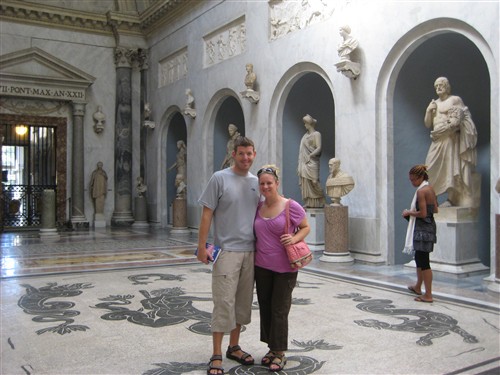 No matter what you have previously read or heard or thought, the Sistine Chapel can bring tears to your eyes. Though Michelangelo always considered himself a sculptor and only begrudgingly accepted the papal commission for the ceiling, he poured himself into the work. Declining any assistance, he spent four years (1508-1512) lying on scaffolding, creating what would become one of the world’s most glorious and famous masterpieces.
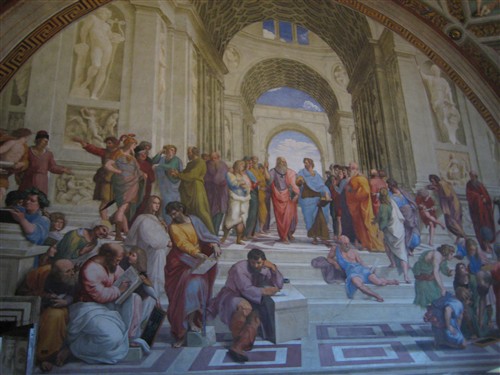 While the security personnel tirelessly hushed the crowd to preserve the sanctity of the atmosphere, the shoulder-to-shoulder crush still detracted from the experience. I wondered if the Pope ever comes in at night, when the doors are locked and he has the place to himself, and lies on his back on the floor, staring up at the ceiling in solitude. I certainly would.
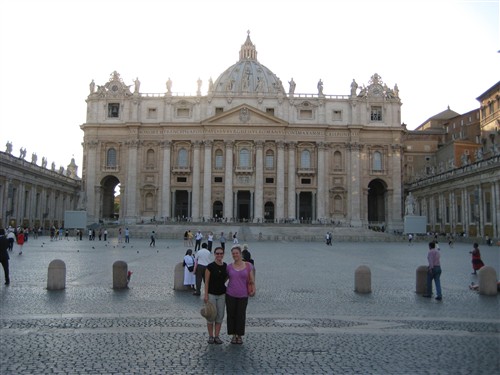
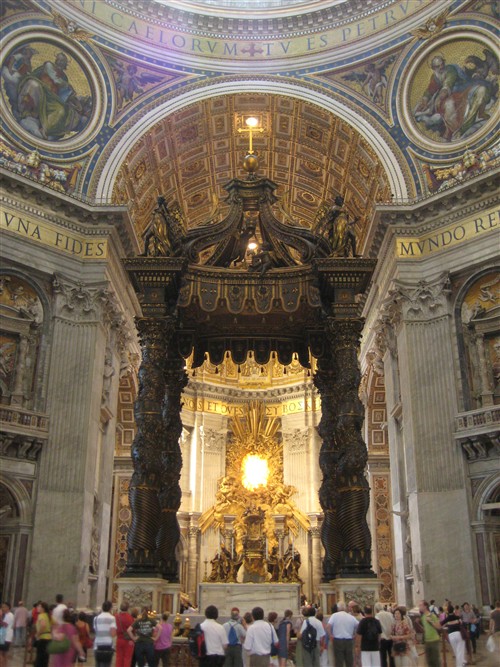 The white marble façade of the world’s second largest basilica, decorated with Roman columns and topped with sculptures, is striking but is a vast understatement in comparison to the majestic grandeur of the interior. Among the magnificent marble sculptures on display is Michelangelo’s Pieta. Bathed in soft light, the work exemplifies the artist’s ability to capture movement with the musculature of Christ’s lifeless body and the flowing folds of the Madonna’s robes. Lifelike marble statues by Bernini also decorate the cavernous interior. In the center of the basilica stands the high altar with a magnificent bronze work by Bernini, which stands above St. Peter’s crypt. Above the high altar, Michelangelo’s dome filters daylight through a line of windows below a kaleidoscope of iconography.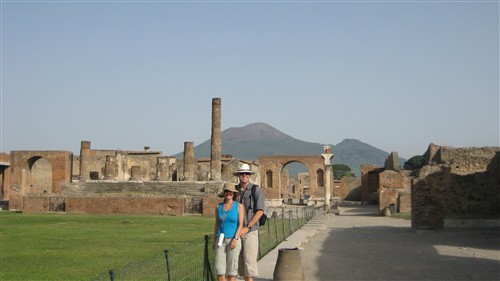
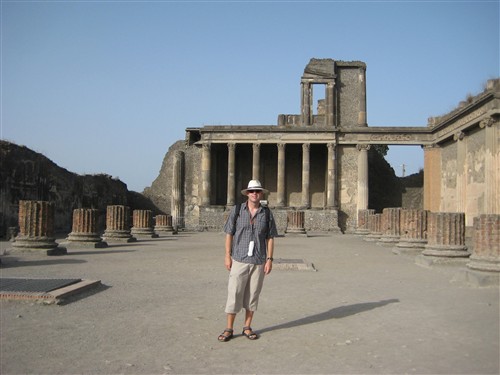 Pompeii, a Roman city that had been in existence for centuries, began to flourish in the 2nd century BC. In AD 79, Mount Vesuvius erupted, covering Pompeii in several meters of toxic volcanic ash. The ancient city remained buried beneath the ash for centuries until traces of it were discovered and excavation began in the 1700s. As fate would have it, the cocoon of ash actually preserved the structures and many of their original frescoes and, after hundreds of years of excavation, most of the remnants have re-emerged.
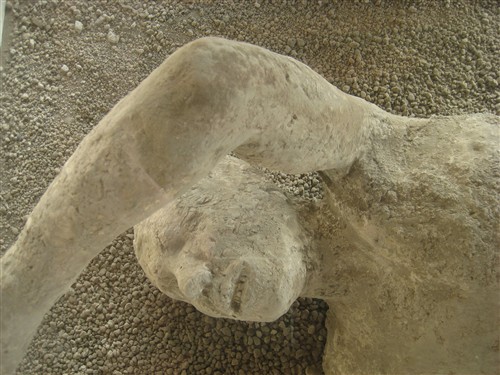 The most fascinating things that we saw among the Pompeii ruins were the bodies. As the volcanic ash began to fall from the sky, many people suffocated and were buried in the meters of ash. When they died, their bodies became petrified in their final agonizing positions. When the bodies decayed, their petrified shapes remained. They were an eerie sight. There was even one body of a dog that had been chained inside its house, its contorted death pose petrified for eternity.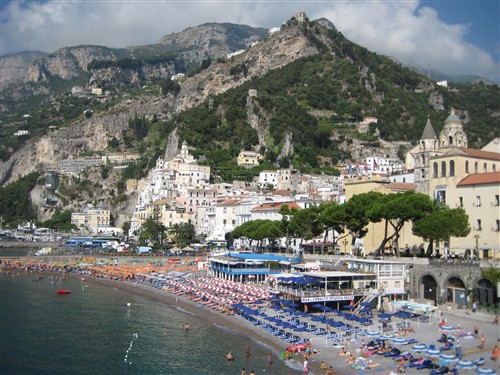
 The Amalfi Coast is as stunning as it sounds. The coast itself is a Unesco World Heritage site composed of whitewashed towns built into sheer cliffs on the perfect blue Mediterranean. Small strips of black volcanic sand, peppered with smooth pebbles and beach glass, dotted with striped beach umbrellas line the coast and, on any given day, there are as many locals swimming as tourists. The waves are gentle and the coast sits at such an angle that the sun lights up the cliffside towns both morning and afternoon.
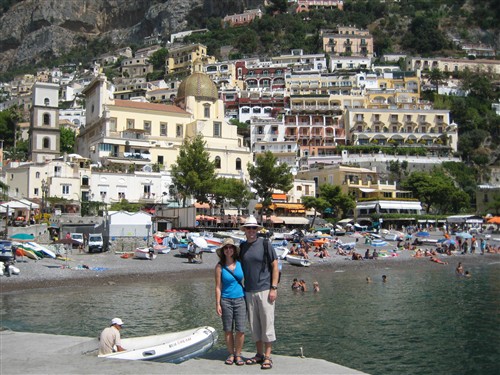
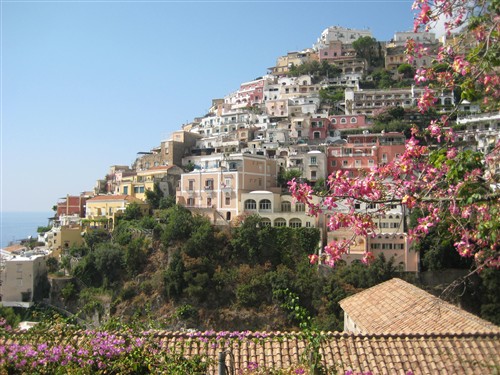 Positano stretches around a crescent moon-shaped bay with each end elevated on a cliff side, which makes for excellent photography. The pretty building facades, painted white, yellow and terra cotta, light up beautifully against the steely cliff. The bus from Amalfi stops at one end and by the time you make it down the hill and into town, you have used up half your camera battery and are brimming with excitement. We began by wandering through the tangle of whitewashed alleys with colorful shops around every corner. By mid-morning it was already hot and we treated ourselves to some terribly stylish hats and a few other treasures, letting ourselves pretend to be two-week vacationers just for a day. We sat for lunch at one of the beachside cafes and shared a pizza and, after a bit more wide-eyed wandering, headed back to Atrani. Both Positano and Amalfi have pretty beaches but we were drawn to our own beach at Atrani, mostly because it was close to our piazza.
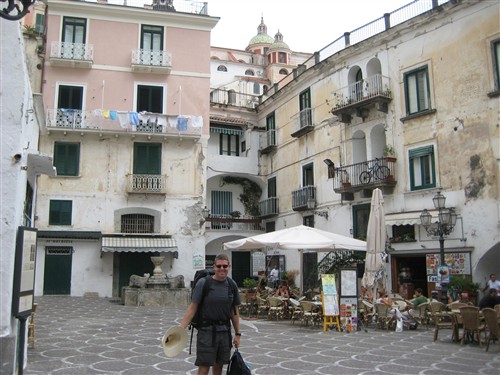 The Amalfi Coast was the perfect place to spend our anniversary because its many delicious similarities to Santorini – the whitewashed buildings, black sand beaches, and pristine blue waters of the Mediterranean – recalled wonderful memories of our honeymoon. We recounted the many blessings in our lives and the happy dream that has been this year traveling the world. Highlights from our great adventures flash through my mind as I sit in our piazza staring out at the ocean and I am tickled by the blooms of our rather unconventional decision just over a year ago. At this moment, in this beautiful place, my heart is full of happiness and I suddenly realize that the pain and hardships that we must endure in our lives make the joyous moments so much sweeter. I realize that, today, I finally feel whole again, my once-faltering faith restored after our recent loss.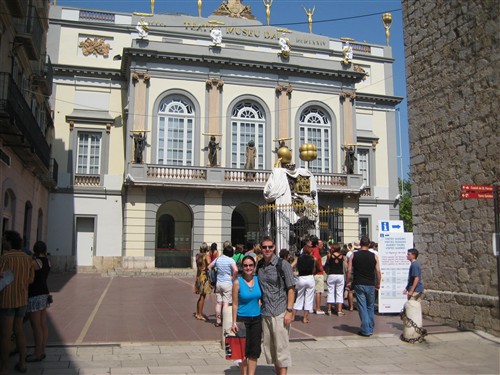
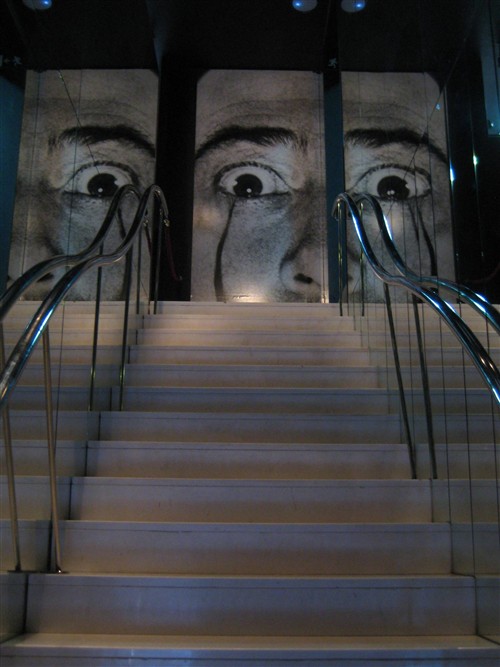 The Figueres’ former municipal theater, burned and destroyed during the Spanish civil war, was personally converted by Dali to create the museum. A brochure that we picked up at the museum entrance suggested that “the Dali Theatre-Museum should be seen as a whole, for Dali conceived and designed everything in it with the aim of offering the visitor a veritable aesthetic experience, and the opportunity of entering the artist’s unique, fascinating world.” And what an amazing world it was, filled with Dali’s psychedelic and spectral images! Tina is unshakably convinced that there must have been some fantastic hallucinogens in Gaudi and Dali’s time. After two hours of wandering around the multilevel amphitheatre we were both overwhelmed by the artist’s unique and varied creations – paintings, drawings, sculptures, gold, jewels, and installations. Dali was certainly not confined to the medium of painting for which he is most famous. He liked to paint his wife, Gala. He liked to create things that move. Filled with cartoon-like sketches, enormous wall-covering paintings, surrealistic oil paintings, doorways morphed into giant faces, and a chaotic array of sculptures and installations, the museum left us speechless. It was easily one of our favorite museums in the world.
 Our tickets granted us entry to another of Dali’s museums nearby, the Dali Joies (Dali Jewels). In the 1940’s, Dali was commissioned to design a collection of jewelry. The result was an eclectic display of beautiful bejeweled anthropomorphic creations including The Eye of Time, an eye-shaped mosaic of platinum, ruby and diamonds and The Royal Heart, a solid gold heart with an inset ruby-encrusted, mechanized heart that appeared to beat. Dali summarizes his collection best. “The jeweled pieces – ornaments, medals, crosses, objets d’art – you find are not conceived to rest soullessly in steel vaults. They were created to please the eye, uplift the spirit, stir the imagination, express convictions. Without an audience, without the presence of spectators, these jewels would not fulfill the function for which they came into being. The viewer, then, is the ultimate artist. His sight, heart, mind – fusing with and grasping with greater or lesser understanding the intent of the creator – gives them life.”