Posted under China
In Shanghai, we have been trying to give China the benefit of the doubt. Shanghai City Central Youth Hostel turned out to be one of the best that we’ve seen on the road and we stayed indoors the entire first day, recovering from the Yangzi River debacle.
On our second morning, we woke refreshed and ready to explore. Taking the metro to the People’s Square in the city center, we walked leisurely through the park toward the Shanghai Museum, which had been highly recommended in our guide book. A large fountain decorated the courtyard in front of the museum, which was crowded with locals playing in the spray, selling kites and souvenirs, and just enjoying the day. The entrance was around the back and when we made our way there, we found a line of at least two hundred people waiting for the museum. This was at lunchtime on a weekday. We grumbled about the overpopulation in China and decided to move on.
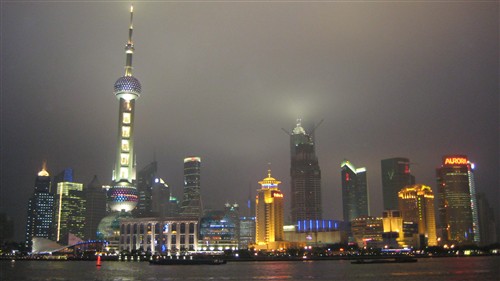
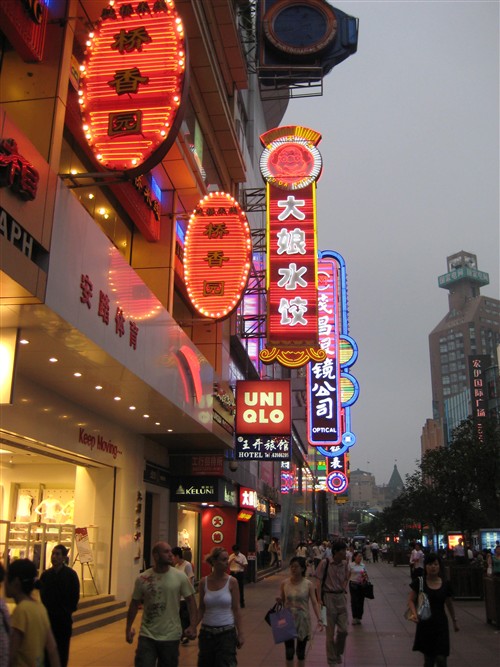 We headed down East Nanjing Road on a wide pedestrian walkway lined with several stories of restaurants, retail shops, billboards and flashy neon signs with Chinese characters. The walkway was crowded with walkers and we were almost incessantly pestered by people peddling cheap watches, jewelry, handbags, leather goods and electronics. None of them spoke more than a few words of English but they were all quite assured that they had what we wanted, whatever it might be. They all had identical laminated picture cards showing an array of tacky accessories. The street itself was a spectacle, both fascinating and dizzying, with bright lights and people everywhere. We walked the length of it to the Bund, a famous street in Shanghai where a grand façade of Old European buildings face the modern architecture of the Pudong skyline across the Huangpu River. An elevated promenade along the west bank of the river was bustling with tourists and locals alike, taking in Shanghai’s best views.
As the gateway to the Yangzi River, Shanghai began as a fishing town. After the first Opium War in the mid-1800s, the British arrived, followed by the French and Japanese, all setting up concessions that were immune from Chinese law. Shanghai’s prime location made it an ideal trading port and it quickly became known for its opium, silk and tea trade. The budding metropolis also lured big finance houses from around the world and soon became a bastion of opium dens, brothels and gambling halls. Shanghai was nicknamed the Whore of the Orient and the Paris of the East. (Lonely Planet: China, May 2007) Most of the grand buildings along the Bund were erected during this colorful period in Shanghai’s past. Today the buildings appear to be occupied by banks, hotels, and government agencies but it is easy to imagine them in their former decadent splendor. We agreed that the Bund would be even more spectacular at night so we walked back to East Nanjing Road to kill a few hours.
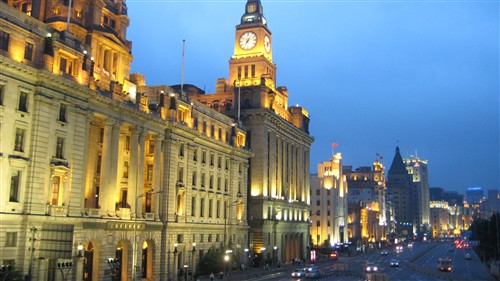
The Bund at night was an awe-inspiring sight. The promenade was even more crowded with photo-happy revelers, patiently awaiting the full-scale brilliance of the illuminated Pudong skyline. When the last remnants of sunlight had faded to dark, the skyline was a kaleidoscope of colorful twinkle lights against a midnight blue sky. The ships traversing the river bedazzled onlookers with twinkle and neon. The Old European buildings were bathed in white light, enhancing the grand details and timeless beauty for which European architecture is famous. By the Bund alone, Shanghai has won my vote as China’s most beautiful city.
The next morning began with a single piece of misinformation which led us on a wild goose chase. We wanted to take the two-hour train ride to Hangzhou for a day trip but were sent to the wrong train station. From there, we attempted a mad dash on the subway to the correct station but you can’t rush the subway and we arrived at the other station way too late. We made the best of our situation by buying train tickets for the next morning and taking in another day of Shanghai, although Aaron would continue seething over the misinformation for several days afterward.
We stopped for a quick bite at a popular noodle chain and then decided to try the Shanghai Museum again. The line was just as long as the day before but, with our Hangzhou plans foiled, we had little else to do. Luckily, we had our books with us and the literary escape made the hour-long wait bearable. Once inside, we went directly to the attraction that we were most excited about: a traveling exhibit from the British Museum called Ancient Olympic Games. It was an impressive collection of artifacts relating to the origin of sport in ancient Greece and its relationship to pagan Gods; the cessation of the games as pagan Gods lost favor in Greek society; and the re-emergence of the tradition centuries later in its modern format.
The permanent exhibits in the Shanghai Museum were decidedly underwhelming. We wandered through halls of ancient Chinese calligraphy and painting, sculpture and bronze works. The stone- and wood-carved sculptures were the most impressive despite the fact that the only subjects of the works were Buddha and Bodhisattvas (Enlightened Ones). We’ve seen so many Buddhas in our four months in Asia that we can hardly get excited about them anymore. Still, the Shanghai Museum was immaculate, air-conditioned, free, and had the best bathrooms in all of China, which is probably the reason that we stayed as long as we did.
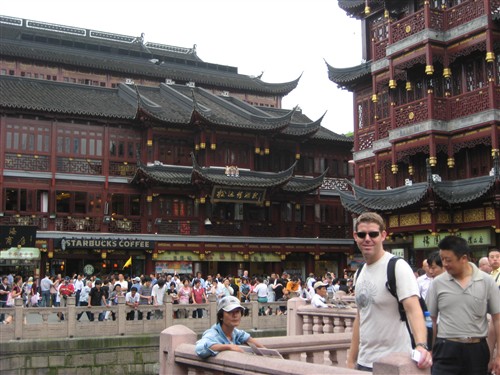 The afternoon was for Yuyuan Garden in Old Town Shanghai. The gardens were first established in 1559 and took eighteen years to cultivate. They were ravaged once during the Opium War and later by the French in retaliation for Chinese impediment on their concession. (Lonely Planet: China, May 2007) The gardens have since been revived and are now one of the most popular tourist sights in Shanghai. The entrance was a bazaar of antique wooden buildings surrounding a glittering lake. The buildings were occupied by shops and restaurants, including Starbucks and Dairy Queen (the Chinese LOVE ice cream – it’s EVERYWHERE, much to Aaron’s delight). True to its reputation, Yuyuan Garden was thronged with tourists. We fought the crowds through the teeming bazaar to the garden where the ambience was considerably more serene. Inside the confines of the garden walls, wooden pavilions and halls were built upon artistic, porous rock formations. Willow trees wept over sparkling carp ponds. Rock gardens and centuries-old, meticulously-pruned trees decorated the edges of every pond and wall. As we wandered through the picturesque perfection of the gardens, we felt a renewed sense of excitement about China. Amid the plethora of unsavory cultural differences and discomforts is an abundance of unique and diversely framed windows into the history of a vast nation that, for better or worse, influenced almost all of Asia in building and landscape architecture, technology, language and culture.
Comments Off on Shanghai
 After our cruise on the Yangzi, we had a long, uncomfortable day of travel to Wuhan. Our cruise ship docked in Maoping where no English-speaking person could tell the group of confused- and frustrated-looking foreigners which public bus went to Yichang. By some miracle, we did make it onto the right bus and were delivered to the bus station in Yichang, where someone was supposed to be waiting with a sign. No such person was there so we dropped our bags on the front steps of the station and waited.
 A cruise on the Yangzi River had been touted as a must-do in China and, although we had so recently cruised in Halong Bay in Vietnam, our curiosity got the best of us. If you don’t speak Chinese, there is disappointingly scarce information available regarding the cruises, the highlight of which is the opportunity to view the famed Three Gorges. From our hostel in Xi’an, we were able to book cruises but the staff had little knowledge of the details. The two options: an international cruise ship – very expensive; or a Chinese cruise ship for less than a third of the price. The international cruise had provided a snazzy color brochure; the Chinese ship was a total mystery. Your Honor, if it pleases the court, I would like the record to reflect that I lobbied against the Yangzi River cruise altogether.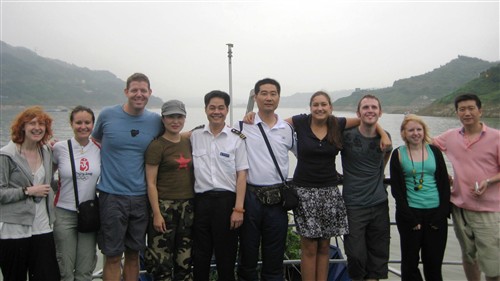
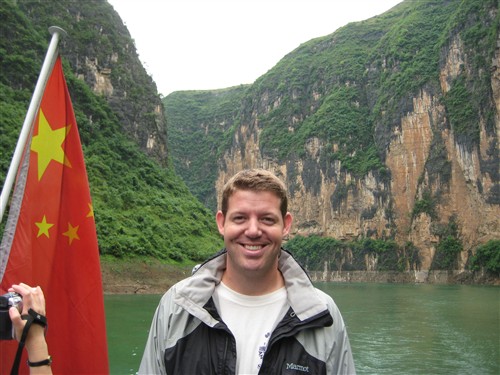
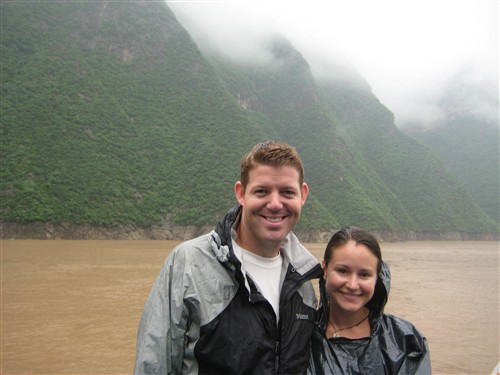 On the second morning, we cruised through Qutang Gorge, the first of the Three Gorges. The day was foggy and it was raining again – the visibility left much to be desired – but the Chinese passengers flooded the outer VIP deck nonetheless to pose for endless photos. All of our group donned their rain gear and wandered outside to join the melee…all except for me. I simply didn’t find the view interesting enough to stand in the rain before my first cup of coffee. The gorge was a range of green contoured rock formations, very similar to Milford Sound in New Zealand. The formations were impressive but shrouded in such thick mist that they were almost completely obscured. I remained inside the glassed-in area of the VIP lounge, enjoying the views from my insulated vantage point. Then suddenly I saw it…the saddest, most forlorn little Bear face peering at me through the glass; he was holding his camera and umbrella and getting soaked from the blowing rain. My heart broke for that little frown and I raced to the cabin to get my rain poncho. God help me if my children have faces like that.
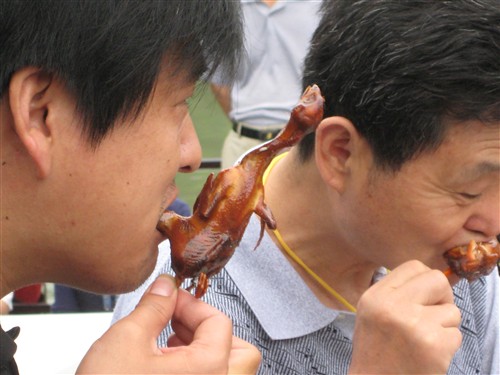 The Chinese have very different ideas about snacks. We have often seen displays of dried fish and grotesque-looking cooked animal parts that sit out on tables all day. One of our most interesting finds at the supermarket was a pile of dried pig faces preserved in the same petrified manner as the pig ears sold for dogs in the States. Refreshments were available for purchase on the ship and a woman walked around the deck, peddling whole juvenile roasted chickens from a bucket. The whole skewered birds couldn’t have had more meat on them than an average drumstick but I was dying to see someone eat one. There were no takers in our group despite my repeated double dares.
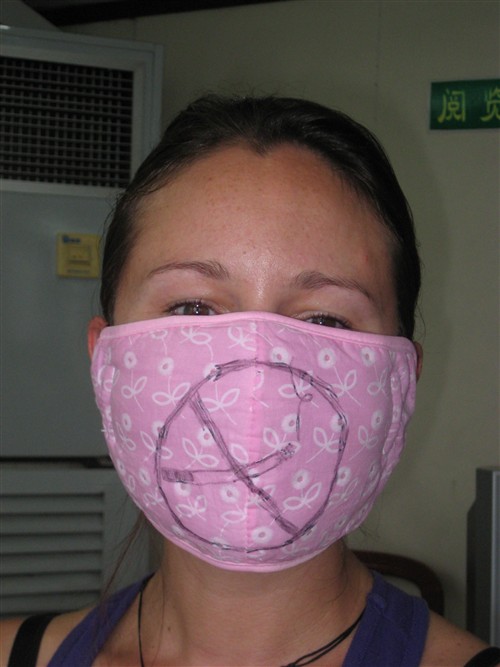
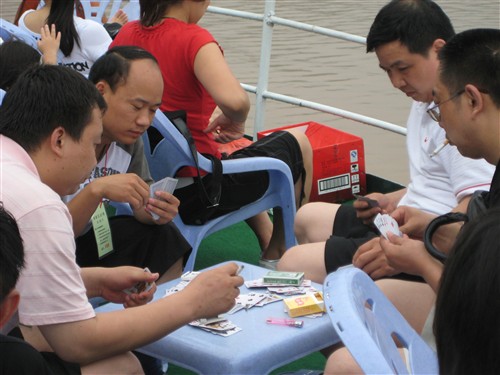 Back on the big boat, we endured the rest of our Yangzi River cruise amid more rain and dense fog. While we would NEVER endeavor to repeat the experience and would strongly discourage anyone else from doing so, we must confess the fascinating insight that we have gained into Chinese culture. After “vacationing” among a ship full of Chinese passengers, we have amassed a collection of observations. They love to play cards and the men smoke like chimneys. Yelling is a part of normal conversation. They hock up mucus and spit incessantly (probably from the pollution and smoking) and often on the floor. They laugh a lot and seem generally cheerful. They largely ignored our presence on the ship and when they did watch us, it was with curiosity rather than disdain. They generally woke early and slept away the afternoons. They smoke incessantly, seemingly oblivious to the fact that they are plaguing those around them with contaminated air. I tried to get the message across by strapping on a double-layer of hospital masks whenever they lit up in my presence but it had no effect. Hopefully, the masks limited the cancer-causing filth that infiltrated my shrine.
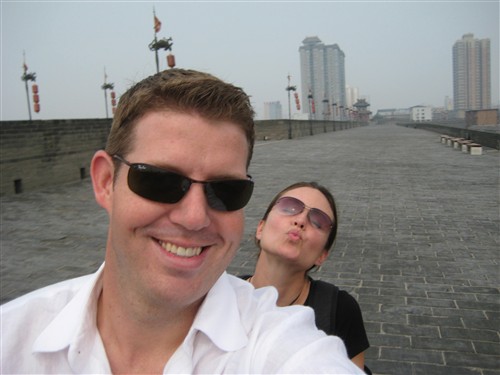 Giant, cuddly, loveable pandas, or panders as the Chinese call them, were on the itinerary for our third day in Xi’an. We hired a driver from our hostel to make the two hour drive to a WWF (World Wildlife Federation)-sponsored wildlife sanctuary.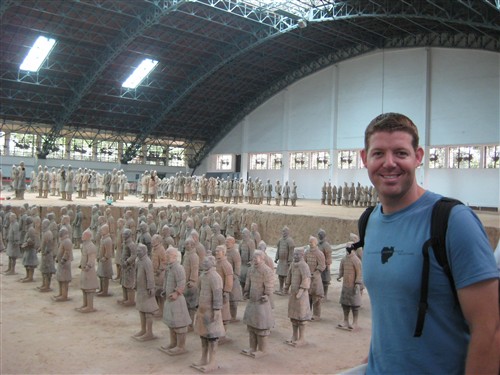
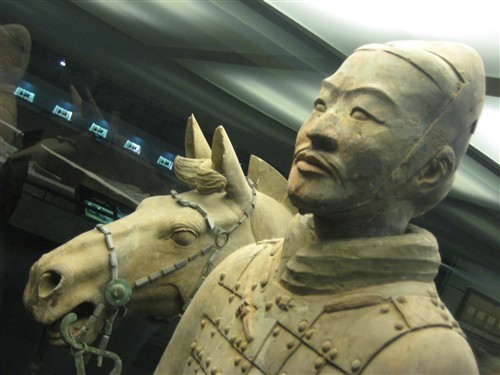 Discovered by accident in 1974 by peasants digging a well, the Army of Terracotta Warriors is one of most important discoveries of ancient Chinese history. Commissioned by Qin Shi Huang, the First Emperor of China, the army of thousands of life-size soldiers in battle formation stands guard at the emperor’s tomb. Some say Qin Shi Huang feared evil spirits in the afterlife while others believe that he expected his rule to continue after death. Ancient scholars seem to agree that the emperor was paranoid and fanatical, which would explain his obsession with creating a “pretend” army. Whatever the case, the army of soldiers, when viewed in its partially restored state, is undeniably impressive.
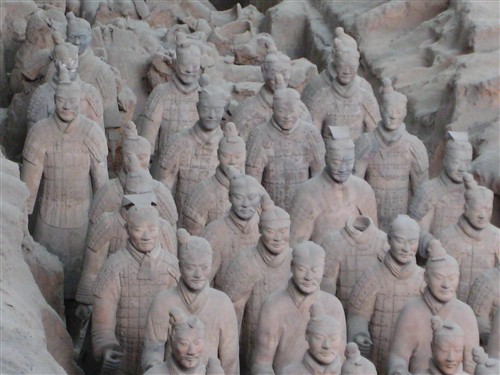 The excavation sites each showed the broken condition in which the soldiers were discovered. A sign near one of the pits indicated that, to date, not a single statue has been unearthed intact. When we reached Pit 1, where approximately 6,000 soldiers are thought to stand (although only 2,000 have been restored to date), we met with the postcard view of the Terracotta Army. The excavation site was larger than a regulation football field and less than half of the site had been fully excavated; the two-thousand restored warriors, dating back to 210 B.C., stood stoically in battle formation with horses and all. As we stood facing the front line, it was easy to imagine the army in its full grandeur and completion with Emperor Qin Shi Huang pacing back and forth, barking orders at his earthen men.